
Managing Inspections, Audits, and Labour Authorities in Factories: HR Practical Guide
INDUSTRIAL RELATIONS & FACTORY HR
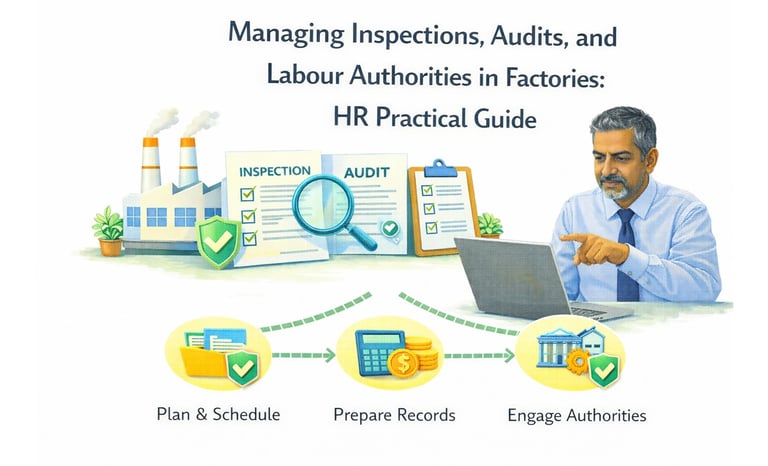
Factory HR teams in India operate under constant regulatory visibility. Labour inspections, statutory audits, and visits from government authorities are not exceptions — they are a routine part of factory operations. How HR prepares for and manages these interactions directly impacts compliance outcomes, industrial relations, and even business continuity.
This article offers a practical, India-focused guide for factory HR professionals on handling labour inspections and audits confidently, lawfully, and without panic.
Understanding Labour Inspections in Indian Factories
Labour inspections are conducted to verify compliance with central and state labour laws. Inspecting officers may come with prior notice or as surprise visits, depending on the statute.
Common Authorities Visiting Factories
Factory Inspector (Factories Act)
Labour Officer / Labour Inspector
ESIC Inspector
EPF Enforcement Officer
Minimum Wages / Payment of Wages Officer
Contract Labour Licensing Authority
Fire, Safety, or Pollution Control inspectors (linked compliance)
Inspections may be routine, complaint-based, accident-triggered, or audit-driven.
Types of Inspections and Audits HR Must Handle
1. Statutory Labour Inspections
Focused on legal compliance under labour laws such as:
Factories Act
Industrial Relations Code / ID Act
Contract Labour Act
Minimum Wages Act
EPF & ESIC laws
2. Internal Compliance Audits
Conducted by:
Corporate HR
Internal audit teams
Legal or compliance consultants
3. External / Certification Audits
ISO / OHS audits
Customer social compliance audits
ESG and safety audits
Each type demands different preparation depth, but the base documentation remains largely common.
HR’s Role Before an Inspection
Preparation is the single biggest factor that determines inspection outcomes.
Key Pre-Inspection Responsibilities
Maintain updated statutory registers (physical or digital)
Ensure licenses and registrations are valid and displayed
Conduct periodic self-audits
Train supervisors on basic labour law awareness
Keep standing orders, policies, and notices updated
A factory that is always “inspection-ready” rarely faces serious issues.
Handling the Inspection Day: HR Best Practices
When an inspector arrives, HR must lead with professionalism, transparency, and calm.
Do’s for HR
Verify the inspector’s identity and authorisation
Cooperate fully without over-explaining
Provide only requested records
Answer questions factually and clearly
Ensure employee interviews are not influenced or coached
Don’ts for HR
Do not panic or argue
Do not fabricate or backdate records
Do not obstruct employee interaction
Do not make commitments without management approval
HR should act as a facilitator, not a negotiator or adversary.
Managing Employee Interaction During Inspections
Inspectors often interact directly with workers to verify:
Wage payments
Working hours and overtime
Leave and holidays
Safety practices
Contract labour engagement
HR’s responsibility is to:
Ensure employees are aware of their rights
Avoid interference in responses
Maintain trust and transparency
A healthy IR environment reflects positively during inspections.
Post-Inspection Actions HR Must Not Miss
Inspections rarely end when the officer leaves.
Critical Post-Inspection Steps
Document inspection observations immediately
Review inspection notes or reports carefully
Submit explanations or documents within deadlines
Initiate corrective actions
Close gaps through training or policy updates
Delays or casual responses often escalate minor issues into legal notices or penalties.
Dealing with Show Cause Notices and Prosecutions
If non-compliances are identified, authorities may issue:
Show cause notices
Improvement notices
Prosecution recommendations
HR must coordinate with:
Management
Legal advisors
Consultants (if required)
The focus should always be rectification and risk mitigation, not confrontation.
Building an Inspection-Ready Factory HR System
Strong systems reduce inspection stress.
Long-Term HR Practices That Help
Digital HRIS and compliance trackers
Periodic mock inspections
Centralised document control
Supervisor compliance training
Strong grievance redressal mechanisms
Factories with disciplined HR systems experience smoother inspections and better authority relationships.
🗹 Factory HR Inspection Readiness Checklist
🗹 Valid factory licence and registrations displayed
🗹 Updated statutory registers and returns
🗹 Wage, attendance, and overtime records accurate
🗹 Standing orders and notices properly displayed
🗹 Contract labour licences and muster rolls in place
🗹 Safety training and PPE records maintained
🗹 Accident and incident registers updated
🗹 HR and supervisors trained for inspections
Conclusion
Labour inspections and audits are not threats — they are tests of HR discipline and systems maturity. Indian factories that invest in proactive compliance, transparent employee relations, and trained HR teams handle inspections smoothly and avoid legal escalation.
For factory HR professionals, mastering inspection management is not optional. It is a core capability that safeguards compliance, industrial harmony, and organisational credibility.
Common Labour Inspections and HR Documentation Requirements
Conclusion--
Effective labour law compliance depends on how well HR operations, payroll, and business processes work together. When compliance is embedded into everyday workflows, organisations reduce risk, improve accuracy, and build sustainable governance systems. HR teams that prioritise integration over isolation are better positioned to manage compliance confidently and consistently.
HireDesk India © 2026 | All Rights Reserved
"Thoughtful guidance for everyday HR"


Quick Links
Topics
Connect
_______________________________________________________________________________________________________________________________________________________________________________________
HireDesk is a free HR knowledge platform focused on practical, India-specific workplace guidance. We help HR professionals, managers, and learners navigate people practices with clarity, responsibility, and real-world relevance.