
Managing Low Performance: Early Identification and Preventive Actions
PERFORMANCE & DEVELOPMENT
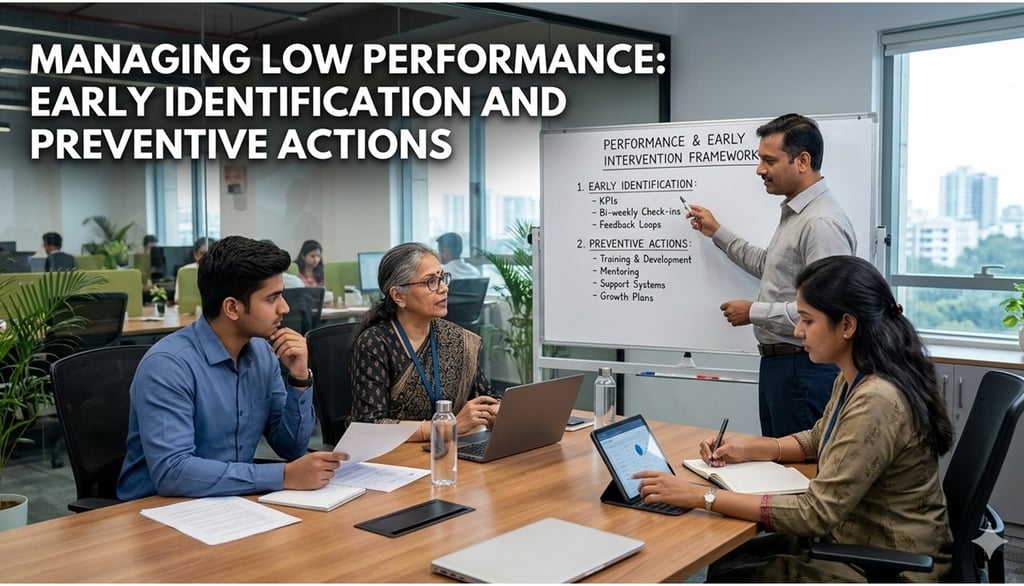
Low performance rarely appears suddenly. In most cases, it develops gradually due to unclear expectations, skill gaps, disengagement, or changing role demands. Early identification of performance issues allows organisations to address concerns proactively, reduce escalation, and support employees before formal corrective actions become necessary.
For Indian organisations, managing low performance effectively requires a balanced approach—combining empathy, clarity, and structured intervention.
Understanding Early Signs of Low Performance
Early indicators of declining performance may include:
Missed deadlines or reduced quality of work
Decreased engagement or participation
Repeated errors or rework
Behavioural changes such as withdrawal or defensiveness
Dependence on supervision for routine tasks
Recognising these signs early enables managers and HR to intervene constructively.
Importance of Early Intervention
Early action helps:
Prevent performance gaps from widening
Reduce the need for formal corrective measures
Support employee confidence and capability
Maintain team productivity and morale
Proactive performance management also strengthens trust by demonstrating that the organisation values development over discipline.
Preventive Actions to Address Low Performance
Clarifying Expectations
Ensure employees fully understand role responsibilities, success criteria, and priorities. Misalignment is a common root cause of underperformance.
Providing Timely Feedback
Regular, specific feedback helps employees course-correct before issues become ingrained.
Identifying Skill Gaps
Assess whether low performance is due to lack of capability, insufficient training, or changing job requirements.
Offering Support Mechanisms
Support may include coaching, mentoring, job aids, process clarification, or targeted training.
Monitoring Progress Informally
Track improvement through regular check-ins without initiating formal processes prematurely.
Light Checklist: Early Performance Management
☐ Role expectations and priorities are clearly communicated
☐ Early signs of performance decline are identified
☐ Feedback is timely, specific, and constructive
☐ Skill or knowledge gaps are assessed
☐ Appropriate support is provided
☐ Progress is reviewed through regular check-ins
☐ Escalation is avoided unless improvement does not occur
Sample Table: Early Intervention Actions for Low Performance
Role of Managers and HR
Managers observe daily performance, initiate conversations, and provide immediate support.
HR ensures consistency, equips managers with tools, and prevents premature escalation to formal actions.
This partnership ensures performance issues are addressed fairly and constructively.
Closing Note
Managing low performance effectively begins with early identification and preventive action. By focusing on clarity, feedback, and support, Indian organisations can reduce formal performance interventions while fostering a culture of continuous improvement and accountability.
Conclusion--
Effective labour law compliance depends on how well HR operations, payroll, and business processes work together. When compliance is embedded into everyday workflows, organisations reduce risk, improve accuracy, and build sustainable governance systems. HR teams that prioritise integration over isolation are better positioned to manage compliance confidently and consistently.
HireDesk India © 2026 | All Rights Reserved
"Thoughtful guidance for everyday HR"


Quick Links
Topics
Connect
_______________________________________________________________________________________________________________________________________________________________________________________
HireDesk is a free HR knowledge platform focused on practical, India-specific workplace guidance. We help HR professionals, managers, and learners navigate people practices with clarity, responsibility, and real-world relevance.