
Managing Performance for Remote and Hybrid Teams
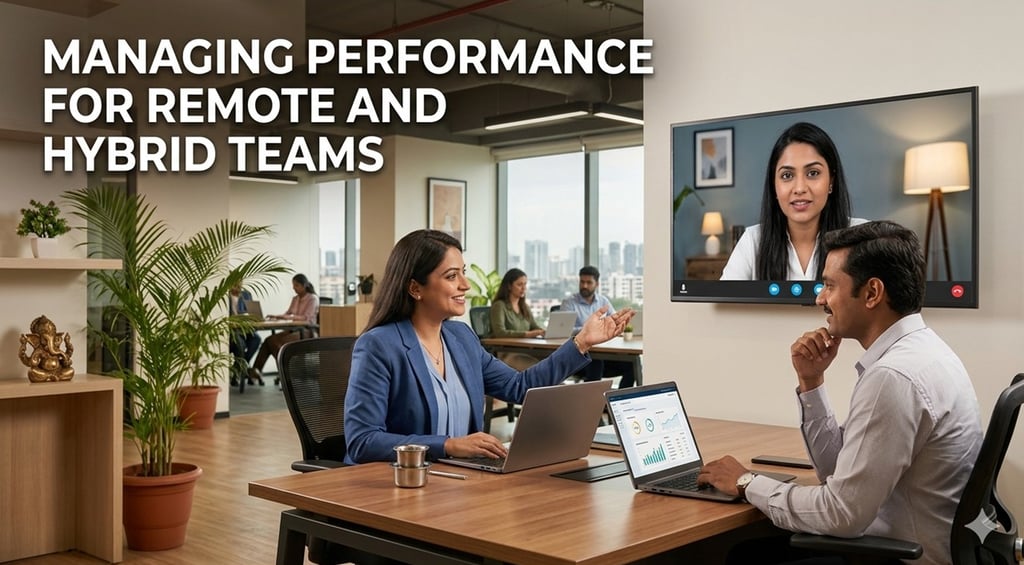

Remote and hybrid work models have become common in Indian organisations, but they introduce unique challenges for performance management. Traditional approaches may not fully capture employee contributions when teams are distributed.
This article explains strategies for managing performance effectively in remote and hybrid environments, ensuring engagement, accountability, and productivity.
Challenges in Remote and Hybrid Performance Management
Limited visibility into day-to-day work
Reduced informal feedback opportunities
Difficulty in measuring output versus effort
Risk of isolation affecting engagement
Bias towards employees who are more visible online
Organisations must adapt performance management to focus on outcomes, clarity, and trust.
Strategies for Managing Remote Performance
1. Set Clear, Outcome-Based Goals
Define measurable deliverables for each employee
Emphasise results rather than time spent online
Align goals with team and organisational objectives
2. Frequent Check-Ins and Feedback
Schedule regular one-on-one meetings
Use virtual tools to provide timely feedback
Encourage two-way conversations to address challenges
3. Foster Transparent Communication
Use collaboration platforms for updates and reporting
Ensure all team members have visibility into priorities and progress
Encourage open discussion of blockers
4. Recognise and Reward Contributions
Celebrate achievements publicly in virtual forums
Acknowledge individual and team outcomes
Use both formal and informal recognition
5. Monitor Wellbeing and Engagement
Track employee satisfaction and work-life balance
Identify signs of burnout or disengagement early
Encourage flexible scheduling and support mechanisms
Sample View: Remote & Hybrid Performance Management
Checklist: Managing Remote and Hybrid Performance
☐ Goals are outcome-based and measurable
☐ Regular one-on-one and team check-ins are conducted
☐ Communication channels are transparent and inclusive
☐ Achievements are recognised and rewarded timely
☐ Employee wellbeing and engagement are actively monitored
☐ HR supports managers with guidelines and best practices
Role of HR
HR plays a critical role by:
Designing frameworks for remote performance measurement
Equipping managers with tools and training for virtual oversight
Ensuring fairness and equity across remote and on-site teams
Tracking engagement and retention metrics
HR ensures the system balances flexibility with accountability.
Key Takeaway
Managing remote and hybrid performance requires clarity, trust, and structure. By focusing on outcomes, providing frequent feedback, recognising contributions, and monitoring wellbeing, organisations can sustain productivity and engagement across distributed teams.
Conclusion--
Effective labour law compliance depends on how well HR operations, payroll, and business processes work together. When compliance is embedded into everyday workflows, organisations reduce risk, improve accuracy, and build sustainable governance systems. HR teams that prioritise integration over isolation are better positioned to manage compliance confidently and consistently.
HireDesk India © 2026 | All Rights Reserved
"Thoughtful guidance for everyday HR"


Quick Links
Topics
Connect
_______________________________________________________________________________________________________________________________________________________________________________________
HireDesk is a free HR knowledge platform focused on practical, India-specific workplace guidance. We help HR professionals, managers, and learners navigate people practices with clarity, responsibility, and real-world relevance.