
Managing Performance Improvement Plans (PIPs) Effectively
PERFORMANCE & DEVELOPMENT
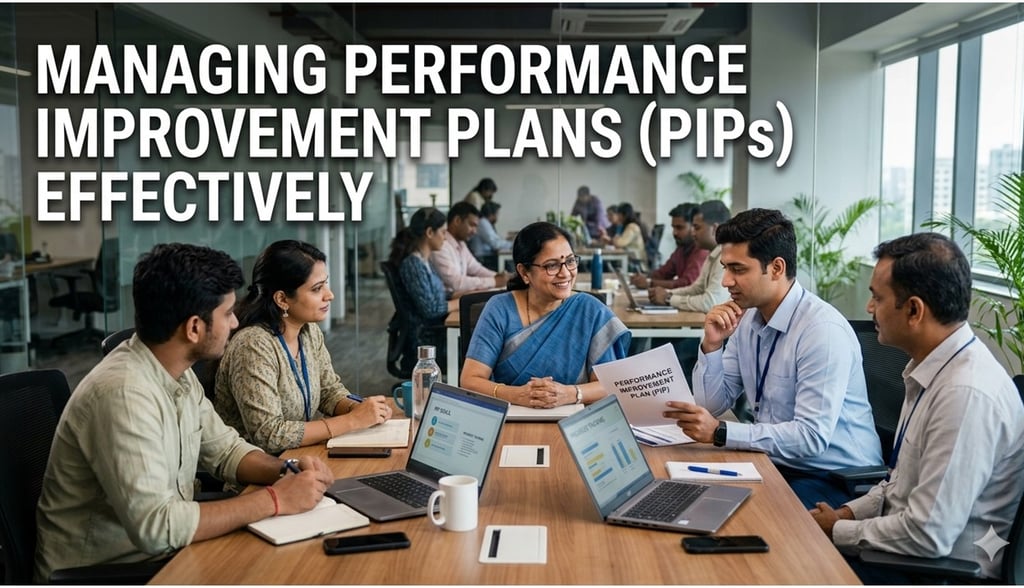
Performance Improvement Plans (PIPs) are structured tools used to address performance gaps in a systematic and transparent manner. When used correctly, PIPs help employees understand expectations, receive focused support, and improve performance within a defined timeframe.
In Indian organisations, PIPs are often viewed negatively or used inconsistently. However, when positioned as a development-oriented process, they can strengthen performance management, improve accountability, and support fair decision-making.
What Is a Performance Improvement Plan?
A Performance Improvement Plan is a formal, time-bound document that outlines:
Specific performance issues
Expected standards
Support mechanisms
Review timelines
Possible outcomes
It serves as a structured bridge between ongoing feedback and formal performance actions, ensuring clarity for both employees and managers.
When Should a PIP Be Used?
A PIP is appropriate when:
Performance issues persist despite informal feedback
Expectations have been clearly communicated
The employee has had reasonable opportunity and support to improve
Performance gaps are measurable and role-related
PIPs should not be used as:
A shortcut to termination
A response to isolated incidents
A substitute for regular performance feedback
Key Elements of an Effective PIP
Clear Performance Expectations
Expectations should be specific, observable, and measurable, linked directly to role requirements and goals.
Defined Improvement Areas
Focus on a limited number of critical performance gaps, rather than listing multiple unrelated issues.
Support and Resources
Outline training, coaching, mentoring, or process support that will be provided to enable improvement.
Timeframe and Milestones
Most PIPs range from 30 to 90 days, with defined checkpoints to review progress.
Review and Documentation
Regular review meetings and documentation ensure transparency and consistency throughout the process.
Light Checklist: Managing PIPs Effectively
☐ Performance concerns are clearly documented and discussed
☐ Expectations and success criteria are measurable
☐ Improvement areas are limited and focused
☐ Support mechanisms are clearly outlined
☐ Review timelines and checkpoints are defined
☐ Progress discussions are documented
☐ Outcomes and next steps are communicated transparently
Sample Table: PIP Structure Overview
Common Challenges in PIP Implementation
Lack of clarity in performance expectations
Inadequate manager capability to conduct difficult conversations
Poor documentation
Overuse of PIPs as disciplinary tools
Addressing these challenges requires manager training, HR oversight, and clear policy guidelines.
Closing Note
When managed effectively, Performance Improvement Plans support fair performance management, employee development, and organisational accountability. For Indian organisations, using PIPs as a structured improvement mechanism—rather than a punitive tool—strengthens trust, transparency, and performance culture.
Conclusion--
Effective labour law compliance depends on how well HR operations, payroll, and business processes work together. When compliance is embedded into everyday workflows, organisations reduce risk, improve accuracy, and build sustainable governance systems. HR teams that prioritise integration over isolation are better positioned to manage compliance confidently and consistently.
HireDesk India © 2026 | All Rights Reserved
"Thoughtful guidance for everyday HR"


Quick Links
Topics
Connect
_______________________________________________________________________________________________________________________________________________________________________________________
HireDesk is a free HR knowledge platform focused on practical, India-specific workplace guidance. We help HR professionals, managers, and learners navigate people practices with clarity, responsibility, and real-world relevance.