
Managing Rating Inflation and Compression in Performance Systems
PERFORMANCE & DEVELOPMENT
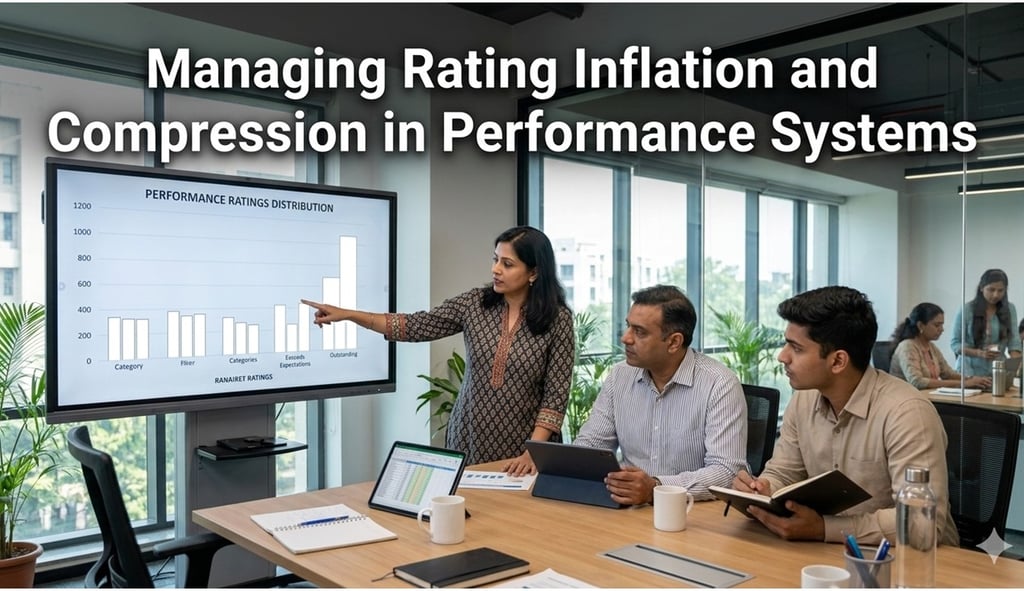
Performance ratings are intended to differentiate contribution and guide decisions on rewards, development, and progression. However, many organisations struggle with rating inflation and rating compression, which reduce the effectiveness and credibility of performance management systems.
This article explains what rating inflation and compression are, why they occur, and how HR can address them in a practical and sustainable way.
Understanding Rating Inflation and Rating Compression
Rating inflation occurs when most employees receive high ratings, regardless of actual performance differences.
Rating compression occurs when ratings cluster tightly within a narrow range, making it difficult to distinguish levels of contribution.
Both issues limit the usefulness of ratings and weaken performance differentiation.
Why These Issues Commonly Occur
1. Manager Discomfort
Managers may avoid difficult conversations and assign higher ratings to maintain harmony or morale.
2. Linkage to Pay and Rewards
When ratings are closely tied to increments or bonuses, managers may inflate ratings to protect team members.
3. Ambiguous Performance Criteria
Vague goals and unclear rating definitions lead to subjective and inconsistent interpretation.
4. Cultural Factors
In some organisational contexts, especially team-oriented environments, differentiation is seen as unfair or demotivating.
Impact on the Organisation
Unchecked inflation and compression can:
Reduce trust in performance systems
Demotivate high performers
Distort talent and succession decisions
Increase compensation inequity
Over time, the system loses relevance and credibility.
Approaches to Address Rating Inflation and Compression
Clarify Rating Definitions
Define each rating level clearly with observable behaviours
Align definitions across roles and levels
Use examples to guide manager judgement
Clarity reduces subjective interpretation.
Strengthen Goal Quality
Ensure goals are specific, measurable, and role-relevant
Avoid generic or identical goals across employees
Review goal quality early in the cycle
Better goals support fair evaluation.
Introduce Calibration Discussions
Review ratings across teams and functions
Challenge inconsistencies constructively
Encourage evidence-based justification
Calibration improves consistency without enforcing forced distributions.
Decouple Development Conversations from Ratings
Separate feedback and coaching from rating outcomes
Encourage honest performance discussions throughout the year
Reduce end-cycle pressure
This helps managers rate more accurately.
Sample View: Common Rating Issues and HR Responses
Checklist: Reducing Rating Bias and Compression
☐ Define rating levels with behavioural indicators
☐ Train managers on evidence-based evaluation
☐ Use calibration to ensure cross-team consistency
☐ Review rating distributions periodically
☐ Separate development discussions from final ratings
Role of HR in Sustaining Rating Quality
HR should:
Monitor rating patterns and trends
Facilitate calibration sessions objectively
Coach managers on difficult feedback conversations
Review system design regularly
HR’s role is to protect both fairness and credibility.
Key Takeaway
Rating inflation and compression weaken performance systems when left unaddressed. Clear standards, strong goal-setting, calibration, and capable managers help restore differentiation and trust without relying on rigid controls.
Conclusion--
Effective labour law compliance depends on how well HR operations, payroll, and business processes work together. When compliance is embedded into everyday workflows, organisations reduce risk, improve accuracy, and build sustainable governance systems. HR teams that prioritise integration over isolation are better positioned to manage compliance confidently and consistently.
HireDesk India © 2026 | All Rights Reserved
"Thoughtful guidance for everyday HR"


Quick Links
Topics
Connect
_______________________________________________________________________________________________________________________________________________________________________________________
HireDesk is a free HR knowledge platform focused on practical, India-specific workplace guidance. We help HR professionals, managers, and learners navigate people practices with clarity, responsibility, and real-world relevance.