
Managing Workforce Flexibility: Contract, Gig, and Project-Based Staffing
WORKFORCE PLANNING & MANPOWER
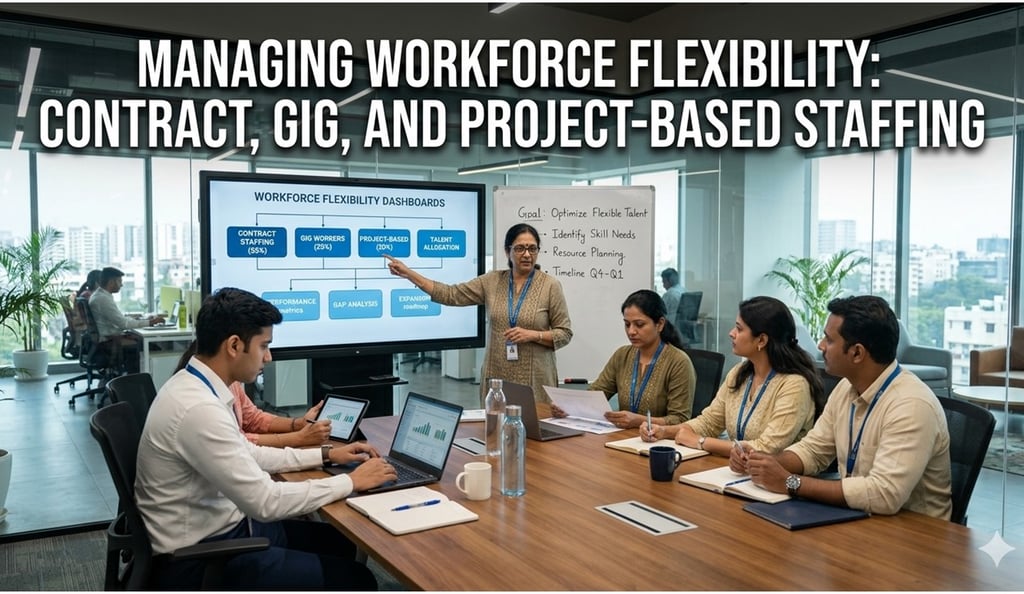
Workforce flexibility has become a strategic necessity for many Indian organisations. Fluctuating business demand, specialised skill requirements, and cost considerations have pushed companies to look beyond traditional permanent employment models. Contract, gig, and project-based staffing offer HR teams ways to respond quickly to changing needs—when applied thoughtfully and within legal boundaries.
This article explains the different flexible workforce models, where each is appropriate, and how HR can manage them responsibly without increasing compliance or operational risks.
Understanding Workforce Flexibility in Practice
Workforce flexibility refers to the ability to scale people resources up or down, adjust skill deployment, and manage costs based on business requirements.
Common flexible workforce models include:
Contract staffing through vendors
Fixed-term employment
Gig or freelance engagement
Project-based or task-specific roles
Each model serves a different purpose and must be selected based on role criticality, duration, and compliance implications.
Contract Staffing: When and Why It Works
Contract staffing is commonly used for:
Operational or support roles
Seasonal or volume-based work
Short-term business expansion
Cost-sensitive functions
Key HR considerations:
Ensure proper vendor agreements
Clarify employer–employee relationships
Monitor statutory compliance (PF, ESIC, wages)
Avoid prolonged contract misuse that may trigger legal risks
Contract staffing works best when roles are clearly defined and time-bound.
Gig and Freelance Engagements
Gig workers are typically engaged for:
Specialised or niche skills
Short-duration tasks
Creative, technical, or advisory work
HR’s role includes:
Clearly defining scope and deliverables
Ensuring payment clarity and timelines
Avoiding control mechanisms that resemble employment
Maintaining basic documentation for audit purposes
Gig models are effective when outcomes matter more than fixed working hours.
Project-Based Staffing
Project-based staffing is useful for:
System implementations
Business transformation initiatives
Process redesign or automation
New unit or market entry
HR should ensure:
Clear project timelines
Defined reporting structures
Knowledge transfer at project closure
Alignment with internal teams
This model supports temporary capability enhancement without long-term cost commitment.
Compliance and Risk Considerations
Flexible workforce models require careful compliance management:
Adherence to labour laws and contract labour regulations
Avoidance of disguised employment
Proper vendor due diligence
Clear separation between permanent and non-permanent roles
HR must work closely with legal and finance teams to minimise risks.
Integrating Flexibility into Workforce Planning
Workforce flexibility should be part of:
Manpower planning discussions
Cost optimisation strategies
Skills gap mitigation plans
Business continuity planning
Used strategically, flexible staffing supports agility without undermining stability.
Workforce Flexibility Checklist for HR
Before engagement
☐ Is the role suitable for non-permanent staffing?
☐ Is the duration clearly defined?
☐ Are compliance implications understood?
During engagement
☐ Are roles, deliverables, and reporting clear?
☐ Are vendor or individual agreements in place?
☐ Is statutory compliance monitored where applicable?
After engagement
☐ Is knowledge transferred to internal teams?
☐ Are contracts closed properly?
☐ Are learnings documented for future planning?
Closing Note
Flexible workforce models are most effective when treated as strategic tools rather than cost shortcuts. With clarity, compliance discipline, and proper planning, HR can leverage flexibility to support growth, innovation, and resilience
Conclusion--
Effective labour law compliance depends on how well HR operations, payroll, and business processes work together. When compliance is embedded into everyday workflows, organisations reduce risk, improve accuracy, and build sustainable governance systems. HR teams that prioritise integration over isolation are better positioned to manage compliance confidently and consistently.
HireDesk India © 2026 | All Rights Reserved
"Thoughtful guidance for everyday HR"


Quick Links
Topics
Connect
_______________________________________________________________________________________________________________________________________________________________________________________
HireDesk is a free HR knowledge platform focused on practical, India-specific workplace guidance. We help HR professionals, managers, and learners navigate people practices with clarity, responsibility, and real-world relevance.