
Managing Workforce Surplus and Shortage
WORKFORCE PLANNING & MANPOWER
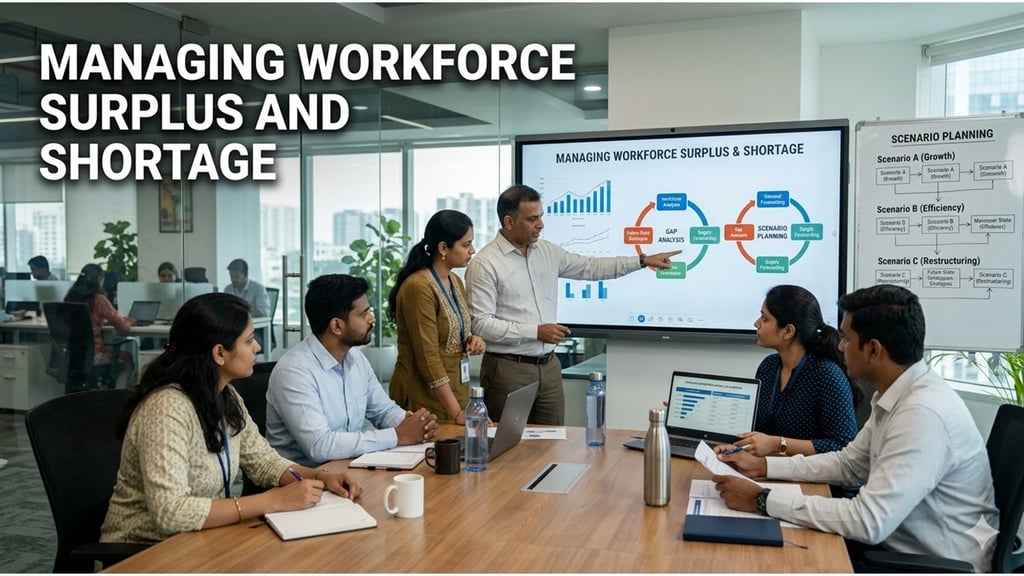
Workforce planning is not only about estimating future manpower needs but also about managing imbalances effectively. Organisations may experience workforce shortages during expansion or peak demand, and surplus manpower during downturns, automation, or restructuring. If not addressed systematically, both situations can affect productivity, costs, and employee morale.
Managing workforce surplus and shortage is therefore a critical component of practical manpower planning.
Understanding Workforce Shortage
Workforce shortage occurs when the available number of employees or skills is insufficient to meet business requirements. This may arise due to rapid growth, high attrition, skill mismatches, or unexpected demand increases.
Common indicators include:
Increased overtime and workload pressure
Delays in project delivery
Declining service or production quality
Identifying shortages early allows organisations to plan corrective actions rather than react under pressure.
Understanding Workforce Surplus
Workforce surplus arises when an organisation has more employees than required for its current or projected operations. This often results from demand slowdown, technology changes, process improvements, or overestimation during manpower planning.
Typical signs include:
Underutilised employees
Rising manpower costs without output increase
Role overlaps and unclear responsibilities
Addressing surplus responsibly is essential to maintain organisational stability and employee trust.
Causes of Workforce Imbalance
Internal Factors
Inaccurate manpower forecasting
Poor coordination between business and HR planning
Limited internal mobility or reskilling options
External Factors
Market fluctuations
Regulatory or policy changes
Technology adoption or automation
Recognising these factors helps improve future workforce planning accuracy.
Strategies to Manage Workforce Shortage
Planned Hiring
Targeted recruitment aligned with workforce forecasts helps fill gaps without overstaffing.
Internal Mobility
Redeploying employees across roles or functions can quickly address shortages.
Upskilling and Reskilling
Training existing employees reduces dependency on external hiring for emerging skill needs.
Temporary or Contract Workforce
Short-term resources can help manage seasonal or project-based demand.
Strategies to Manage Workforce Surplus
Redeployment and Role Redesign
Surplus employees can be moved to understaffed areas or reassigned to new roles.
Training for New Skills
Reskilling helps employees transition into future-relevant roles.
Natural Attrition Planning
Hiring freezes and non-replacement of voluntary exits can gradually reduce surplus.
Workforce Restructuring
As a last resort, structured separation plans may be considered, following legal and ethical guidelines.
Light Checklist: Managing Workforce Imbalance
☐ Regular review of manpower forecasts
☐ Early identification of shortage or surplus trends
☐ Internal redeployment options assessed
☐ Training linked to future skill needs
☐ Clear communication with managers and employees
Aligning Surplus and Shortage with Workforce Planning
Effective workforce planning anticipates both surplus and shortage scenarios. By building flexibility into manpower plans, organisations can respond to changes without sudden disruptions.
This alignment ensures:
Better cost control
Higher workforce utilisation
Reduced employee uncertainty
Common Challenges
Delayed recognition of workforce imbalance
Resistance to redeployment or role changes
Limited data on skill availability
Treating surplus or shortage as isolated HR issues
Addressing these challenges strengthens the overall workforce planning process.
Conclusion
Managing workforce surplus and shortage is a core responsibility within workforce planning. A balanced approach that combines forecasting, internal mobility, training, and clear communication helps organisations remain agile while maintaining workforce stability.
When handled proactively, workforce imbalances become manageable transitions rather than operational crises.
Conclusion--
Effective labour law compliance depends on how well HR operations, payroll, and business processes work together. When compliance is embedded into everyday workflows, organisations reduce risk, improve accuracy, and build sustainable governance systems. HR teams that prioritise integration over isolation are better positioned to manage compliance confidently and consistently.
HireDesk India © 2026 | All Rights Reserved
"Thoughtful guidance for everyday HR"


Quick Links
Topics
Connect
_______________________________________________________________________________________________________________________________________________________________________________________
HireDesk is a free HR knowledge platform focused on practical, India-specific workplace guidance. We help HR professionals, managers, and learners navigate people practices with clarity, responsibility, and real-world relevance.