
Manpower Planning & Hiring Forecasting in Indian Organisations
RECRUITMENT AND HIRING
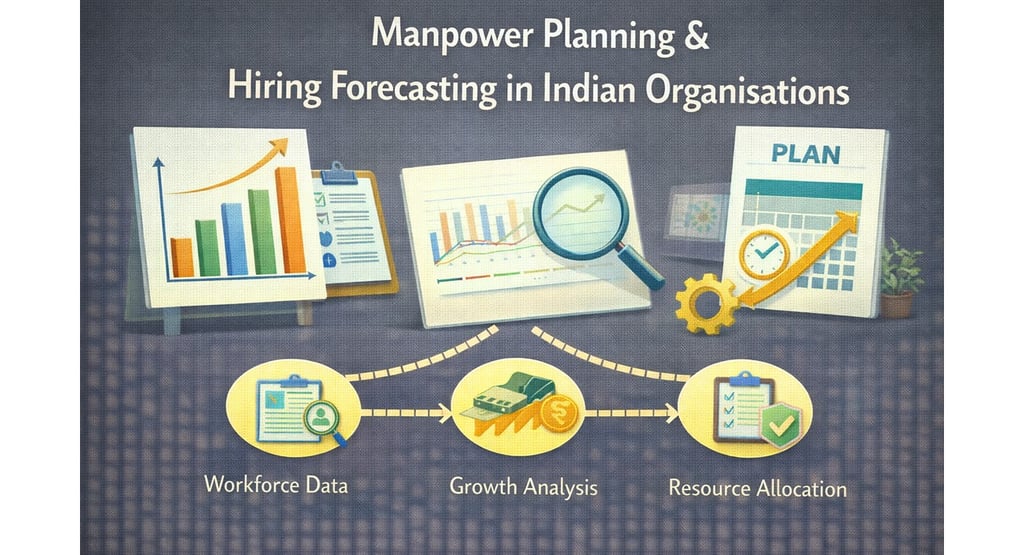
Manpower planning is the starting point of disciplined recruitment. In Indian organisations, hiring often begins reactively — when work piles up, someone resigns, or a new project is won. This reactive approach leads to rushed recruitment, role confusion, cost overruns, and poor hiring outcomes.
Effective manpower planning helps HR and business leaders anticipate workforce needs, align hiring with budgets, and avoid last-minute decisions. In the Indian context, where skill availability, attrition, seasonality, and business volatility are common, structured hiring forecasting is essential for stability and control.
Manpower Planning in the Indian Context
Indian organisations operate in dynamic environments. Growth plans may change quickly, projects may start or stop, and attrition can be unpredictable. At the same time, cost sensitivity and approval hierarchies are strong.
Common realities include:
Limited long-term workforce planning in SMEs
Hiring driven by immediate manager requests
Budget approvals coming late in the cycle
High replacement hiring due to attrition
Seasonal or cyclical manpower needs (factories, sales, retail)
Manpower planning must therefore be practical, flexible, and closely linked to business operations, not just annual HR exercises.
Core Elements of Manpower Planning & Hiring Forecasting
Understanding Business Demand
The first step is understanding what the business actually needs. HR must engage with leadership to clarify:
Business plans and growth targets
New projects, locations, or shifts
Productivity expectations
Automation or process changes
Hiring forecasts should reflect realistic demand, not optimistic projections.
Assessing Current Workforce Capacity
Before approving new hires, HR should assess whether existing capacity can meet requirements through:
Work redistribution
Role redesign
Skill upskilling or cross-training
Temporary or contract staffing
This is especially important in cost-sensitive Indian organisations where headcount additions are closely scrutinised.
Forecasting Hiring Requirements
Hiring forecasts should typically cover:
Replacement hiring due to attrition
Growth hiring linked to business expansion
Statutory or compliance-driven roles
Critical skill roles with longer hiring timelines
Forecasts may be quarterly or half-yearly rather than strictly annual, depending on organisational maturity.
Budgeting and Approval Discipline
Manpower plans must align with financial planning. HR plays a key role in ensuring:
Approved headcount numbers
Budgeted compensation ranges
Timing of hires across the year
Clear approval authority for deviations
Weak approval discipline often results in unplanned hiring and cost overruns.
Linking Manpower Planning with Recruitment Execution
A manpower plan is useful only if it guides actual hiring. HR should translate forecasts into:
Recruitment calendars
Sourcing strategies for upcoming roles
Advance engagement with consultants or campuses
Internal readiness for interviews and onboarding
This linkage reduces panic hiring and improves recruitment quality.
HR’s Role and Practical Perspective
HR acts as the custodian of manpower discipline. This requires balancing business urgency with organisational sustainability. HR’s practical responsibilities include:
Challenging ad-hoc hiring requests
Asking for role justification and timelines
Highlighting cost and capacity implications
Tracking planned versus actual hires
Updating forecasts based on attrition and business changes
In Indian organisations, strong HR judgement is critical to prevent manpower planning from becoming either a rigid control exercise or a meaningless formality.
Conclusion
Manpower planning and hiring forecasting bring predictability and control to recruitment. In the Indian context, where volatility and cost sensitivity coexist, practical and flexible workforce planning helps organisations avoid reactive hiring and poor decisions.
When HR aligns manpower plans with business demand, budget realities, and recruitment execution, hiring becomes more disciplined, timely, and effective.
🗹 Manpower Planning & Hiring Forecasting Checklist
🗹 Understand business plans and operational priorities
🗹 Assess current workforce capacity before approving new roles
🗹 Identify replacement versus growth hiring needs
🗹 Factor attrition trends into hiring forecasts
🗹 Define critical roles requiring advance planning
🗹 Align manpower plans with approved budgets
🗹 Establish clear approval authority for hiring
🗹 Review and update forecasts periodically
🗹 Track planned versus actual hiring
🗹 Link forecasts directly to recruitment execution
Manpower Planning Components in Indian Organisations
Conclusion--
Effective labour law compliance depends on how well HR operations, payroll, and business processes work together. When compliance is embedded into everyday workflows, organisations reduce risk, improve accuracy, and build sustainable governance systems. HR teams that prioritise integration over isolation are better positioned to manage compliance confidently and consistently.
HireDesk India © 2026 | All Rights Reserved
"Thoughtful guidance for everyday HR"


Quick Links
Topics
Connect
_______________________________________________________________________________________________________________________________________________________________________________________
HireDesk is a free HR knowledge platform focused on practical, India-specific workplace guidance. We help HR professionals, managers, and learners navigate people practices with clarity, responsibility, and real-world relevance.