
Measuring Employee Experience and Culture: What HR Should Track (and What Not To)
EMPLOYEE EXPERIENCE & CULTURE
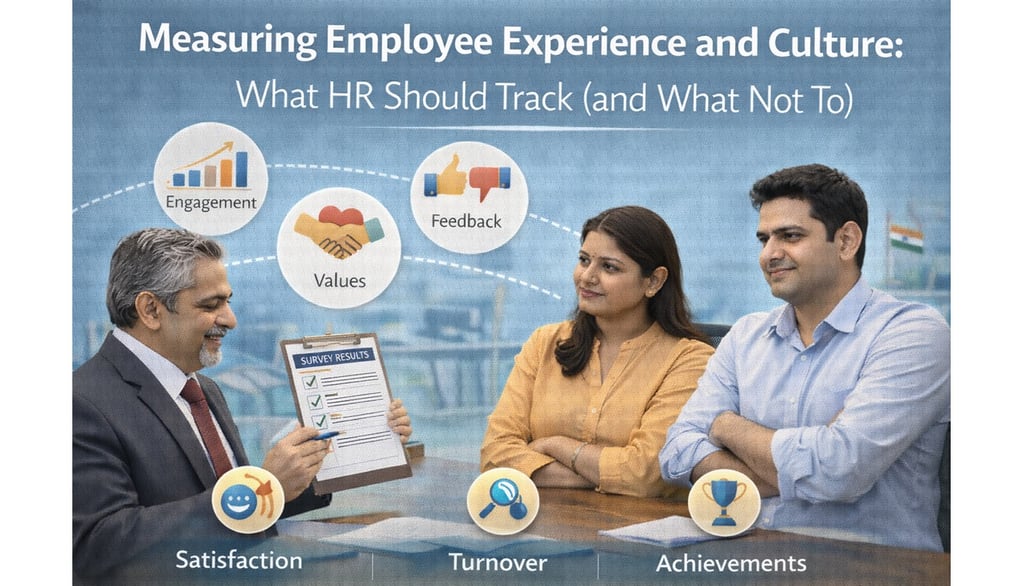
Indian organisations increasingly want to “measure culture” and “track employee experience”. While intent is positive, many HR teams end up collecting large volumes of data without clarity on purpose or usage.
Measurement should support better decisions, not create dashboards that nobody acts on. This article explains what HR should realistically track, what to avoid measuring, and how to use data responsibly in Indian workplaces.
Why Measuring Culture Is Tricky
Culture and experience are behavioural and contextual. Common challenges include:
Over-reliance on survey scores
Copying global benchmarks without local relevance
Collecting data without follow-up action
Using metrics to control rather than improve
Creating survey fatigue among employees
Measurement without trust weakens culture instead of strengthening it.
What HR Should Measure
HR should focus on indicators that reflect lived experience, such as:
Manager behaviour and quality
Fairness and consistency of decisions
Workload and work-life boundaries
Access to growth and development
Psychological safety and voice
These signals matter more than vanity metrics.
What HR Should Avoid Measuring
Not everything measurable is useful. HR should avoid:
Over-frequent pulse surveys
Tracking “happiness” scores without context
Ranking teams publicly on culture metrics
Using culture data for performance penalties
Collecting sensitive data without safeguards
Poor measurement practices erode trust quickly.
Using Data Responsibly in Indian Organisations
Responsible measurement means:
Explaining why data is collected
Protecting anonymity and confidentiality
Sharing insights, not raw scores
Closing feedback loops with visible action
Respecting cultural and organisational maturity
Trust is the foundation of any measurement effort.
HR’s Practical Role in Culture Measurement
HR must:
Define clear measurement objectives
Choose simple, meaningful metrics
Combine data with qualitative insights
Train managers to interpret data wisely
Review metrics periodically for relevance
Measurement should enable better conversations, not replace them.
Conclusion
Measuring employee experience and culture is useful only when done with intent, discipline, and empathy. Indian organisations do not need complex analytics — they need honest insights and responsible usage.
HR’s role is to ensure measurement supports trust, learning, and improvement, not control or compliance.
HR Checklist: Measuring Experience and Culture Responsibly
🗹 Define why each metric is being tracked
🗹 Focus on behaviour and experience indicators
🗹 Avoid excessive or intrusive data collection
🗹 Protect anonymity and confidentiality
🗹 Share insights and act visibly on feedback
🗹 Combine quantitative and qualitative inputs
🗹 Train managers on ethical data usage
🗹 Review and refine metrics regularly
Culture Measurement: Useful vs Problematic Metrics
Conclusion--
Effective labour law compliance depends on how well HR operations, payroll, and business processes work together. When compliance is embedded into everyday workflows, organisations reduce risk, improve accuracy, and build sustainable governance systems. HR teams that prioritise integration over isolation are better positioned to manage compliance confidently and consistently.
HireDesk India © 2026 | All Rights Reserved
"Thoughtful guidance for everyday HR"


Quick Links
Topics
Connect
_______________________________________________________________________________________________________________________________________________________________________________________
HireDesk is a free HR knowledge platform focused on practical, India-specific workplace guidance. We help HR professionals, managers, and learners navigate people practices with clarity, responsibility, and real-world relevance.