
Measuring Training Effectiveness
PERFORMANCE & DEVELOPMENT
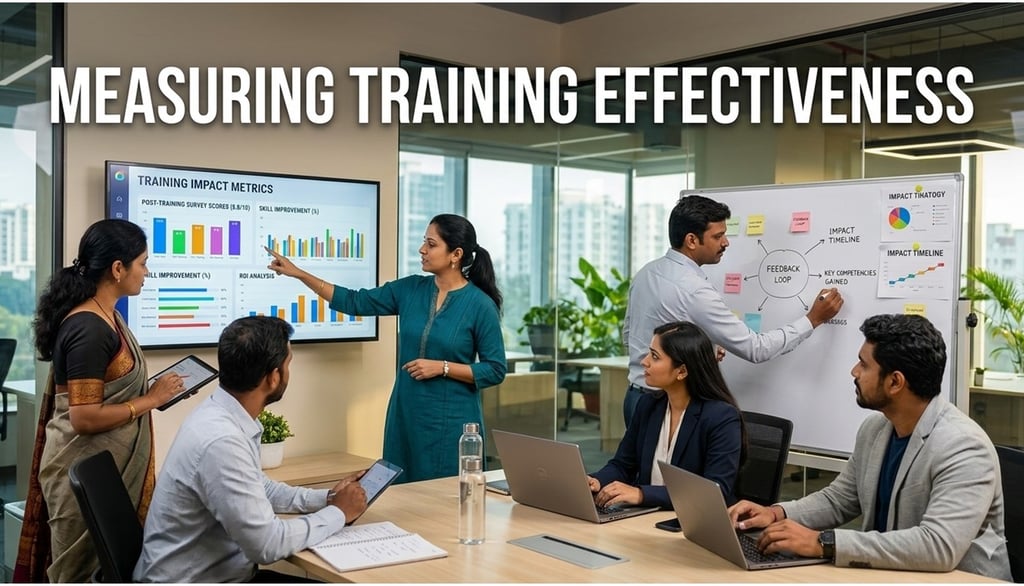
Training initiatives represent a significant investment of time, effort, and cost. Measuring training effectiveness helps organisations understand whether learning programs are delivering meaningful outcomes — not just participation or completion rates.
For HR, training effectiveness measurement ensures that learning initiatives support performance improvement, capability building, and business objectives, rather than becoming isolated activities.
Why Measuring Training Effectiveness Matters
Validates learning investments by linking training to outcomes
Improves program quality through data-driven insights
Supports performance improvement by identifying what works
Strengthens credibility of L&D with business leaders
Without measurement, organisations risk continuing programs that do not improve skills, behaviour, or performance.
What Training Effectiveness Really Means
Training effectiveness goes beyond attendance and satisfaction scores. It evaluates whether:
Employees acquired new knowledge or skills
Learning is applied on the job
Performance or behaviour improves over time
Training contributes to business or operational outcomes
Effective measurement considers both learning impact and practical application.
Key Levels of Measuring Training Effectiveness
1. Participation and Completion
Tracks attendance, enrolment, and course completion rates
Confirms that training reached the intended audience
Useful as a baseline, but not sufficient on its own
2. Learning and Knowledge Gain
Measures understanding through assessments, quizzes, or tests
Compares pre-training and post-training results
Indicates whether learning objectives were met
3. Behaviour and Application
Assesses whether employees apply learning at work
Uses manager observations, feedback, or role-based assessments
Focuses on practical skill usage rather than theoretical knowledge
4. Performance Improvement
Reviews changes in KPIs, productivity, quality, or efficiency
Links learning outcomes to role-specific performance metrics
Helps differentiate training impact from other factors
5. Business Impact
Evaluates broader outcomes such as cost reduction, customer satisfaction, or risk mitigation
Relevant for leadership, compliance, and capability-building programs
Often measured over a longer period
Sample View: Training Effectiveness Measurement Framework
Checklist: Measuring Training Effectiveness
☐ Define clear learning objectives before training begins
☐ Track participation and completion consistently
☐ Measure knowledge or skill acquisition
☐ Assess on-the-job application of learning
☐ Link training outcomes to performance indicators
☐ Review results and refine future learning programs
Common Pitfalls to Avoid
Relying only on post-training feedback surveys
Measuring effectiveness too soon after training
Ignoring manager input on behaviour change
Expecting immediate business impact for long-term capability programs
Role of HR and Managers
HR designs measurement frameworks, tools, and reporting mechanisms.
Managers observe behaviour changes and provide practical feedback.
Together, they ensure learning outcomes are tracked, validated, and improved over time.
Key Takeaway
Measuring training effectiveness helps organisations move from activity-based learning to outcome-driven development. A structured approach ensures that training investments translate into improved skills, better performance, and stronger organisational capability.
Conclusion--
Effective labour law compliance depends on how well HR operations, payroll, and business processes work together. When compliance is embedded into everyday workflows, organisations reduce risk, improve accuracy, and build sustainable governance systems. HR teams that prioritise integration over isolation are better positioned to manage compliance confidently and consistently.
HireDesk India © 2026 | All Rights Reserved
"Thoughtful guidance for everyday HR"


Quick Links
Topics
Connect
_______________________________________________________________________________________________________________________________________________________________________________________
HireDesk is a free HR knowledge platform focused on practical, India-specific workplace guidance. We help HR professionals, managers, and learners navigate people practices with clarity, responsibility, and real-world relevance.