
Minimum Wages Compliance in Factories: HR Challenges and Best Practices
INDUSTRIAL RELATIONS & FACTORY HR
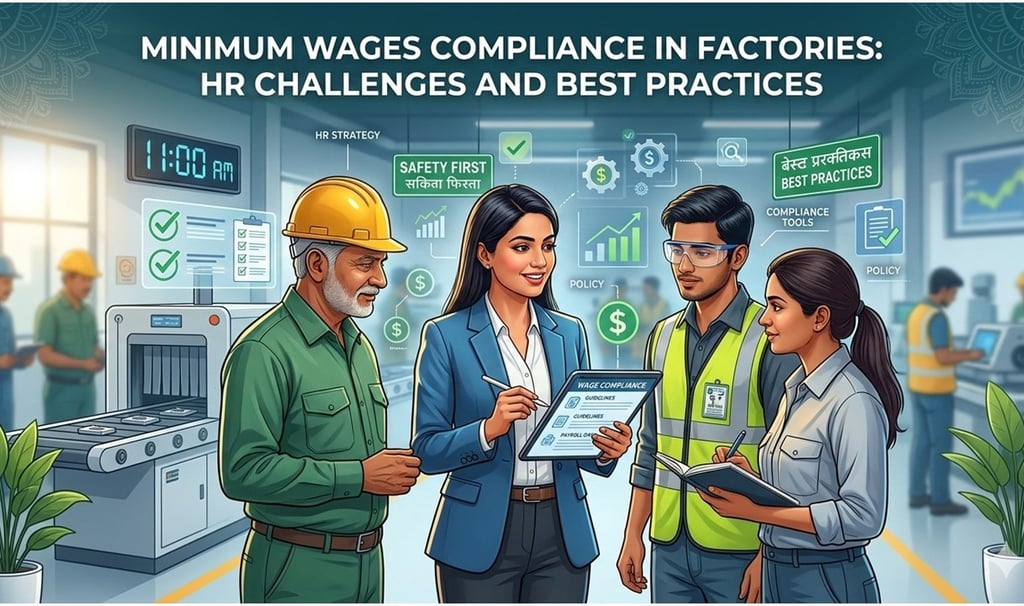
Minimum wages compliance is one of the most visible and frequently inspected areas in Indian factories. Even well-run units face penalties and disputes due to incorrect wage structuring, missed revisions, or contractor-related lapses.
For Factory HR teams, minimum wages are not just about paying the notified rate. They involve correct classification of workers, timely implementation of revisions, accurate wage components, and proper documentation.
This article explains how HR should manage minimum wages compliance practically and consistently.
Understanding Minimum Wages in the Factory Context
Minimum wages in India are notified by:
Central Government (for scheduled employments under its control)
State Governments (for most factories)
Wages vary based on:
Skill category (unskilled, semi-skilled, skilled, highly skilled)
Zone or location
Employment type
HR must track notifications carefully, as revisions occur periodically and are often retrospective.
HR Responsibilities in Wage Structuring
HR must ensure that:
Basic and DA together meet or exceed notified minimum wages
Allowances are structured lawfully
Deductions are within permissible limits
Overtime wages are calculated correctly
Improper structuring—especially excessive allowances—can result in wage shortfall findings during inspections.
Applicability to Contract Labour and Trainees
Minimum wages apply to:
Permanent workers
Contract labour
Casual and temporary workers
Exceptions are limited and must be legally justified. HR cannot rely on contractor agreements to bypass minimum wage obligations.
Common HR Challenges in Minimum Wages Compliance
Factory HR teams often struggle with:
Frequent and varied state notifications
Classification disputes
Delayed implementation of revised rates
Contractor non-compliance
Payroll system limitations
These challenges require structured processes, not ad-hoc fixes.
Best Practices for Factory HR Teams
Effective compliance requires HR to:
Maintain a wage compliance tracker
Review wage structures annually
Align contractor agreements with wage notifications
Train payroll teams and supervisors
Conduct internal wage audits
Proactive practices significantly reduce inspection risk.
Conclusion
Minimum wages compliance is a foundational obligation for Indian factories. Beyond legal compliance, fair wages influence morale, retention, and industrial harmony.
Factory HR teams must treat minimum wages as a dynamic compliance area requiring constant monitoring, documentation, and coordination with contractors and payroll teams.
🗹 HR Checklist for Minimum Wages Compliance
🗹 Track state-wise minimum wage notifications
🗹 Classify workers correctly
🗹 Ensure Basic + DA meet notified rates
🗹 Apply revisions on time
🗹 Monitor contractor wage payments
🗹 Verify overtime wage calculations
🗹 Maintain wage registers and payslips
🗹 Conduct internal wage audits
Minimum Wages Compliance – Key HR Responsibility Matrix
Conclusion--
Effective labour law compliance depends on how well HR operations, payroll, and business processes work together. When compliance is embedded into everyday workflows, organisations reduce risk, improve accuracy, and build sustainable governance systems. HR teams that prioritise integration over isolation are better positioned to manage compliance confidently and consistently.
HireDesk India © 2026 | All Rights Reserved
"Thoughtful guidance for everyday HR"


Quick Links
Topics
Connect
_______________________________________________________________________________________________________________________________________________________________________________________
HireDesk is a free HR knowledge platform focused on practical, India-specific workplace guidance. We help HR professionals, managers, and learners navigate people practices with clarity, responsibility, and real-world relevance.