
Monthly Payroll Processing Checklist for HR
PAYROLL, PF & BENEFITS
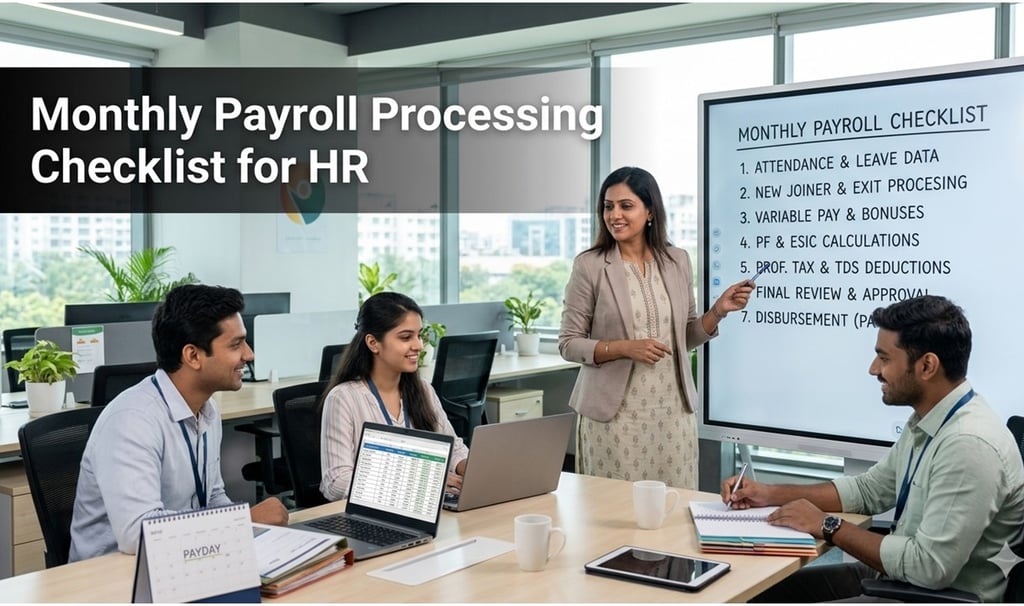
Monthly payroll processing is a recurring responsibility that requires precision, coordination, and timely execution. Even minor gaps in data or approvals can lead to errors that affect employee trust and statutory compliance. For HR teams, a structured payroll checklist helps ensure consistency while reducing last-minute corrections and escalations.
This article outlines a practical, step-by-step payroll processing checklist that HR professionals can use each month to manage payroll accurately and confidently.
Why a Structured Payroll Checklist Matters
Payroll involves multiple inputs from HR, operations, and sometimes external vendors. Without a standard checklist, teams often rely on memory or informal practices, increasing the risk of errors.
A clear payroll checklist helps HR:
Ensure all required inputs are captured on time
Maintain consistency across payroll cycles
Reduce dependency on individuals
Improve coordination with payroll and finance teams
Consistency is the foundation of payroll reliability.
Pre-Payroll Preparation
Before payroll processing begins, HR must ensure that all employee-related data is complete and validated.
Key preparation steps include:
Finalising attendance and leave data
Verifying new joiner details and documentation
Confirming exits, settlements, and recoveries
Reviewing salary revisions or role changes
Errors at this stage often cascade into payroll discrepancies.
Payroll Processing and Validation
Once data inputs are finalised, payroll calculations must be processed carefully and reviewed for accuracy.
HR should ensure:
Salary components are calculated as per policy
Statutory deductions and contributions are applied correctly
Reimbursements and variable pay are validated
Payroll summaries are reviewed before finalisation
A review step is critical—even when payroll is vendor-managed.
Post-Payroll Activities
Payroll responsibilities continue even after salaries are credited.
Post-payroll tasks include:
Sharing payslips with employees
Addressing payroll-related queries
Ensuring statutory remittances are completed on time
Updating payroll and compliance records
Closing the payroll cycle properly reduces follow-up issues.
Monthly Payroll Processing Checklist for HR
Use this checklist to guide each payroll cycle:
Pre-Payroll
☐ Attendance and leave data finalised
☐ New joiners added with correct salary details
☐ Exits and recoveries confirmed
☐ Salary changes approved and updated
Payroll Processing
☐ Payroll calculations reviewed
☐ Statutory deductions applied correctly
☐ Variances from previous month analysed
☐ Payroll approved before release
Post-Payroll
☐ Salaries credited as per schedule
☐ Payslips issued to employees
☐ Statutory remittances and filings completed
☐ Payroll records archived
Common Payroll Processing Mistakes to Avoid
HR teams should be cautious of:
Rushing payroll due to delayed inputs
Skipping validation steps
Ignoring minor discrepancies
Over-relying on vendors without review
Most payroll errors are preventable with discipline and planning.
Conclusion
A well-structured payroll checklist helps HR manage monthly payroll cycles with accuracy and confidence. By standardising preparation, processing, and closure activities, HR teams can minimise errors, maintain compliance, and strengthen employee trust in payroll outcomes.
Conclusion--
Effective labour law compliance depends on how well HR operations, payroll, and business processes work together. When compliance is embedded into everyday workflows, organisations reduce risk, improve accuracy, and build sustainable governance systems. HR teams that prioritise integration over isolation are better positioned to manage compliance confidently and consistently.
Related Articles
HireDesk India © 2026 | All Rights Reserved
"Thoughtful guidance for everyday HR"


Quick Links
Topics
Connect
_______________________________________________________________________________________________________________________________________________________________________________________
HireDesk is a free HR knowledge platform focused on practical, India-specific workplace guidance. We help HR professionals, managers, and learners navigate people practices with clarity, responsibility, and real-world relevance.