
New Social Security Code: What HR Should Prepare For
COMPLIANCE & LABOUR LAWS
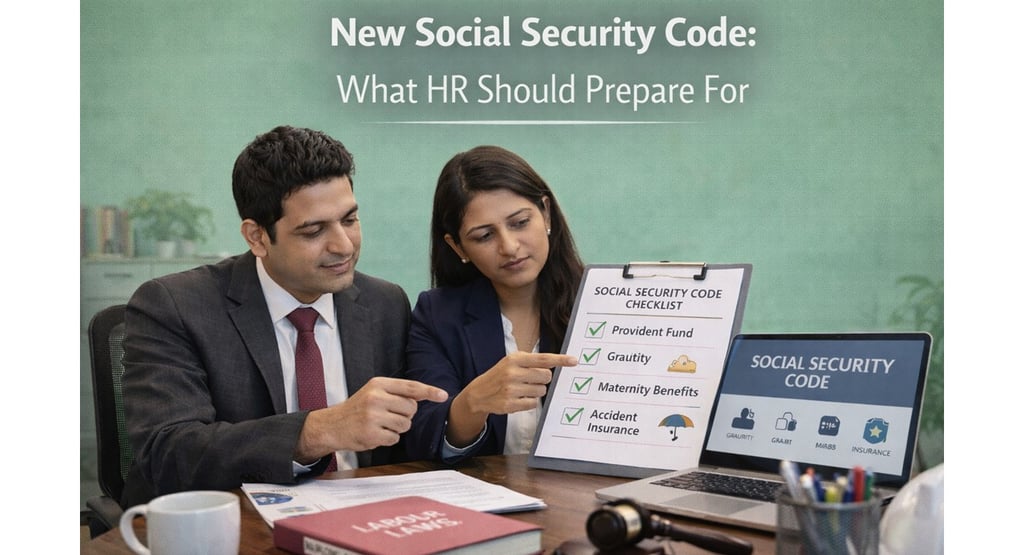
The Code on Social Security, 2020 is one of the four new labour codes intended to consolidate and modernise India’s social security framework. While the Code has not yet been fully implemented, it represents a significant shift in how social security coverage, contributions, and employer responsibilities may operate in the future.
For HR teams, the key challenge is not immediate compliance, but readiness. Organisations that wait for notification without internal preparation are likely to face confusion, employee concerns, and operational disruption once the Code becomes effective.
This article focuses on what HR should start preparing for, rather than speculating on dates or final rules.
What the Social Security Code Seeks to Change
The Code aims to:
Consolidate multiple laws (PF, ESIC, Gratuity, Maternity Benefit, etc.)
Expand social security coverage to gig, platform, and unorganised workers
Enable broader wage definitions for contribution calculations
Introduce greater centralised digital compliance
While the intent is simplification, execution will require significant HR process realignment.
Likely Impact Areas for HR Teams
1. Expanded Employee Coverage
HR should be prepared for:
Inclusion of gig and platform workers in social security frameworks
Reduced scope for exclusion based on employment type
Increased scrutiny of contract and consultant arrangements
This will require clear workforce classification and documentation.
2. Wage Definition Changes
The Code proposes a standardised wage definition that may:
Limit excessive salary structuring
Increase contribution bases for PF, ESIC, and Gratuity
Require redesign of CTC structures
HR teams will need to balance cost impact, employee communication, and compliance.
3. Unified Registration and Reporting
The Code emphasises:
Centralised electronic registration
Common identifiers for establishments and workers
Integrated filings across social security schemes
This will place greater importance on data accuracy and system readiness.
HR Preparation Areas (Even Before Notification)
HR should not wait passively. Practical preparation includes:
Reviewing current wage structures against proposed definitions
Auditing contract labour and gig arrangements
Mapping existing benefits and statutory contributions
Strengthening payroll–HR data governance
Early preparation reduces panic-driven compliance fixes later.
Managing Employee Communication and Expectations
Once notified, employees may expect:
Immediate changes in take-home pay
Expanded benefits coverage
Clarification on deductions and eligibility
HR must prepare clear, factual communication, avoiding speculation while explaining intent and timelines realistically.
Common Misconceptions HR Should Avoid
Assuming the Code will not materially impact existing setups
Treating it as a purely legal or payroll issue
Waiting for consultants before internal assessment
Communicating unconfirmed changes to employees
The Social Security Code is as much an HR governance change as a legal reform.
Conclusion
The New Social Security Code is not just a future compliance obligation—it is a signal of how India’s employment and social protection landscape is evolving.
For HR teams, success will depend on early assessment, structured preparation, and disciplined execution, rather than last-minute reaction. Prepared organisations will transition smoothly when the Code is enforced.
HR Readiness Action Checklist: Social Security Code
🗹 Track notifications and rules under the Social Security Code
🗹 Review wage structures against proposed definitions
🗹 Audit contract, gig, and platform workforce arrangements
🗹 Assess cost impact of expanded contribution bases
🗹 Strengthen HR–Payroll data accuracy and controls
🗹 Prepare employee communication frameworks
🗹 Update compliance calendars and internal SOPs
🗹 Engage leadership early on anticipated changes
Social Security Code: HR Preparation Focus Areas
Conclusion--
Effective labour law compliance depends on how well HR operations, payroll, and business processes work together. When compliance is embedded into everyday workflows, organisations reduce risk, improve accuracy, and build sustainable governance systems. HR teams that prioritise integration over isolation are better positioned to manage compliance confidently and consistently.
HireDesk India © 2026 | All Rights Reserved
"Thoughtful guidance for everyday HR"


Quick Links
Topics
Connect
_______________________________________________________________________________________________________________________________________________________________________________________
HireDesk is a free HR knowledge platform focused on practical, India-specific workplace guidance. We help HR professionals, managers, and learners navigate people practices with clarity, responsibility, and real-world relevance.