
Onboarding Platforms and Automation: Improving New Hire Experience
HR TECH & ANALYTICS
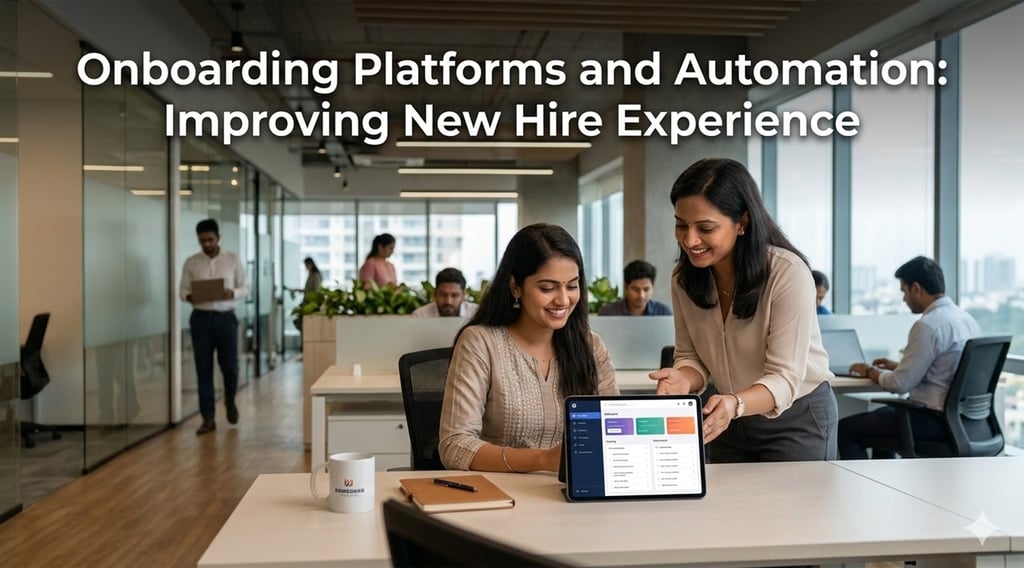
Onboarding plays a critical role in shaping a new employee’s early experience with the organisation. A structured and well-managed onboarding process helps new hires settle in faster, understand expectations, and feel connected from day one.
For Indian organisations handling multiple locations, diverse roles, or high-volume hiring, onboarding platforms and automation help bring consistency, reduce delays, and improve the overall new hire experience.
What Are Onboarding Platforms?
Onboarding platforms are digital systems designed to manage and automate onboarding activities such as:
Document collection and verification
Policy communication and acknowledgements
Role and team introductions
Task allocation and completion tracking
System and access provisioning
These platforms ensure that onboarding activities are organised, timely, and auditable.
Why Onboarding Automation Matters in Indian Organisations
In many Indian organisations, onboarding is still manual and fragmented, leading to:
Delays in documentation and system access
Inconsistent communication across locations
Poor first impressions for new hires
Increased HR follow-ups
Automation helps standardise onboarding while allowing HR teams to focus on engagement and support rather than paperwork.
Key Benefits of Onboarding Platforms
1. Consistent New Hire Experience
Automated workflows ensure that every new employee receives the same information, documents, and tasks, regardless of location or function.
2. Faster Productivity
Early completion of documentation, training modules, and system access enables new hires to become productive sooner.
3. Reduced HR Workload
Automation reduces repetitive follow-ups and manual tracking, allowing HR to focus on relationship-building and culture integration.
4. Better Compliance and Documentation
Digital records help maintain audit-ready documentation and policy acknowledgements.
5. Improved Engagement
Structured communication and welcome activities help new hires feel supported and connected.
Typical Onboarding Activities Supported by Platforms
Onboarding platforms commonly manage:
Offer acceptance and joining formalities
Personal data and document submission
Policy reading and acknowledgements
Induction schedules and training assignments
Manager and buddy introductions
The scope can be tailored based on organisational needs.
HR’s Role in Successful Onboarding Automation
HR plays a vital role in ensuring onboarding platforms are effective:
Defining onboarding stages and ownership
Ensuring content relevance and clarity
Coordinating with IT and managers
Monitoring completion and follow-ups
Collecting feedback from new hires
Technology supports onboarding, but HR ensures it remains a human experience.
Common Challenges in Onboarding Automation
HR teams may encounter challenges such as:
Overloading new hires with information
Poor coordination between HR, IT, and managers
Low completion of onboarding tasks
Treating onboarding as a one-day activity
These issues can be addressed through phased onboarding and clear accountability.
Best Practices for Improving New Hire Experience
Start onboarding before the joining date
Spread information over the first few weeks
Include manager and team interactions
Keep communication clear and friendly
Use automation for tracking, not replacing personal interaction
A balanced approach leads to better engagement and retention.
Measuring Onboarding Effectiveness
HR can assess onboarding success through:
Onboarding task completion rates
Time-to-productivity
New hire feedback
Early attrition trends
Continuous review helps improve the onboarding experience.
Conclusion
Onboarding platforms and automation play an important role in improving the new hire experience in Indian organisations. When designed thoughtfully, they bring consistency, efficiency, and compliance while supporting engagement and early productivity.
Effective onboarding combines structured technology with meaningful human interaction, ensuring new employees feel welcomed and prepared.
Checklist: Onboarding Platforms and Automation: Improving New Hire Experience
🗹 Automate administrative onboarding tasks to reduce manual effort.
🗹 Provide clear pre-joining communication and documentation.
🗹 Create structured digital learning for role orientation.
🗹 Integrate onboarding data with HRMS and performance systems.
🗹 Personalise the onboarding journey based on role and location.
🗹 Ensure managers are trained to support automated onboarding.
🗹 Track completion, feedback, and early engagement metrics.
Conclusion--
Effective labour law compliance depends on how well HR operations, payroll, and business processes work together. When compliance is embedded into everyday workflows, organisations reduce risk, improve accuracy, and build sustainable governance systems. HR teams that prioritise integration over isolation are better positioned to manage compliance confidently and consistently.
HireDesk India © 2026 | All Rights Reserved
"Thoughtful guidance for everyday HR"


Quick Links
Topics
Connect
_______________________________________________________________________________________________________________________________________________________________________________________
HireDesk is a free HR knowledge platform focused on practical, India-specific workplace guidance. We help HR professionals, managers, and learners navigate people practices with clarity, responsibility, and real-world relevance.