
Overtime, Working Hours and Shift Compliance in Factories
INDUSTRIAL RELATIONS & FACTORY HR

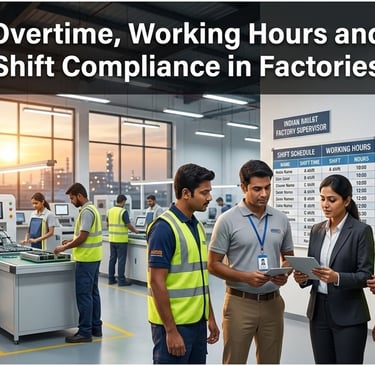
Working hours, overtime, and shift management are daily operational realities in Indian factories. Production targets, seasonal demand, breakdowns, and manpower shortages often push factories towards extended hours and additional shifts.
However, working time violations are among the most frequently observed non-compliances during factory inspections. For Factory HR teams, the challenge lies in balancing production needs with statutory limits, worker health, and proper documentation.
This article explains how HR must manage working hours, overtime, and shifts lawfully and practically.
Statutory Limits on Working Hours
Under the Factories Act, key limits include:
9 hours per day
48 hours per week
Mandatory weekly holiday
Daily spread-over limits (including rest intervals)
Any deviation requires overtime compensation and, in some cases, approval from authorities.
Overtime: Legal Requirements and HR Oversight
Overtime must be:
Voluntary, not forced
Paid at twice the ordinary rate of wages
Recorded accurately in overtime registers
Limited to statutory ceilings
HR must monitor overtime closely, as excessive overtime often attracts scrutiny and indicates manpower planning gaps.
Shift Scheduling and Night Work
Factory HR is responsible for:
Designing shift rosters within legal limits
Ensuring rest intervals and weekly offs
Managing night shifts, especially for women workers (where permitted by state rules)
Communicating shift changes in advance
Poor shift planning directly impacts safety, morale, and compliance.
Weekly Offs and Compensatory Holidays
Factories must provide:
One weekly holiday
Compensatory holidays when workers are required to work on weekly offs
HR must track eligibility, accumulation, and utilisation properly.
Record-Keeping and Documentation
HR must maintain:
Attendance and muster rolls
Overtime registers
Shift rosters
Wage and overtime payment records
Incomplete or inconsistent records are treated as violations even if payments are correct.
Common Compliance Risks in Factories
HR teams often face issues such as:
Exceeding daily or weekly limits
Improper overtime calculation
Missing approvals for extended hours
Poor shift communication
Fatigue-related safety incidents
These risks increase when HR is not closely integrated with production planning.
Conclusion
Overtime and shift compliance is not just a legal requirement—it is a workforce sustainability issue. Excessive hours lead to fatigue, accidents, absenteeism, and industrial relations problems.
Factory HR must enforce statutory limits firmly while working with operations to plan manpower realistically. Structured scheduling, disciplined record-keeping, and proactive monitoring ensure compliance without compromising productivity.
🗹 Factory HR Checklist for Working Hours and Overtime
🗹 Monitor daily and weekly working hour limits
🗹 Pay overtime at double rate
🗹 Obtain approvals where required
🗹 Plan shifts with adequate rest intervals
🗹 Track weekly offs and compensatory holidays
🗹 Maintain accurate attendance and OT registers
🗹 Coordinate shift planning with production teams
🗹 Review overtime trends periodically
Working Hours & Overtime – Key HR Responsibility Matrix
Conclusion--
Effective labour law compliance depends on how well HR operations, payroll, and business processes work together. When compliance is embedded into everyday workflows, organisations reduce risk, improve accuracy, and build sustainable governance systems. HR teams that prioritise integration over isolation are better positioned to manage compliance confidently and consistently.
HireDesk India © 2026 | All Rights Reserved
"Thoughtful guidance for everyday HR"


Quick Links
Topics
Connect
_______________________________________________________________________________________________________________________________________________________________________________________
HireDesk is a free HR knowledge platform focused on practical, India-specific workplace guidance. We help HR professionals, managers, and learners navigate people practices with clarity, responsibility, and real-world relevance.