
Payroll Compliance Calendar: Monthly, Quarterly, and Annual Obligations
PAYROLL, PF & BENEFITS
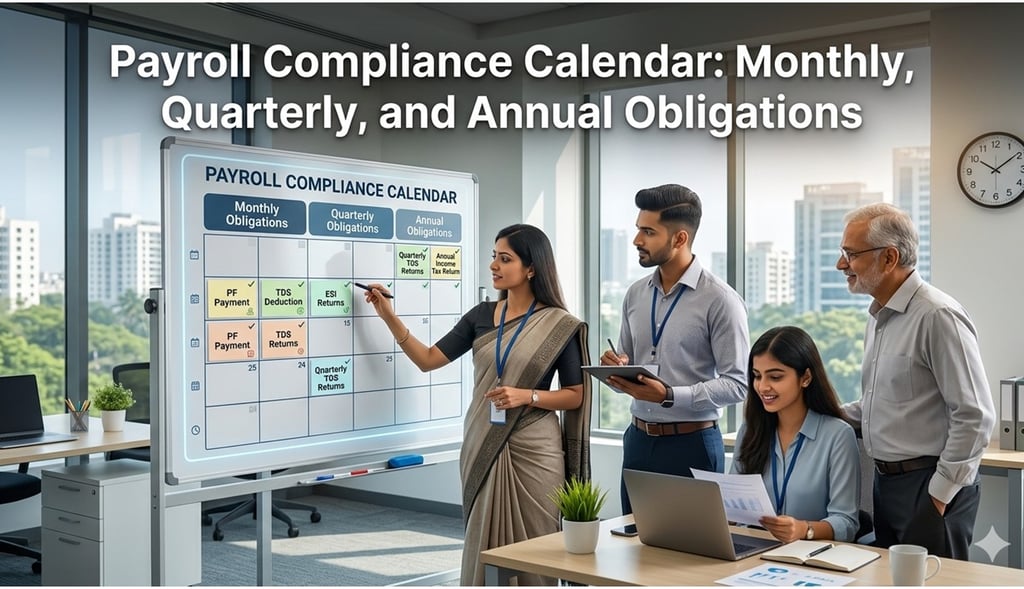
Payroll compliance is not a one-time activity—it is a continuous cycle of statutory filings, deposits, and reporting. Missing a single deadline can lead to penalties, interest, and audit exposure. A clearly defined payroll compliance calendar helps HR teams stay organised, predictable, and compliant throughout the year.
This article outlines key payroll-related compliance obligations in India and how HR can manage them systematically.
Why a Payroll Compliance Calendar Is Essential
A structured calendar helps HR:
Track statutory deadlines accurately
Avoid last-minute errors and penalties
Coordinate with finance and consultants
Prepare for inspections and audits
Maintain consistent payroll governance
Monthly Payroll Compliance Obligations
Typically due every month:
Provident Fund (PF) contribution deposit
ESIC contribution deposit
Professional Tax (as applicable by state)
TDS deduction and challan payment
Issuance of payslips
Attendance and wage register updates
Timely deposits are as important as correct calculations.
Quarterly Payroll Compliance Obligations
Common quarterly requirements include:
TDS return filing
Reconciliation of tax deductions
Review of statutory registers and returns
Internal payroll compliance checks
Quarterly reviews help catch issues early.
Annual Payroll Compliance Obligations
Annual activities usually include:
Form 16 issuance to employees
Annual PF and ESIC returns (where applicable)
Bonus calculations and disbursement
Gratuity liability review
Payroll audit preparation
These activities require advance planning and accurate records.
Payroll Compliance Calendar Checklist
☐ Maintain a master compliance calendar
☐ Assign clear ownership for each filing
☐ Track statutory updates regularly
☐ Maintain challans and acknowledgements
☐ Conduct periodic compliance reviews
Common Compliance Risks HR Should Watch
Missing revised statutory due dates
Inconsistent payroll data across months
Dependence on individuals instead of systems
Poor coordination between HR, finance, and vendors
Conclusion
A payroll compliance calendar brings discipline and predictability to payroll operations. When HR manages compliance proactively, payroll becomes a controlled process rather than a reactive firefighting exercise.
Conclusion--
Effective labour law compliance depends on how well HR operations, payroll, and business processes work together. When compliance is embedded into everyday workflows, organisations reduce risk, improve accuracy, and build sustainable governance systems. HR teams that prioritise integration over isolation are better positioned to manage compliance confidently and consistently.
Related Articles
HireDesk India © 2026 | All Rights Reserved
"Thoughtful guidance for everyday HR"


Quick Links
Topics
Connect
_______________________________________________________________________________________________________________________________________________________________________________________
HireDesk is a free HR knowledge platform focused on practical, India-specific workplace guidance. We help HR professionals, managers, and learners navigate people practices with clarity, responsibility, and real-world relevance.