
People Analytics for Strategic Decision-Making in Indian Organisations
HR TECH & ANALYTICS
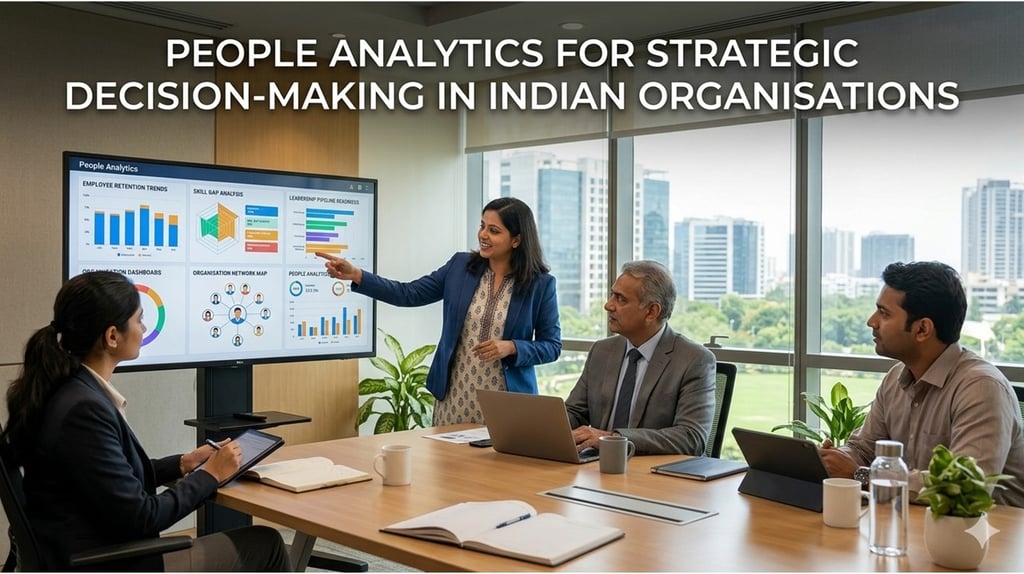
As Indian organisations scale, diversify, and compete in dynamic markets, HR decisions increasingly need to be evidence-based rather than intuition-driven. People analytics enables HR and business leaders to use workforce data to support strategic decisions related to talent, productivity, cost, and capability building.
Unlike operational HR reporting, people analytics focuses on insights that influence long-term organisational outcomes. When applied thoughtfully, it strengthens HR’s role as a strategic partner to business leadership.
What Is People Analytics?
People analytics refers to the systematic use of employee and workforce data to understand patterns, predict outcomes, and support strategic decision-making.
It goes beyond tracking metrics to answering questions such as:
Which roles and skills are critical for future growth?
What workforce risks could impact business continuity?
How do people practices influence productivity and retention?
People analytics integrates data from HR systems, business performance data, and external benchmarks to provide meaningful insights.
Strategic Use Cases of People Analytics
Workforce Planning and Capability Building
Identify future skill requirements
Forecast workforce demand and supply
Support succession planning and leadership development
Talent Acquisition Strategy
Analyse hiring effectiveness and time-to-productivity
Identify sources of high-performing talent
Optimise recruitment investments
Performance and Productivity Insights
Understand performance trends across roles and functions
Link people outcomes with business performance indicators
Identify systemic productivity gaps
Retention and Engagement Strategy
Predict attrition risks
Identify drivers of disengagement
Design targeted retention interventions
Cost and Resource Optimisation
Analyse workforce cost structures
Evaluate ROI of talent investments
Support budgeting and manpower decisions
People Analytics in the Indian Context
Indian organisations present unique analytics challenges and opportunities:
Large and diverse workforce populations
Varying levels of digital maturity across organisations
Complex labour laws and regional variations
Cultural sensitivity around data usage
People analytics in India must focus on relevance, practicality, and ethical use of data, rather than advanced models alone.
Analytics Maturity Levels
Descriptive: What is happening in the workforce?
Diagnostic: Why is it happening?
Predictive: What is likely to happen next?
Prescriptive: What actions should be taken?
Most Indian organisations are transitioning from descriptive to diagnostic analytics. Strategic value increases as maturity advances.
Role of HR in Strategic People Analytics
HR plays a critical role in ensuring analytics drives decisions, not just dashboards:
Define business-aligned people questions
Ensure data accuracy and consistency
Translate insights into business-friendly language
Collaborate with business leaders on action planning
Maintain ethical standards and data confidentiality
HR’s ability to interpret and communicate insights determines the success of people analytics initiatives.
Challenges in Strategic People Analytics
Fragmented data across systems
Limited analytics capability within HR teams
Resistance to data-based decision-making
Overemphasis on metrics without context
Data privacy and employee trust concerns
Addressing these challenges requires governance, capability building, and leadership alignment.
Conclusion
People analytics empowers Indian organisations to make strategic, informed, and forward-looking people decisions. When HR uses data responsibly and focuses on actionable insights, people analytics strengthens workforce planning, improves talent outcomes, and aligns HR initiatives with business strategy.
The true value of people analytics lies not in technology, but in how insights are applied to shape organisational decisions.
Checklist: Using People Analytics for Strategic Decision-Making
🗹 Identify strategic business questions before selecting metrics.
🗹 Integrate workforce data with business performance indicators.
🗹 Ensure data accuracy, consistency, and governance.
🗹 Start with simple, high-impact analytics use cases.
🗹 Interpret insights in organisational and cultural context.
🗹 Engage business leaders in insight validation and action planning.
🗹 Communicate findings in clear, non-technical language.
🗹 Track outcomes of decisions driven by analytics.
🗹 Maintain ethical data usage and employee confidentiality.
🗹 Build HR capability in analytics and data interpretation.
Sample Table: Strategic People Analytics Use Cases
Conclusion--
Effective labour law compliance depends on how well HR operations, payroll, and business processes work together. When compliance is embedded into everyday workflows, organisations reduce risk, improve accuracy, and build sustainable governance systems. HR teams that prioritise integration over isolation are better positioned to manage compliance confidently and consistently.
HireDesk India © 2026 | All Rights Reserved
"Thoughtful guidance for everyday HR"


Quick Links
Topics
Connect
_______________________________________________________________________________________________________________________________________________________________________________________
HireDesk is a free HR knowledge platform focused on practical, India-specific workplace guidance. We help HR professionals, managers, and learners navigate people practices with clarity, responsibility, and real-world relevance.