
Performance & Workforce Analytics: Driving Data-Driven HR Decisions in Indian Organisations
HR TECH & ANALYTICS
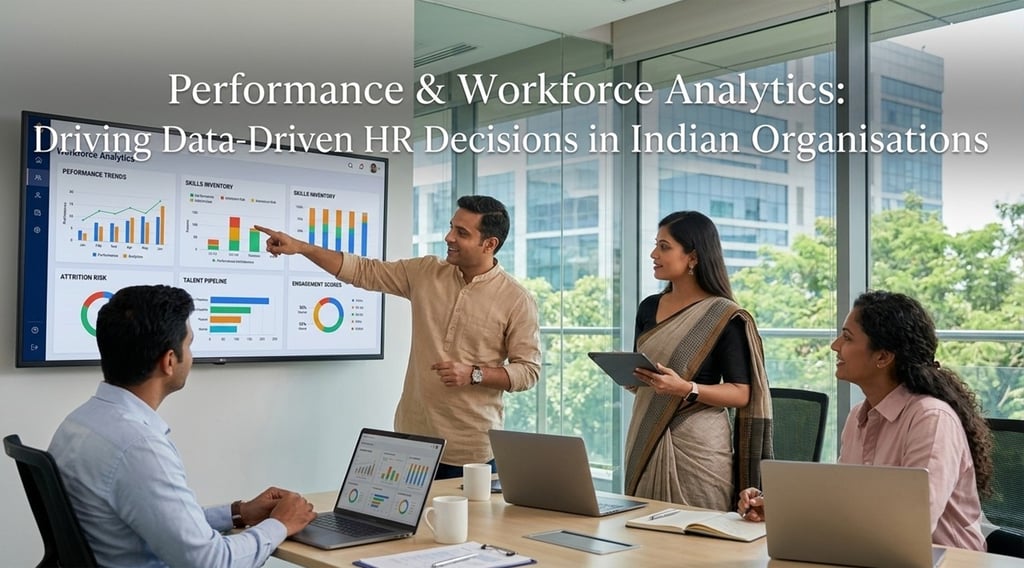
Modern HR teams are increasingly relying on performance and workforce analytics to make informed decisions about people, roles, and organisational strategy. Instead of relying solely on gut feeling or historical records, analytics enables HR to identify trends, predict outcomes, and optimise workforce potential.
In Indian organisations, where workforce diversity, scale, and regional differences are significant, performance and workforce analytics help HR balance operational realities with strategic planning.
Understanding Performance and Workforce Analytics
Performance Analytics: Focuses on employee performance data to understand productivity, engagement, skill utilisation, and contribution to business goals.
Workforce Analytics: Examines broader workforce patterns, including headcount, attrition, skills distribution, cost, and capacity planning.
While distinct, the two are interlinked: performance insights often inform workforce decisions, and workforce trends impact performance outcomes.
Key Applications in Indian Organisations
Talent Identification and Development
Spot high performers and high-potential employees
Identify skill gaps and training needs
Align career development plans with organisational priorities
Attrition and Retention Analysis
Predict roles or teams with high attrition risk
Understand factors driving turnover
Develop targeted retention strategies
Workforce Planning and Optimisation
Forecast hiring needs and headcount requirements
Evaluate capacity versus business demand
Identify redundant roles or skill shortages
Compensation and Reward Alignment
Link performance metrics to reward strategies
Ensure fairness and consistency in promotions and incentives
Align remuneration with organisational and individual outcomes
Types of Data Used
Indian organisations typically rely on a combination of sources:
HRMS/HRIS systems for employee demographics, role, and salary data
Performance management systems for ratings, goals, and appraisals
Learning and development records
Attendance, leave, and productivity data
Employee surveys and engagement feedback
Data quality and consistency are critical for meaningful insights.
Analytics Approaches
Descriptive Analytics: What happened? (e.g., attrition trends, performance scores)
Diagnostic Analytics: Why did it happen? (e.g., underperformance linked to skill gaps)
Predictive Analytics: What is likely to happen? (e.g., forecasting high-risk turnover or future skill needs)
Prescriptive Analytics: What actions should we take? (e.g., targeted training, succession planning)
Challenges in Implementing Analytics
Poor data quality or missing records
Lack of integration across HR systems
Limited analytics capability within HR teams
Resistance to data-driven decisions from line managers
Misinterpretation of metrics without context
A phased, practical approach is often more effective than attempting enterprise-wide analytics at once.
HR’s Role in Driving Analytics Success
Define key metrics aligned with business priorities
Validate data for accuracy and relevance
Translate insights into actionable HR interventions
Communicate findings in simple, non-technical language
Ensure ethical and responsible data usage
HR acts as the bridge between analytics tools, business leaders, and employees.
Conclusion
Performance and workforce analytics provide Indian HR teams with powerful tools to understand trends, predict outcomes, and drive strategic workforce decisions. The focus should always be on relevance, simplicity, and actionable insights, rather than chasing sophisticated tools without organisational readiness.
When applied responsibly, analytics transforms HR from a reactive administrative function into a proactive business partner.
Checklist: Using Performance & Workforce Analytics Effectively
🗹 Identify critical workforce and performance metrics relevant to business goals.
🗹 Ensure data accuracy and consistency across HR systems.
🗹 Combine performance data with workforce trends for holistic insights.
🗹 Start with simple, actionable analytics before moving to complex models.
🗹 Interpret metrics in the context of organisational culture and roles.
🗹 Engage managers to validate insights and implement interventions.
🗹 Monitor analytics outcomes regularly and refine approaches.
🗹 Maintain transparency and ethical use of employee data.
🗹 Focus on outcomes and actions, not just reports.
🗹 Build HR capability to understand and apply analytics insights.
Sample Table: Workforce and Performance Analytics Metrics
Conclusion--
Effective labour law compliance depends on how well HR operations, payroll, and business processes work together. When compliance is embedded into everyday workflows, organisations reduce risk, improve accuracy, and build sustainable governance systems. HR teams that prioritise integration over isolation are better positioned to manage compliance confidently and consistently.
HireDesk India © 2026 | All Rights Reserved
"Thoughtful guidance for everyday HR"


Quick Links
Topics
Connect
_______________________________________________________________________________________________________________________________________________________________________________________
HireDesk is a free HR knowledge platform focused on practical, India-specific workplace guidance. We help HR professionals, managers, and learners navigate people practices with clarity, responsibility, and real-world relevance.