
Performance-Based Rewards and Recognition
PERFORMANCE & DEVELOPMENT
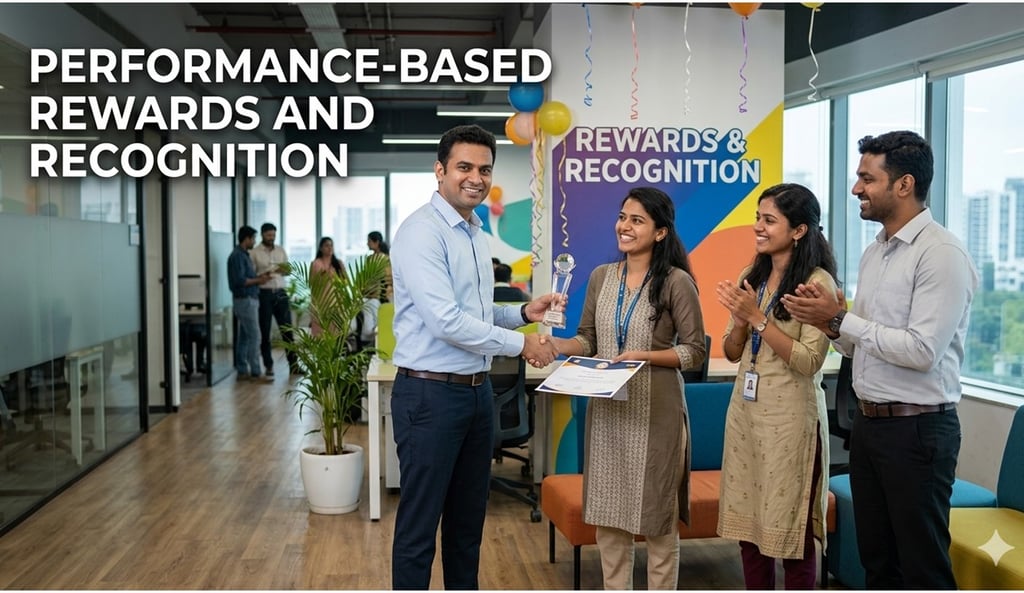
Rewards and recognition are critical to building a high-performance culture. They not only motivate employees but also reinforce behaviours and outcomes that align with organisational goals. In Indian organisations, effective reward systems combine monetary and non-monetary incentives, fostering engagement, retention, and long-term capability development.
A thoughtfully designed system ensures that employees understand what is valued, and managers have clear guidelines for fair recognition. Linking rewards to measurable performance outcomes strengthens accountability and transparency.
Key Principles of Performance-Based Rewards
Alignment with Organisational Goals
Rewards must reflect contributions that advance business priorities. For example, a sales team achieving quarterly revenue targets may receive performance-linked incentives, while innovation awards can recognise process improvements.Fairness and Transparency
Clear criteria and consistent application of rewards prevent perceptions of bias. Employees should understand why and how rewards are granted.Timeliness and Relevance
Prompt recognition is more impactful. Delayed rewards can reduce motivation and dilute the connection between performance and recognition.Diversity of Rewards
Include monetary incentives, non-monetary recognition, career development opportunities, and experiential rewards. A mix ensures inclusivity and caters to different employee motivators.Integration with Performance Management
Rewards should be informed by structured performance evaluations, such as goal achievement, competency development, and behavioural assessments.Sustainability and Scalability
Reward programs should be financially viable, scalable across the organisation, and adaptable to changing business needs.
Light Checklist: Designing a Reward and Recognition Program
☐ Reward criteria are linked to both organisational objectives and individual performance
☐ Performance metrics are measurable and clearly communicated
☐ Managers are trained to provide timely, specific, and constructive recognition
☐ Rewards include a balanced mix of monetary and non-monetary incentives
☐ Recognition programs are visible and encourage peer acknowledgment
☐ Learning and development opportunities are integrated as part of rewards
☐ Programs are reviewed periodically for fairness, effectiveness, and ROI
☐ Employee feedback is gathered to improve the reward system
Sample Table: Types of Performance-Based Rewards
Best Practices for Implementation
Transparency: Make the rules of reward programs clear to all employees.
Consistency: Apply rewards fairly across teams and locations.
Manager Enablement: Train managers to give meaningful recognition.
Integration: Connect recognition programs to performance management, L&D, and career development.
Flexibility: Update reward programs to reflect changing business priorities, team needs, and employee preferences.
Closing Note
A well-designed performance-based rewards and recognition system strengthens motivation, engagement, and organisational culture. In Indian organisations, balancing monetary, non-monetary, experiential, and developmental rewards ensures inclusivity and encourages employees to achieve their best while aligning with strategic goals.
Conclusion--
Effective labour law compliance depends on how well HR operations, payroll, and business processes work together. When compliance is embedded into everyday workflows, organisations reduce risk, improve accuracy, and build sustainable governance systems. HR teams that prioritise integration over isolation are better positioned to manage compliance confidently and consistently.
HireDesk India © 2026 | All Rights Reserved
"Thoughtful guidance for everyday HR"


Quick Links
Topics
Connect
_______________________________________________________________________________________________________________________________________________________________________________________
HireDesk is a free HR knowledge platform focused on practical, India-specific workplace guidance. We help HR professionals, managers, and learners navigate people practices with clarity, responsibility, and real-world relevance.