
Performance Calibration: Ensuring Consistency Across Teams
PERFORMANCE & DEVELOPMENT
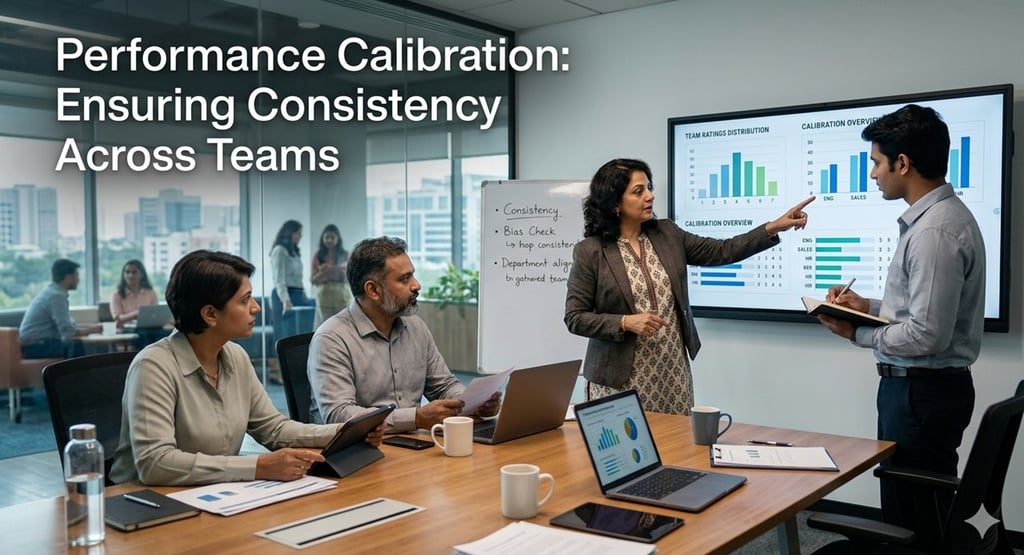
Performance calibration is a structured process used to review, compare, and align performance ratings across teams and managers. As organisations grow, differences in managerial judgement can lead to inconsistent ratings, even when performance levels are similar.
This article explains how performance calibration works, why it matters, and how HR can enable fair, consistent, and credible performance outcomes across the organisation.
Why Performance Calibration Is Important
Without calibration, organisations often experience:
Rating inflation in some teams and deflation in others
Perceived unfairness among employees
Weak linkage between performance outcomes and rewards or career decisions
Reduced confidence in the appraisal system
Calibration helps ensure that performance standards are applied consistently, regardless of team or manager.
What Performance Calibration Is (and Is Not)
Calibration is:
A comparison of performance outcomes across teams
A forum to discuss evidence and context
A governance step to improve consistency
Calibration is not:
A forced ranking exercise
A negotiation forum for managers
A mechanism to downgrade ratings arbitrarily
Clear intent is essential to maintain trust in the process.
Key Elements of an Effective Calibration Process
1. Clear Performance Criteria
Use common goals, competencies, and rating definitions
Ensure expectations are aligned across roles and levels
Calibration works only when evaluation standards are shared.
2. Evidence-Based Discussions
Require managers to support ratings with examples
Review goal outcomes, competencies, and feedback data
Avoid anecdotal or personality-based assessments
Evidence keeps discussions objective and focused.
3. Cross-Team Comparison
Review ratings across departments or functions
Identify patterns or anomalies
Discuss contextual factors influencing performance
This highlights inconsistencies that may otherwise go unnoticed.
4. HR Facilitation and Governance
HR facilitates calibration discussions neutrally
Flags outliers and trends
Ensures adherence to process and principles
HR’s role is to enable consistency, not dictate ratings.
5. Documentation and Communication
Document calibration outcomes and rationale
Communicate final ratings clearly to managers
Equip managers to explain outcomes to employees
Transparency strengthens acceptance and credibility.
Sample View: Performance Calibration Framework
Checklist: Effective Performance Calibration
☐ Performance criteria are clearly defined and shared
☐ Managers provide evidence to support ratings
☐ Cross-team comparisons are conducted
☐ HR facilitates discussions neutrally
☐ Outliers and patterns are reviewed objectively
☐ Calibration outcomes are documented and communicated
Role of HR
HR enables effective calibration by:
Designing the calibration framework and timelines
Training managers on evidence-based evaluation
Monitoring rating distributions and trends
Ensuring alignment with rewards and career decisions
HR safeguards fairness, consistency, and system integrity.
Key Takeaway
Performance calibration strengthens performance management by ensuring that ratings mean the same thing across teams. When conducted transparently and objectively, calibration builds trust, supports better decisions, and reinforces organisational standards.
Conclusion--
Effective labour law compliance depends on how well HR operations, payroll, and business processes work together. When compliance is embedded into everyday workflows, organisations reduce risk, improve accuracy, and build sustainable governance systems. HR teams that prioritise integration over isolation are better positioned to manage compliance confidently and consistently.
HireDesk India © 2026 | All Rights Reserved
"Thoughtful guidance for everyday HR"


Quick Links
Topics
Connect
_______________________________________________________________________________________________________________________________________________________________________________________
HireDesk is a free HR knowledge platform focused on practical, India-specific workplace guidance. We help HR professionals, managers, and learners navigate people practices with clarity, responsibility, and real-world relevance.