
Performance Improvement Plans (PIPs): When and How
PERFORMANCE & DEVELOPMENT
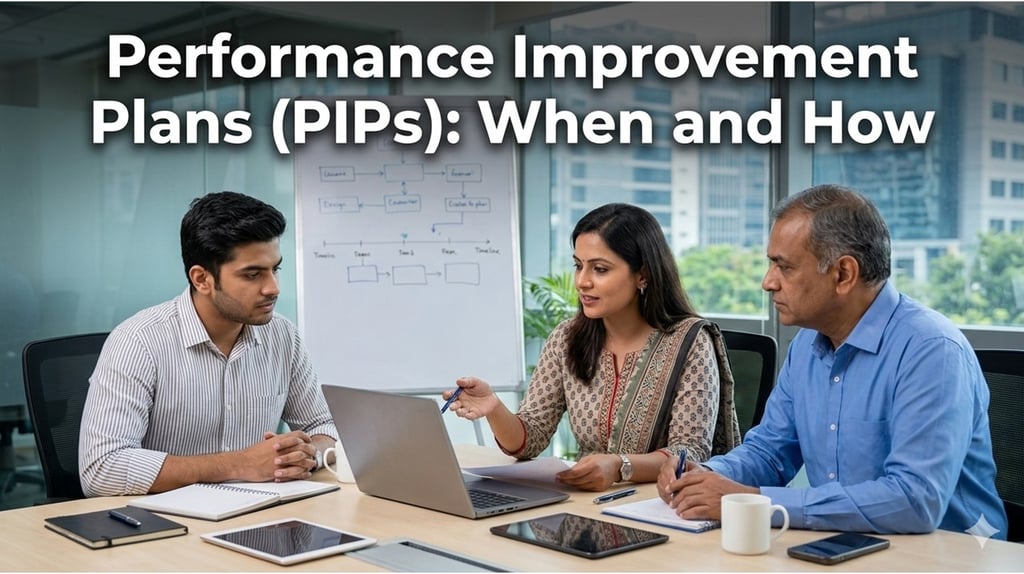
A Performance Improvement Plan (PIP) is a structured approach to address underperformance while giving employees a clear path to improvement. PIPs are not punitive; they are tools for clarity, accountability, and development.
When designed and executed correctly, PIPs help employees align with expectations, enhance skills, and contribute meaningfully to organisational goals.
When to Use a PIP
PIPs are appropriate when:
Performance consistently falls below expectations
Previous informal coaching or feedback has not led to improvement
The employee’s role is critical, and underperformance impacts business outcomes
PIPs should not be used for minor mistakes or isolated incidents; they are meant for sustained performance gaps.
Core Components of a PIP
1. Clear Performance Expectations
Specify measurable goals and standards
Focus on role-specific outcomes rather than subjective behaviour
Document expectations for transparency
2. Time-Bound Plan
Set a realistic timeframe for improvement (usually 30–90 days)
Break down the plan into weekly or milestone checkpoints
3. Support and Resources
Provide guidance, mentoring, or training needed to meet expectations
Ensure managers are available for regular feedback sessions
4. Monitoring and Feedback
Track progress regularly with structured check-ins
Offer constructive feedback and recognition for improvements
5. Consequences and Next Steps
Clarify outcomes if performance does not improve
Ensure alignment with HR policies and fair treatment practices
Sample View: PIP Framework
Checklist: Implementing PIPs Effectively
☐ Confirm underperformance is sustained and documented
☐ Define clear, measurable expectations
☐ Set a realistic, time-bound plan
☐ Provide guidance, mentoring, or training
☐ Schedule regular check-ins and feedback
☐ Communicate consequences and next steps clearly
☐ Document the process to ensure fairness and compliance
Common Pitfalls to Avoid
Using a PIP as a disciplinary tool instead of development
Setting vague goals or unrealistic timelines
Failing to provide support or resources
Ignoring regular feedback during the PIP period
Lack of documentation
Role of HR and Managers
HR ensures PIPs are fair, documented, and aligned with policies
Managers define expectations, support improvement, and monitor progress
Collaboration ensures PIPs drive performance improvement while maintaining engagement
Key Takeaway
A well-structured PIP is a developmental, transparent, and measurable tool that aligns employee performance with organisational expectations. When applied thoughtfully, it strengthens accountability, builds skills, and preserves employee trust.
Conclusion--
Effective labour law compliance depends on how well HR operations, payroll, and business processes work together. When compliance is embedded into everyday workflows, organisations reduce risk, improve accuracy, and build sustainable governance systems. HR teams that prioritise integration over isolation are better positioned to manage compliance confidently and consistently.
HireDesk India © 2026 | All Rights Reserved
"Thoughtful guidance for everyday HR"


Quick Links
Topics
Connect
_______________________________________________________________________________________________________________________________________________________________________________________
HireDesk is a free HR knowledge platform focused on practical, India-specific workplace guidance. We help HR professionals, managers, and learners navigate people practices with clarity, responsibility, and real-world relevance.