
Performance Management and Development in Indian Organisations: HR’s Practical Role
PERFORMANCE & DEVELOPMENT
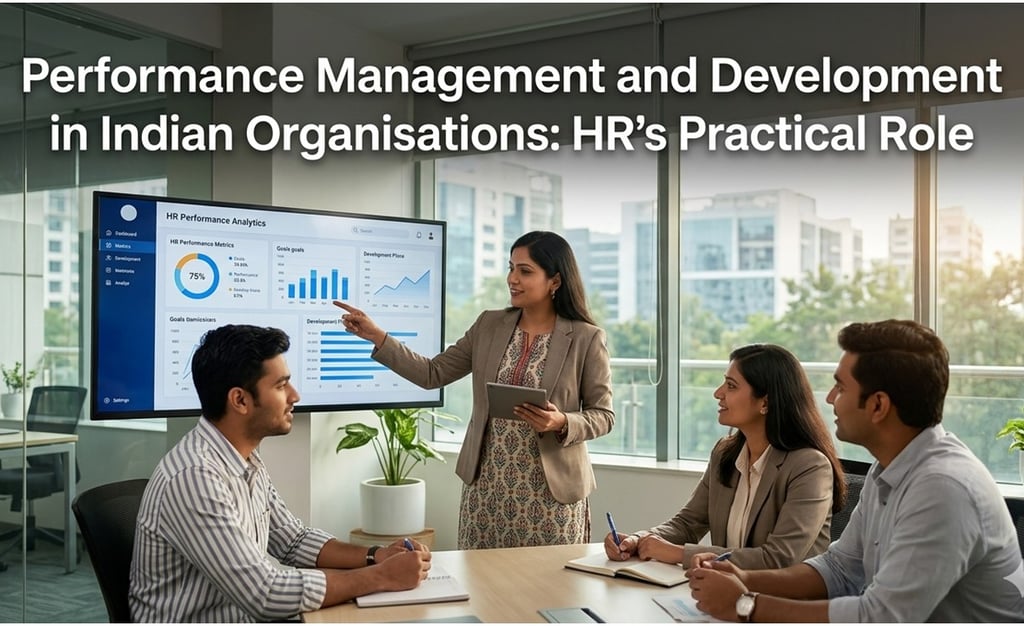
Performance management and employee development are often treated as formal systems driven by cycles, ratings, and programs. In practice, their effectiveness depends on how clearly expectations are set, how feedback is delivered, and how development opportunities are integrated into everyday work.
This article explains how HR can design and sustain performance and development practices that are credible, fair, and useful in Indian workplaces.
Understanding Performance Management Beyond Appraisals
Performance management is an ongoing process, not a once-a-year event. It includes:
Goal setting and role clarity
Continuous feedback and check-ins
Performance reviews and outcomes
Development planning and support
When limited to annual appraisals, performance systems lose relevance and trust.
HR’s Role in Performance Management
HR influences performance effectiveness by:
Defining clear frameworks and expectations
Ensuring consistency across teams and managers
Enabling managers with tools and guidance
Monitoring fairness and bias in evaluations
HR’s role is to create structure—not to replace managerial accountability.
Linking Performance and Development
Development should not be separate from performance discussions. Effective systems:
Use performance insights to identify skill gaps
Align learning opportunities with role needs
Support growth without over-promising promotions
Development works best when it is realistic and role-relevant.
Indian Workplace Considerations
In Indian organisations, performance challenges often arise from:
Overloaded roles and unclear priorities
Manager capability gaps in feedback delivery
Rating-focused conversations rather than growth-focused ones
Inconsistent goal alignment across levels
HR must design systems that accommodate these realities.
Common Pitfalls in Performance & Development Systems
Treating ratings as the primary outcome
Infrequent or scripted feedback conversations
Generic training programs without role linkage
Lack of transparency in outcomes
Such practices weaken credibility and motivation.
Performance & Development Orientation Checklist for HR
☐ Define clear performance expectations and goals
☐ Enable managers to give meaningful feedback
☐ Link development plans to actual role needs
☐ Review fairness and consistency regularly
☐ Communicate purpose and process clearly
Conclusion
Performance and development systems succeed when they are practical, consistent, and human. HR’s effectiveness lies in balancing structure with flexibility—ensuring that performance conversations lead to clarity, growth, and accountability.
Conclusion--
Effective labour law compliance depends on how well HR operations, payroll, and business processes work together. When compliance is embedded into everyday workflows, organisations reduce risk, improve accuracy, and build sustainable governance systems. HR teams that prioritise integration over isolation are better positioned to manage compliance confidently and consistently.
Related Articles
HireDesk India © 2026 | All Rights Reserved
"Thoughtful guidance for everyday HR"


Quick Links
Topics
Connect
_______________________________________________________________________________________________________________________________________________________________________________________
HireDesk is a free HR knowledge platform focused on practical, India-specific workplace guidance. We help HR professionals, managers, and learners navigate people practices with clarity, responsibility, and real-world relevance.