
Performance Management and Employee Development in India: Concepts, Practices and the Role of HR
PERFORMANCE & DEVELOPMENT
Introduction
Performance management and employee development are essential to organisational effectiveness, workforce capability, productivity, and long-term business growth. Organisations increasingly require systems that not only evaluate employee performance, but also support learning, accountability, role clarity, and continuous improvement.
In Indian workplaces, performance management is often influenced by multiple operational realities such as rapid business growth, changing workforce expectations, managerial capability gaps, productivity pressures, attrition concerns, skill shortages, and evolving work models.
At the same time, performance management is not limited to annual appraisals or rating discussions alone. Employees experience performance systems through everyday interactions such as goal setting, manager feedback, role expectations, recognition, learning opportunities, coaching, and career development conversations.
For HR teams, effective performance management therefore involves building structured, practical, and fair systems that support both organisational goals and employee growth.
This article provides a practical overview of performance management and employee development in the Indian context — covering performance systems, feedback practices, goal setting, managerial accountability, capability development, employee growth, and the role of HR in building sustainable performance cultures.
The objective is not to promote overly complex appraisal frameworks, but to help organisations create practical performance practices that improve clarity, accountability, development, and workplace effectiveness.
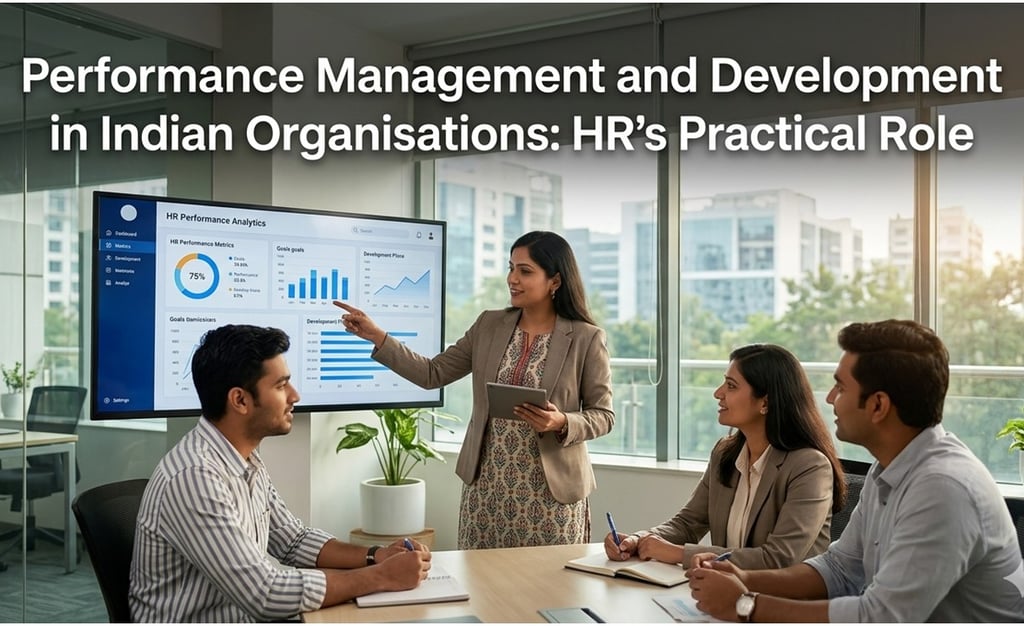
Understanding Performance Management and Employee Development
Performance management refers to the structured process through which organisations:
define expectations
monitor performance
evaluate outcomes
provide feedback
support improvement
align employee contribution with business objectives
Employee development focuses on strengthening workforce capability through:
learning
skill development
coaching
role exposure
career growth
capability building
Together, these practices help organisations:
improve productivity
strengthen accountability
build future leadership
reduce performance gaps
support employee growth
improve workforce readiness
enhance organisational capability
Effective performance management is usually continuous and operationally integrated rather than limited to yearly appraisal cycles alone.
__________________________________________________________________________________________________
Why Performance Management Matters in Indian Organisations
Indian workplaces often operate within:
fast-changing business conditions
productivity expectations
lean workforce structures
rapid expansion environments
operational pressure
varying managerial maturity levels
skill development challenges
diverse employee expectations
Without structured performance systems, organisations may face:
unclear accountability
inconsistent evaluation practices
low employee motivation
poor feedback culture
managerial bias concerns
employee disengagement
career stagnation
productivity decline
Practical performance management helps organisations create greater clarity, fairness, and alignment across teams and functions.
__________________________________________________________________________________________________
Key Areas of Performance Management
Performance management involves multiple connected practices.
1. Role Clarity and Expectation Setting
Employees generally perform better when they clearly understand:
job responsibilities
performance expectations
reporting relationships
operational priorities
behavioural expectations
timelines and deliverables
Lack of role clarity often contributes to confusion, underperformance, and workplace conflict.
Clear expectation setting forms the foundation of effective performance management.
2. Goal Setting and Performance Alignment
Organisations typically establish:
business goals
departmental objectives
individual performance expectations
productivity targets
operational deliverables
Well-defined goals help employees understand how their work contributes to broader organisational outcomes.
Performance goals are generally more effective when they remain:
realistic
measurable
role-relevant
periodically reviewed
aligned with operational realities
3. Continuous Feedback and Performance Discussions
Performance management should not be limited to annual review meetings alone.
Employees benefit from:
regular feedback
performance discussions
coaching conversations
improvement guidance
recognition for contributions
clarity on performance concerns
Consistent feedback helps organisations address performance issues earlier while improving employee confidence and engagement.
4. Managerial Capability and Performance Leadership
Managers play a critical role in shaping employee performance experiences.
Managerial effectiveness influences:
goal clarity
feedback quality
team motivation
accountability standards
employee confidence
conflict handling
development support
In many organisations, performance management challenges arise not from systems alone, but from inconsistent managerial practices.
HR therefore plays an important role in strengthening manager capability.
5. Performance Evaluation and Appraisal Processes
Performance evaluations may include:
appraisal discussions
productivity assessment
competency review
behavioural evaluation
achievement tracking
development planning
Employees generally expect performance reviews to remain:
fair
transparent
structured
professionally managed
reasonably consistent
Poorly managed appraisal systems may create:
mistrust
disengagement
perceived bias
low morale
retention concerns
6. Learning and Capability Development
Employee development is closely connected to performance management.
Organisations may support development through:
training programmes
coaching
mentoring
job rotation
cross-functional exposure
technical skill development
leadership development initiatives
Development opportunities help organisations strengthen internal capability while improving employee growth and retention.
7. Career Growth and Development Conversations
Employees increasingly value:
career visibility
learning opportunities
internal growth
progression clarity
development support
Career discussions help employees understand:
future opportunities
capability expectations
improvement areas
growth pathways
Development-focused workplaces often improve workforce stability and long-term engagement.
__________________________________________________________________________________________________
Performance Management in Indian Workplaces
Performance systems in India may vary significantly depending on:
organisation size
industry
workforce structure
operational environment
leadership style
business maturity
For example:
factories may emphasise productivity, discipline, attendance, and operational continuity
sales organisations may focus heavily on targets and business outcomes
technology organisations may prioritise innovation, collaboration, and agility
service industries may emphasise customer interaction and behavioural performance
There is no single performance management model suitable for every organisation.
However, effective systems generally combine:
operational accountability
communication clarity
employee development
fair evaluation
managerial responsibility
continuous feedback
__________________________________________________________________________________________________
Common Performance Management Challenges
Many organisations face recurring performance-related challenges such as:
unclear KPIs
inconsistent appraisals
delayed feedback
rating inflation
favouritism concerns
weak manager capability
employee disengagement
poor development follow-through
excessive focus on ratings
lack of meaningful performance conversations
Industrial and operational environments may additionally face:
productivity monitoring challenges
attendance-related performance concerns
supervisory inconsistencies
skill gaps
workforce discipline issues
Practical performance systems help organisations manage these issues more effectively.
__________________________________________________________________________________________________
The Role of HR in Performance Management and Development
HR plays an important role in creating structured and sustainable performance systems through:
performance framework design
appraisal process coordination
manager capability building
policy alignment
employee communication
learning initiatives
development planning
performance calibration support
grievance handling
leadership alignment
However, performance management cannot be driven by HR alone.
Sustainable performance cultures require active involvement from:
leadership
managers
supervisors
operational teams
employees themselves
HR acts as a facilitator in creating consistency, fairness, and organisational alignment.
__________________________________________________________________________________________________
Building Sustainable Performance Cultures
Organisations benefit from:
clear goal-setting systems
continuous feedback practices
manager development
employee coaching
transparent appraisal processes
structured learning opportunities
realistic performance expectations
recognition systems
development-focused conversations
Strong performance cultures are generally built through consistent managerial behaviour and organisational discipline rather than complex appraisal formats alone.
__________________________________________________________________________________________________
Performance Management Requires Continuous Attention
Performance management and employee development are ongoing organisational processes rather than isolated annual activities.
In Indian workplaces, performance systems become more effective when they remain:
practical
transparent
development-oriented
operationally aligned
professionally managed
adaptable to workforce realities
Employees generally perform better when organisations combine accountability with support, expectations with clarity, and evaluation with development.
Sustainable performance cultures are built gradually through trust, communication, capability development, and consistent organisational practices.
__________________________________________________________________________________________________
Explore Related Topics and Guides
Several related articles within the Performance Management & Development section explore goal setting, appraisal systems, manager feedback, employee capability development, performance conversations, recognition practices, learning initiatives, productivity management, and employee growth through more specific workplace situations and practical HR perspectives.
Together, these resources aim to help organisations build performance systems that are structured, fair, development-focused, and aligned with long-term organisational effectiveness.
__________________________________________________________________________________________________
Conclusion
Performance management and employee development are essential to building capable, accountable, and sustainable organisations. Effective performance systems help organisations improve productivity, strengthen workforce capability, support employee growth, and align individual contribution with broader business objectives.
In Indian workplaces, employee performance is influenced not only by targets and appraisals, but also by leadership behaviour, communication quality, managerial capability, learning opportunities, and workplace support systems.
There is no single performance management approach suitable for every organisation or industry. However, organisations generally achieve better workforce outcomes when performance practices remain:
practical
transparent
development-oriented
consistently managed
operationally realistic
aligned with both business and employee needs
As organisations continue to evolve, performance management should increasingly be viewed not merely as an appraisal exercise, but as an important part of building capable teams, stronger managers, and better-managed workplaces.
Related Articles
HireDesk India © 2026 | All Rights Reserved
"Thoughtful guidance for everyday HR"


Quick Links
Topics
Connect
_______________________________________________________________________________________________________________________________________________________________________________________
HireDesk is a free HR knowledge platform focused on practical, India-specific workplace guidance. We help HR professionals, managers, and learners navigate people practices with clarity, responsibility, and real-world relevance.