
Performance Management for Remote Teams
PERFORMANCE & DEVELOPMENT
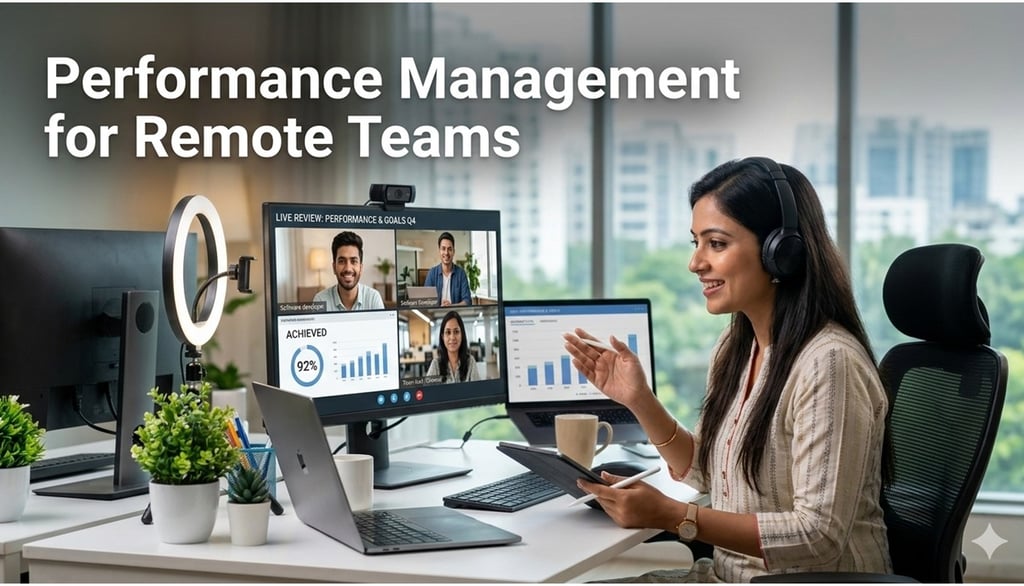
Remote and hybrid work models have changed how performance is managed and evaluated. Traditional supervision methods based on physical presence are no longer effective. Instead, organisations must adopt outcome-focused, structured, and transparent performance management practices for remote teams.
Effective performance management for remote teams ensures clarity, accountability, and engagement while maintaining fairness and consistency.
Why Remote Performance Management Needs a Different Approach
Limited visibility into day-to-day work
Higher risk of misalignment on expectations and priorities
Communication gaps affecting feedback and collaboration
Potential bias toward employees who are more visible or vocal
A structured framework helps address these challenges while supporting productivity and trust.
Core Principles of Performance Management for Remote Teams
1. Define Clear and Measurable Goals
Set outcome-based goals rather than activity-based expectations.
Break objectives into short-term milestones with defined timelines.
Ensure goals are documented and easily accessible.
2. Establish Regular Check-ins
Schedule consistent one-on-one meetings focused on progress and challenges.
Use check-ins to remove blockers and realign priorities.
Keep conversations structured and purposeful.
3. Emphasise Output and Quality
Evaluate performance based on deliverables, timelines, and quality of work.
Avoid assumptions based on online availability or responsiveness.
Use role-specific KPIs wherever possible.
4. Maintain Continuous Feedback
Provide timely feedback instead of waiting for formal review cycles.
Balance corrective feedback with recognition of achievements.
Encourage two-way feedback to identify support needs.
5. Ensure Fairness and Consistency
Apply performance standards uniformly across remote and on-site employees.
Document goals, feedback, and outcomes to reduce subjectivity.
Train managers to recognise and avoid proximity bias.
Sample View: Remote Performance Management Framework
Checklist: Managing Performance in Remote Teams
☐ Set clear, outcome-based performance goals
☐ Schedule regular and structured check-ins
☐ Measure performance based on deliverables, not visibility
☐ Provide continuous and balanced feedback
☐ Document performance discussions and outcomes
☐ Train managers to avoid proximity and visibility bias
Common Pitfalls to Avoid
Micromanaging remote employees
Relying on online presence as a performance indicator
Delaying feedback until formal review cycles
Applying different standards to remote and on-site employees
Role of HR and Managers
HR establishes performance frameworks, tools, and consistency across teams.
Managers set expectations, provide feedback, and support remote employees.
Together, they ensure performance management remains fair, transparent, and outcome-focused.
Key Takeaway
Performance management for remote teams requires a shift toward clarity, trust, and results-oriented evaluation. Structured goals, regular feedback, and consistent documentation help organisations sustain productivity while supporting employee engagement in remote work environments.
Conclusion--
Effective labour law compliance depends on how well HR operations, payroll, and business processes work together. When compliance is embedded into everyday workflows, organisations reduce risk, improve accuracy, and build sustainable governance systems. HR teams that prioritise integration over isolation are better positioned to manage compliance confidently and consistently.
HireDesk India © 2026 | All Rights Reserved
"Thoughtful guidance for everyday HR"


Quick Links
Topics
Connect
_______________________________________________________________________________________________________________________________________________________________________________________
HireDesk is a free HR knowledge platform focused on practical, India-specific workplace guidance. We help HR professionals, managers, and learners navigate people practices with clarity, responsibility, and real-world relevance.