
Performance Management Metrics HR Should Track
PERFORMANCE & DEVELOPMENT
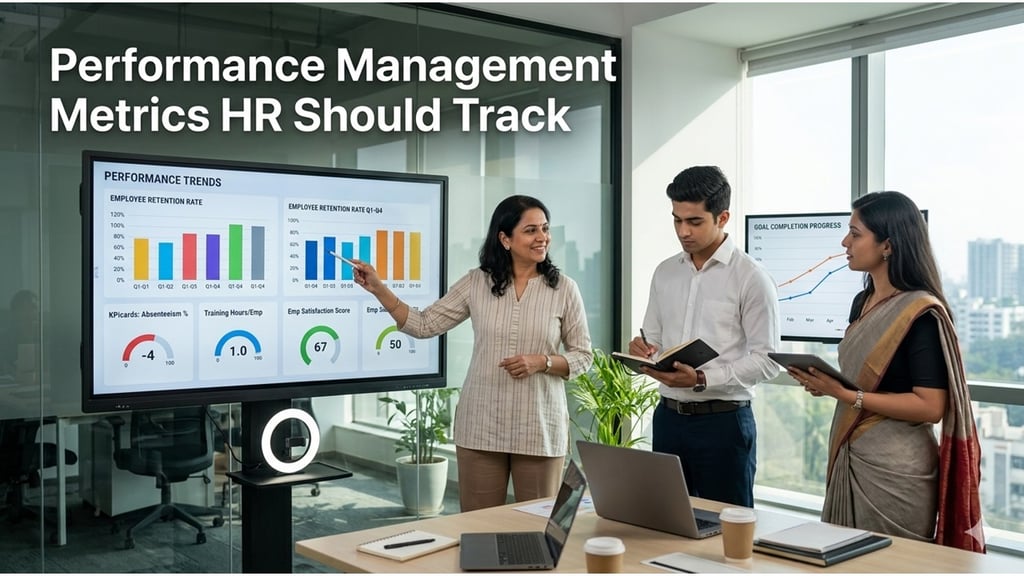
Performance management systems generate large amounts of data, but not all data leads to meaningful insight. HR’s role is to identify and track the right performance metrics that help leaders understand effectiveness, fairness, and development outcomes.
This article outlines key performance management metrics HR teams should monitor to strengthen decision-making and improve system credibility.
Why Performance Metrics Matter
Well-chosen metrics help organisations:
Evaluate whether performance processes are working as intended
Identify capability gaps and development needs
Detect bias or inconsistency in evaluations
Link performance outcomes to business and talent decisions
Without metrics, performance management remains subjective and difficult to improve.
Core Performance Management Metrics
1. Goal Achievement Rate
Tracks the percentage of employees meeting or exceeding their goals.
Why it matters:
Indicates quality of goal setting
Highlights unrealistic or poorly aligned objectives
2. Distribution of Performance Ratings
Monitors how ratings are spread across teams, roles, and functions.
Why it matters:
Identifies rating inflation or compression
Supports calibration and fairness reviews
3. Frequency of Performance Conversations
Measures how often managers conduct formal and informal check-ins.
Why it matters:
Reflects adoption of continuous performance management
Indicates manager effectiveness and engagement
4. Development Plan Completion Rate
Tracks how many agreed development actions are completed post-review.
Why it matters:
Shows whether performance discussions lead to growth
Links performance management to learning outcomes
5. Improvement After Feedback or PIP
Assesses whether performance improves following structured feedback or improvement plans.
Why it matters:
Evaluates effectiveness of feedback and intervention
Helps refine coaching and support mechanisms
6. High Performer Retention Rate
Measures retention among consistently high-performing employees.
Why it matters:
Indicates whether top talent feels recognised and supported
Signals risks to organisational capability
Sample View: Key Performance Management Metrics
Checklist: Tracking Performance Metrics Effectively
☐ Metrics are clearly defined and consistently measured
☐ Data is reviewed at team and organisational levels
☐ Insights are shared with managers and leaders
☐ Metrics inform calibration, development, and rewards
☐ Trends are monitored across cycles, not in isolation
☐ Actions are taken based on metric insights
Role of HR
HR is responsible for:
Selecting metrics aligned with performance philosophy
Ensuring data accuracy and completeness
Interpreting metrics in context, not isolation
Guiding leaders on appropriate actions
Metrics should support learning and improvement, not control.
Key Takeaway
Performance management metrics help HR and leaders move from opinion-based decisions to evidence-based performance conversations. When used thoughtfully, they strengthen fairness, development, and organisational effectiveness.
Conclusion--
Effective labour law compliance depends on how well HR operations, payroll, and business processes work together. When compliance is embedded into everyday workflows, organisations reduce risk, improve accuracy, and build sustainable governance systems. HR teams that prioritise integration over isolation are better positioned to manage compliance confidently and consistently.
HireDesk India © 2026 | All Rights Reserved
"Thoughtful guidance for everyday HR"


Quick Links
Topics
Connect
_______________________________________________________________________________________________________________________________________________________________________________________
HireDesk is a free HR knowledge platform focused on practical, India-specific workplace guidance. We help HR professionals, managers, and learners navigate people practices with clarity, responsibility, and real-world relevance.