
Performance Management Systems: Concepts and Components
PERFORMANCE & DEVELOPMENT
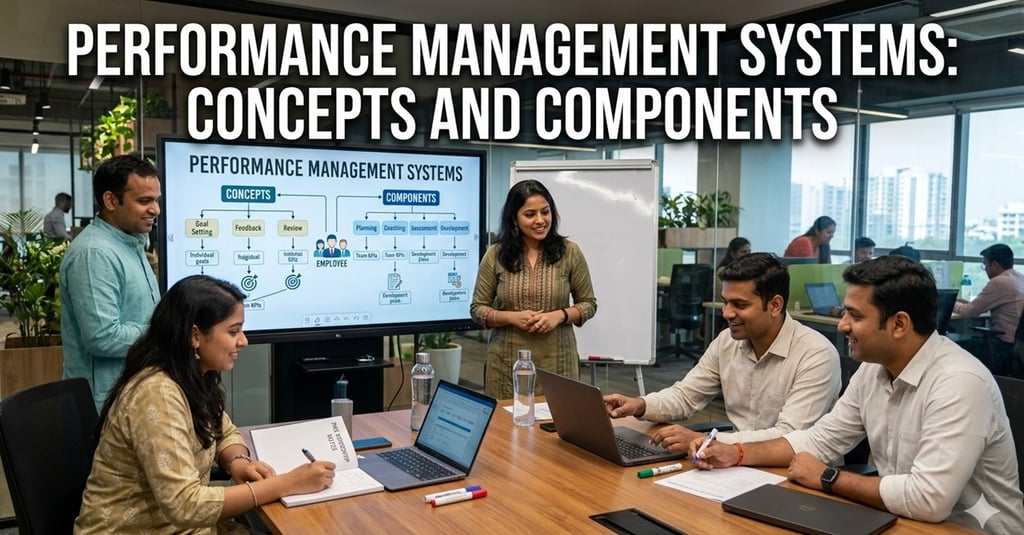
A performance management system provides a structured way for organisations to plan, monitor, review, and improve employee performance. It goes beyond annual appraisals and connects individual contributions with organisational goals. For HR teams, understanding the core concepts and components of such systems is essential to ensure consistency, fairness, and long-term capability development.
What Is a Performance Management System?
A performance management system is a formal framework that defines how performance expectations are set, progress is reviewed, feedback is provided, and outcomes are documented. It establishes a shared understanding between the organisation, managers, and employees on what good performance looks like and how it is assessed.
Unlike isolated appraisal exercises, a system operates throughout the year and supports both performance outcomes and employee development.
Key Objectives of a Performance Management System
A well-designed system aims to:
Align individual performance with organisational priorities
Encourage regular performance conversations
Provide a basis for development, rewards, and career decisions
Ensure transparency and consistency in evaluation
The system should support performance improvement rather than function only as a rating or compliance exercise.
Core Components of a Performance Management System
1. Performance Planning
This component defines roles, responsibilities, and performance expectations at the beginning of the cycle. It typically includes goal setting, success measures, and clarity on priorities.
2. Ongoing Performance Monitoring
Performance is observed and discussed throughout the year through check-ins, informal reviews, and progress discussions. This reduces surprises during formal evaluations.
3. Performance Review and Evaluation
At defined intervals, performance is formally assessed against agreed goals and standards. Evidence, outcomes, and behavioural inputs are considered during this stage.
4. Feedback and Coaching
Structured and informal feedback helps employees understand strengths, improvement areas, and expectations. Coaching conversations support capability building and course correction.
5. Development Planning
Development actions such as training, mentoring, or role exposure are identified based on performance outcomes and future role requirements.
6. Documentation and Governance
Policies, records, and review mechanisms ensure consistency, auditability, and fairness across departments and employee groups.
How Performance Management Systems Differ from Appraisals
While appraisals are a part of performance management, they are not the system itself. A system is continuous and integrated, whereas appraisals are periodic evaluation points within that system.
Light Checklist: Indicators of a Structured Performance Management System
☐ Clear performance goals are defined at the start of the cycle
☐ Managers conduct regular performance discussions
☐ Feedback is documented and actionable
☐ Development needs are linked to performance outcomes
☐ Evaluation criteria are consistent across roles
☐ HR reviews the system for fairness and effectiveness
Sample View: Core Components of a Performance Management System
Role of HR in Strengthening the System
HR’s role is not limited to administering forms or timelines. HR ensures that the system design aligns with organisational context, managers are equipped to use it effectively, and outcomes are reviewed for equity and improvement opportunities.
Closing Note
A performance management system is most effective when it is simple, clearly communicated, and consistently applied. Organisations that treat it as an ongoing process rather than a once-a-year activity are better positioned to improve performance, develop talent, and support long-term organisational goals.
Conclusion--
Effective labour law compliance depends on how well HR operations, payroll, and business processes work together. When compliance is embedded into everyday workflows, organisations reduce risk, improve accuracy, and build sustainable governance systems. HR teams that prioritise integration over isolation are better positioned to manage compliance confidently and consistently.
HireDesk India © 2026 | All Rights Reserved
"Thoughtful guidance for everyday HR"


Quick Links
Topics
Connect
_______________________________________________________________________________________________________________________________________________________________________________________
HireDesk is a free HR knowledge platform focused on practical, India-specific workplace guidance. We help HR professionals, managers, and learners navigate people practices with clarity, responsibility, and real-world relevance.