
Planning for Skill Transitions
WORKFORCE PLANNING & MANPOWER
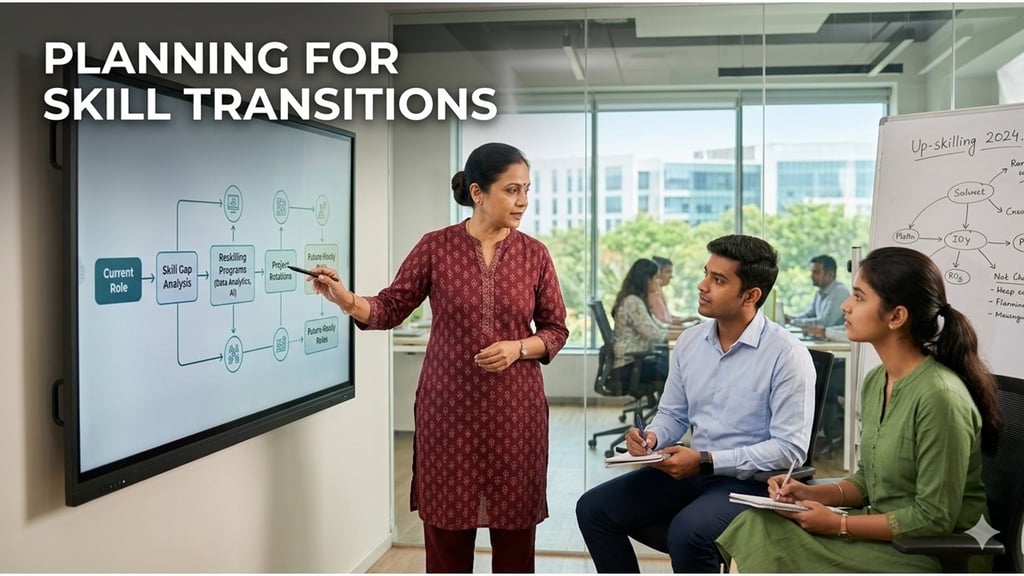

Rapid changes in technology, processes, and business priorities often make certain skills obsolete while creating demand for new capabilities. Workforce planning must proactively address skill transitions to maintain organisational performance and future readiness.
This article outlines how HR can plan for skill transitions strategically, ensuring employees and the organisation remain equipped for evolving demands.
Why Skill Transitions Matter
Skill transitions are critical to:
Avoid capability gaps in critical roles
Minimise disruption due to outdated skills
Support business transformation and innovation
Retain employees by providing growth opportunities
Ignoring skill transitions can result in reduced productivity, higher attrition, and difficulty filling critical roles.
Key Steps in Planning for Skill Transitions
1. Identify Skills at Risk
Review the workforce to determine which skills are becoming less relevant and which new skills are emerging.
2. Assess Employee Readiness
Evaluate employees’ current competencies and potential to acquire new skills through training or on-the-job experience.
3. Develop Transition Roadmaps
Plan timelines, learning initiatives, and role adjustments to guide employees through the skill change process.
4. Prioritise Critical Roles
Focus on roles where skill gaps would have the greatest business impact.
5. Monitor and Adjust
Track skill acquisition progress and adjust plans to address delays or unforeseen skill gaps.
Light Checklist: Planning Skill Transitions
☐ Skills at risk and emerging skills identified
☐ Employee readiness assessed
☐ Transition roadmaps developed for key roles
☐ Critical roles prioritised for skill updates
☐ Progress monitored and plans adjusted regularly
Sample Table: Skill Transition Planning Overview
Conclusion
Planning for skill transitions ensures the workforce remains capable, adaptable, and aligned with evolving business needs. By identifying skills at risk, assessing employee readiness, creating roadmaps, and monitoring progress, organisations can manage transitions smoothly while retaining talent and minimising operational disruption.
Conclusion--
Effective labour law compliance depends on how well HR operations, payroll, and business processes work together. When compliance is embedded into everyday workflows, organisations reduce risk, improve accuracy, and build sustainable governance systems. HR teams that prioritise integration over isolation are better positioned to manage compliance confidently and consistently.
HireDesk India © 2026 | All Rights Reserved
"Thoughtful guidance for everyday HR"


Quick Links
Topics
Connect
_______________________________________________________________________________________________________________________________________________________________________________________
HireDesk is a free HR knowledge platform focused on practical, India-specific workplace guidance. We help HR professionals, managers, and learners navigate people practices with clarity, responsibility, and real-world relevance.