
Process Discipline and Governance in Hiring
RECRUITMENT AND HIRING
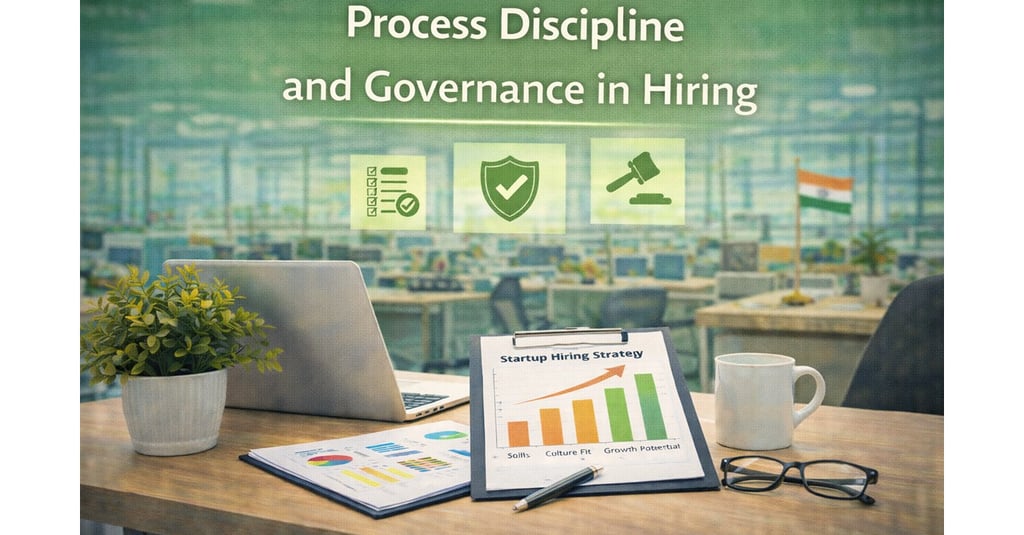
Hiring is one of the highest-risk people processes in any organisation. In India, where hiring volumes can be high and timelines tight, lack of process discipline often leads to inconsistent decisions, compliance gaps, and quality failures. Process discipline and governance ensure that recruitment is predictable, fair, and defensible.
Good governance does not slow hiring—it reduces rework, errors, and risk.
What Process Discipline Means in Recruitment
Process discipline refers to the consistent application of defined recruitment steps, roles, and controls across all hiring activities. It ensures that:
Every hire follows an approved workflow
Decisions are documented and reviewable
Exceptions are visible and authorised
Discipline creates reliability, especially in fast-growing or multi-location organisations.
Why Hiring Governance Is Critical in India
Key Indian realities that demand governance include:
High employee mobility and attrition
Regulatory and compliance expectations
Use of external consultants and agents
Volume hiring across diverse geographies
Without governance, hiring becomes fragmented and difficult to control.
Core Elements of Hiring Governance
1. Clear Role Ownership
Governance starts with clarity on:
Who approves manpower requirements
Who screens and shortlists candidates
Who conducts interviews and final selection
Who approves offers and deviations
Undefined ownership leads to delays and accountability gaps.
2. Standardised Hiring Workflows
Standard workflows should cover:
Requisition creation and approval
Sourcing and screening steps
Interview rounds and assessments
Offer, joining, and documentation
Consistency improves speed and quality simultaneously.
3. Approval and Exception Controls
Governance requires visibility over deviations such as:
Compensation exceptions
Fast-track hiring
Policy overrides
All exceptions must be documented and approved at the right level.
4. Documentation and Audit Trails
HR must ensure availability of:
Interview feedback and evaluations
Offer approvals
Background verification records
Strong documentation protects the organisation during audits or disputes.
Balancing Speed and Control
Governance does not mean rigidity. HR should:
Define fast-track workflows for critical hiring
Pre-approve hiring bands and ranges
Use technology to reduce manual approvals
The objective is controlled flexibility, not bureaucracy.
Role of HR in Enforcing Discipline
HR acts as the custodian of hiring governance by:
Designing and communicating hiring policies
Training recruiters and hiring managers
Monitoring compliance and deviations
Intervening when discipline weakens
HR credibility increases when governance is applied consistently.
Common Governance Failures
Hiring without approved requisitions
Verbal offers without documentation
Incomplete interview records
Unauthorised compensation commitments
Poor vendor and consultant control
These failures increase legal, financial, and reputational risk.
Continuous Improvement Through Reviews
Governance frameworks must evolve. HR should periodically:
Review process effectiveness
Analyse deviation trends
Update workflows based on business needs
Governance is a living system, not a one-time setup.
Conclusion
Process discipline and governance in hiring create stability, fairness, and accountability. Indian HR teams must design practical frameworks that support speed while maintaining control. When governance is strong, recruitment becomes reliable, defensible, and aligned with organisational values.
🗹 Process Discipline and Governance Checklist
🗹 Define clear ownership across all hiring stages
🗹 Enforce approved requisition and approval workflows
🗹 Standardise interviews, assessments, and evaluations
🗹 Document decisions and maintain audit trails
🗹 Control and approve all hiring exceptions
🗹 Balance speed with defined fast-track processes
🗹 Train stakeholders on governance expectations
🗹 Review and refine hiring processes periodically
Hiring Governance Framework
Conclusion--
Effective labour law compliance depends on how well HR operations, payroll, and business processes work together. When compliance is embedded into everyday workflows, organisations reduce risk, improve accuracy, and build sustainable governance systems. HR teams that prioritise integration over isolation are better positioned to manage compliance confidently and consistently.
HireDesk India © 2026 | All Rights Reserved
"Thoughtful guidance for everyday HR"


Quick Links
Topics
Connect
_______________________________________________________________________________________________________________________________________________________________________________________
HireDesk is a free HR knowledge platform focused on practical, India-specific workplace guidance. We help HR professionals, managers, and learners navigate people practices with clarity, responsibility, and real-world relevance.