Process Optimisation: From Manual HR to Digital Workflows in Indian Organisations
HR TECH & ANALYTICS
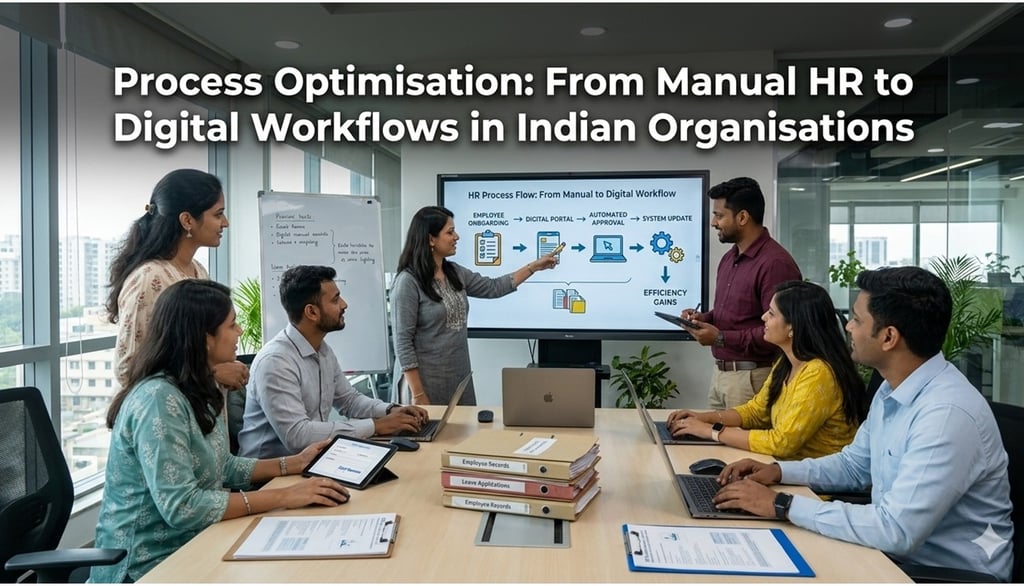
HR processes in many Indian organisations remain manual, fragmented, and time-consuming, resulting in errors, delays, and reduced efficiency. From leave approvals to recruitment and compliance, traditional paper-based or spreadsheet-driven workflows create bottlenecks and limit HR’s strategic impact.
Process optimisation through digital workflows transforms HR operations, enabling standardisation, efficiency, and data-driven decision-making. This article explores how Indian HR teams can shift from manual processes to streamlined digital workflows.
Why Process Optimisation Matters
Efficiency Gains: Reduces repetitive tasks and accelerates approvals
Accuracy and Compliance: Minimises errors and ensures adherence to statutory requirements
Employee Experience: Provides faster responses and transparency in HR services
Data-Driven Insights: Enables reporting, analytics, and strategic workforce planning
Scalability: Supports growing workforce without proportional increase in HR headcount
Key Areas for Digital Workflow Optimisation
1. Recruitment and Onboarding
Automate candidate tracking, interview scheduling, and offer approvals
Digitise onboarding forms, document submission, and inductions
Track new hire progress and integration milestones
2. Leave and Attendance Management
Streamline leave applications, approvals, and balances
Capture attendance via biometric, mobile, or web systems
Reduce errors in payroll and compliance
3. Performance and Appraisal Processes
Standardise appraisal forms and review cycles
Enable online goal setting, continuous feedback, and ratings
Facilitate performance calibration and reporting
4. Employee Requests and Grievances
Digital ticketing for HR queries and service requests
Track resolution timelines and accountability
Improve transparency and employee satisfaction
5. Compliance and Statutory Documentation
Automate submission, approval, and tracking of statutory reports
Maintain digital audit trails for PF, ESI, PT, TDS, and other obligations
Reduce risk of non-compliance and penalties
Steps for Successful Process Optimisation
Process Mapping: Document current manual processes to identify bottlenecks.
Prioritisation: Focus on high-volume or high-impact processes first.
System Selection: Choose digital tools compatible with HRIS, payroll, and other systems.
Stakeholder Engagement: Involve managers and employees early to ensure adoption.
Change Management: Communicate benefits, provide training, and offer support.
Continuous Improvement: Review workflows periodically to refine processes and adapt to organisational changes.
Challenges in Digitising HR Processes
Resistance from employees and managers used to manual workflows
Inconsistent data entry or lack of system discipline
Integration difficulties with existing HR and finance systems
Underestimating the effort required for change management
Careful planning, clear communication, and phased implementation reduce these risks.
HR’s Role in Driving Process Optimisation
HR must lead the shift from manual to digital by:
Identifying repetitive, error-prone tasks suitable for automation
Selecting and implementing user-friendly digital tools
Ensuring compliance with statutory and internal policies
Monitoring process efficiency and adoption metrics
Using analytics to refine workflows and measure impact
Digital workflows are most effective when HR combines technology with governance, communication, and employee support.
Conclusion
Process optimisation through digital workflows enables Indian HR teams to move from reactive, manual operations to strategic, efficient, and transparent HR management. By carefully selecting processes to automate, engaging stakeholders, and continuously monitoring results, HR can deliver improved efficiency, compliance, and employee experience, while freeing up time for strategic initiatives.
Checklist: Implementing Digital HR Workflows
🗹 Map and document existing HR processes in detail.
🗹 Identify high-volume or high-impact processes for digital transformation.
🗹 Choose digital tools that integrate with HRIS, payroll, and other systems.
🗹 Engage managers and employees early to ensure adoption.
🗹 Define KPIs to measure process efficiency, accuracy, and adoption.
🗹 Provide training, support, and communication to all stakeholders.
🗹 Maintain digital audit trails for compliance purposes.
🗹 Monitor workflows regularly and refine for continuous improvement.
🗹 Ensure data accuracy and standardisation across systems.
🗹 Review legal and statutory requirements to maintain compliance.
Sample Table: Digital Workflow Optimisation in HR
Conclusion--
Effective labour law compliance depends on how well HR operations, payroll, and business processes work together. When compliance is embedded into everyday workflows, organisations reduce risk, improve accuracy, and build sustainable governance systems. HR teams that prioritise integration over isolation are better positioned to manage compliance confidently and consistently.
HireDesk India © 2026 | All Rights Reserved
"Thoughtful guidance for everyday HR"


Quick Links
Topics
Connect
_______________________________________________________________________________________________________________________________________________________________________________________
HireDesk is a free HR knowledge platform focused on practical, India-specific workplace guidance. We help HR professionals, managers, and learners navigate people practices with clarity, responsibility, and real-world relevance.