
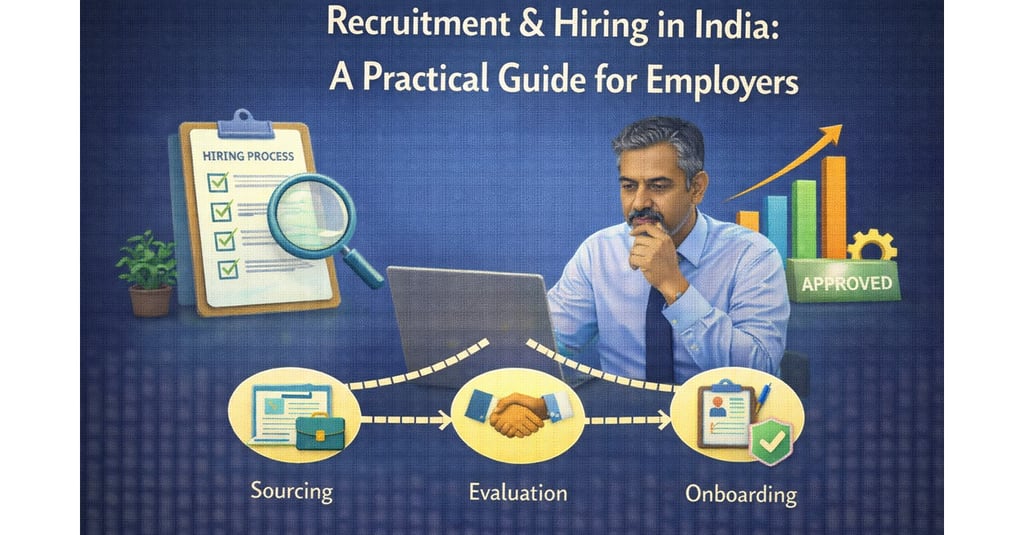
Recruitment & Hiring in India: A Practical Guide for Employers
RECRUITMENT AND HIRING
Introduction
Recruitment and hiring are among the most important operational responsibilities within any organisation. Hiring decisions influence workforce quality, productivity, employee stability, organisational culture, and long-term business performance.
In India, recruitment is also shaped by multiple practical realities such as skill availability, notice period practices, salary competition, regional workforce differences, documentation requirements, and candidate dropouts during the hiring process.
As organisations grow, hiring can no longer remain an informal or purely reactive activity. Structured recruitment processes help organisations improve hiring quality, reduce operational disruptions, strengthen compliance practices, and create better onboarding outcomes.
This article provides a practical overview of recruitment and hiring in the Indian context — covering workforce planning, sourcing, interviews, offer management, joining formalities, onboarding readiness, and common hiring challenges faced by organisations.
The objective is not to overcomplicate recruitment, but to help employers and HR teams build hiring practices that are practical, organised, and aligned with real workplace needs.
Recruitment and hiring are among the most important responsibilities within any organisation. The quality of hiring decisions directly affects productivity, workforce stability, organisational culture, compliance, and long-term business performance.
In India, recruitment is also shaped by additional realities such as:
diverse workforce expectations
regional and industry variations
skill availability challenges
notice period practices
salary competition
candidate dropouts and offer backouts
documentation and compliance requirements
As organisations grow, hiring often becomes more than simply filling vacancies. It requires structured processes, operational coordination, workforce planning, and responsible people decisions.
This guide provides a practical overview of recruitment and hiring in the Indian context — from workforce planning and sourcing to onboarding and joining formalities.
__________________________________________________________________________________________________
Understanding Recruitment and Hiring in the Indian Context
Recruitment in India operates across highly varied environments:
startups and growing businesses
SMEs
corporate organisations
factories and industrial establishments
field and sales-driven operations
technology and service sectors
__________________________________________________________________________
Hiring practices therefore differ based on:
industry requirements
workforce type
skill availability
location
operational urgency
organisational maturity
At the same time, employers must balance:
speed of hiring
quality of selection
candidate experience
compensation expectations
documentation and compliance
long-term workforce needs
A structured recruitment process helps organisations reduce hiring risks and improve workforce stability.
__________________________________________________________________________________________________
The Recruitment & Hiring Lifecycle
Recruitment is not a single activity but a connected process involving multiple stages.
A practical hiring lifecycle typically includes:
1. Workforce Planning
Identifying manpower requirements based on business needs, expansion plans, replacement hiring, productivity goals, and workforce structure.
Related Guide:
Aligning Hiring with Long-Term Workforce Planning
2. Role Identification & Job Structuring
Defining:
responsibilities
reporting relationships
required qualifications
experience expectations
compensation range
operational requirements
Clear role definition improves hiring accuracy and reduces confusion later in the process.
3. Candidate Sourcing
Organisations may source candidates through:
job portals
referrals
consultants
campus hiring
social media
internal hiring
walk-ins and local sourcing channels
Sourcing strategy often depends on the role type, urgency, industry, and location.
4. Screening & Shortlisting
Initial evaluation typically includes:
profile matching
qualification review
experience relevance
salary alignment
notice period assessment
communication evaluation
Effective screening helps reduce recruitment delays and improves interview quality.
5. Interviews & Candidate Evaluation
Interviews help organisations assess:
technical capability
behavioural suitability
communication skills
workplace fit
managerial expectations
operational readiness
Structured evaluation reduces inconsistent hiring decisions.
6. Selection & Compensation Discussion
Once candidates are shortlisted, organisations typically finalise:
compensation structure
designation
joining timelines
employment terms
reporting arrangements
Clear communication during this stage helps reduce offer declines and future disputes.
7. Offer Management
Offer management includes:
offer letter issuance
candidate follow-up
joining confirmation
pre-joining engagement
expectation alignment
Many Indian organisations face challenges such as:
offer shopping
counteroffers
delayed joining
candidate dropouts
Managing this stage carefully improves joining conversion.
Related Guide:
Joining Dropouts, Backouts, and Hiring Risk Controls in India
8. Background Verification & Documentation
Employers may verify:
educational qualifications
previous employment
identity documents
address details
references
statutory eligibility
Documentation processes should remain structured, consistent, and compliant with organisational policy.
Related Guide:
Documentation, Eligibility, and Joining Formalities
9. Joining Formalities & Onboarding
Hiring does not end with offer acceptance.
The joining and onboarding stage includes:
employee documentation
policy acknowledgement
induction
statutory enrolments
workplace familiarisation
reporting alignment
A smooth onboarding process improves employee experience and early retention.
__________________________________________________________________________________________________
Common Recruitment Challenges in India
Many organisations face recurring hiring difficulties such as:
reactive hiring practices
unclear job expectations
high competition for skilled talent
candidate ghosting
joining backouts
salary expectation mismatch
rushed interview decisions
delayed approvals
poor onboarding coordination
Factory and industrial environments may additionally face:
documentation gaps
attendance instability
workforce mobility
contractor dependency
local hiring constraints
Structured hiring systems help reduce these operational risks.
__________________________________________________________________________________________________
Compliance & Risk Areas in Hiring
Recruitment processes should also consider legal and compliance responsibilities.
Important areas may include:
employment documentation
equal opportunity considerations
contractor engagement risks
wage structure alignment
background verification practices
statutory onboarding requirements
employment classification
Organisations should ensure that hiring processes remain consistent, documented, and professionally managed.
Related Guide:
Appointment Letters and Employment Contracts: Legal Dos and Don’ts
Principal Employer Responsibilities Under Contract Labour Laws
__________________________________________________________________________
The Role of HR in Recruitment
HR plays a broader role in recruitment than simply coordinating interviews.
Effective HR involvement includes:
workforce planning support
process coordination
hiring governance
candidate communication
documentation management
onboarding readiness
stakeholder alignment
risk reduction
hiring experience management
As organisations grow, recruitment becomes an important part of workforce strategy and organisational capability building.
__________________________________________________________________________________________________
Building a Sustainable Hiring Process
Sustainable hiring requires more than filling immediate vacancies.
Organisations benefit from:
workforce planning
structured interview systems
clear approval processes
consistent documentation
realistic compensation practices
candidate engagement
onboarding preparedness
hiring data and metrics
long-term workforce thinking
Well-designed hiring systems improve both operational efficiency and employee stability.
__________________________________________________________________________________________________
Recruitment in India Requires Practical Balance
Recruitment and hiring involve balancing:
business urgency
workforce quality
operational realities
compliance expectations
candidate experience
long-term organisational needs
There is rarely a perfect hiring process for every organisation or industry.
However, structured and practical hiring practices can significantly improve workforce outcomes while reducing avoidable risks and confusion.
For Indian organisations, recruitment works best when it remains:
practical
organised
responsive
fair
professionally managed
aligned with real workplace conditions
__________________________________________________________________________
Explore Recruitment & Hiring Topics
Recruitment Planning
Workforce Planning
Manpower Forecasting
Role Structuring
Candidate Management
Sourcing Strategies
Screening & Interviews
Candidate Evaluation
Offer & Joining
Compensation Discussions
Offer Management
Joining Formalities
Onboarding
Hiring Compliance
Employment Documentation
Background Verification
Contractor Hiring
Labour Law Considerations
Related Recruitment & Hiring Guides
Aligning Hiring with Long-Term Workforce Planning
Documentation, Eligibility, and Joining Formalities
Joining Dropouts, Backouts, and Hiring Risk Controls in India
Appointment Letters and Employment Contracts: Legal Dos and Don’ts
Principal Employer Responsibilities Under Contract Labour Laws
__________________________________________________________________________________________________
Conclusion
Recruitment and hiring are not limited to filling vacancies. They are connected to workforce planning, organisational stability, employee experience, and long-term business effectiveness.
In Indian workplaces, hiring processes often operate under time pressure, operational constraints, and changing workforce expectations. Without structure and clarity, organisations may face recurring challenges such as poor hiring decisions, joining dropouts, inconsistent onboarding, and avoidable compliance risks.
Practical and well-organised recruitment systems help organisations improve hiring consistency, strengthen workforce readiness, and create smoother employee transitions from selection to onboarding.
There is no single hiring model that suits every organisation or industry. However, recruitment practices become more effective when they remain:
practical
structured
responsive
professionally managed
aligned with workplace realities
As organisations continue to evolve, recruitment must increasingly be viewed not merely as an administrative activity, but as an important part of building stable, capable, and well-managed workplaces.
HireDesk India © 2026 | All Rights Reserved
"Thoughtful guidance for everyday HR"


Quick Links
Topics
Connect
_______________________________________________________________________________________________________________________________________________________________________________________
HireDesk is a free HR knowledge platform focused on practical, India-specific workplace guidance. We help HR professionals, managers, and learners navigate people practices with clarity, responsibility, and real-world relevance.