
Recruitment Mistakes That Increase Attrition
RECRUITMENT AND HIRING

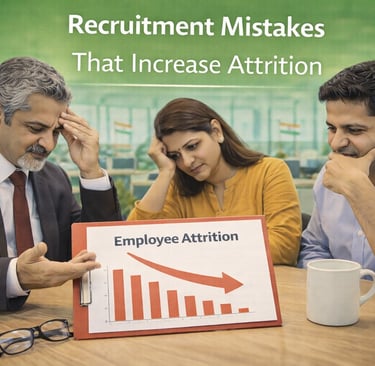
High attrition in Indian organisations is often analysed after employees leave, but the root causes frequently sit in the recruitment stage. Poor hiring decisions, unclear communication, and weak assessment discipline create mismatches that surface within months of joining.
For HR, reducing attrition starts not at exit interviews, but at the point of hiring.
How Recruitment Directly Impacts Attrition
Recruitment sets expectations about:
Role scope and responsibilities
Compensation and growth
Work culture and management style
When these expectations are inaccurate or incomplete, employees disengage early.
Common Recruitment Mistakes That Drive Attrition
Hiring Without Role Clarity
Unclear or evolving roles lead to:
Confusion post-joining
Frustration with managers
Performance misalignment
Employees leave when reality differs from what was discussed.
Overemphasis on Speed Over Fit
Rushing to close positions often results in:
Compromised assessments
Ignored red flags
Short-term fixes
Speed without quality increases early exits.
Overpromising Career Growth or Stability
Promising fast promotions or long-term stability without certainty:
Raises unrealistic expectations
Creates disappointment
Erodes trust
Honesty matters more than attraction.
Weak Interview and Assessment Discipline
Inconsistent interviews cause:
Poor role fit
Skill mismatches
Manager dissatisfaction
Employees who feel out of depth disengage quickly.
Inadequate Compensation Communication
Lack of clarity on:
Salary structure
Variable pay
Benefits and deductions
Leads to dissatisfaction within the first few salary cycles.
Ignoring Cultural and Team Fit
Technical skills alone are not enough. Ignoring:
Work style alignment
Manager compatibility
Team dynamics
Often results in voluntary exits.
HR’s Role in Attrition Prevention at Hiring Stage
Setting Accurate Expectations
HR must ensure candidates clearly understand:
Role challenges
Performance expectations
Reporting structures
Clarity reduces surprises.
Strengthening Hiring Governance
HR should enforce:
Structured interviews
Mandatory assessment criteria
Approval checks for deviations
Governance improves consistency.
Linking Hiring to Early Attrition Data
HR should review:
First 6–12 month attrition patterns
Hiring sources and interview panels
Manager-specific trends
This feedback loop improves future hiring.
Conclusion
Attrition is often a delayed outcome of recruitment mistakes. By focusing on role clarity, honest communication, disciplined assessments, and governance, HR can significantly reduce early exits. Strong recruitment practices are one of the most effective attrition control measures in Indian organisations.
🗹 Recruitment Practices to Reduce Attrition Checklist
🗹 Define clear and stable role expectations
🗹 Avoid rushing hiring at the cost of fit
🗹 Set realistic growth and stability expectations
🗹 Use structured interviews and assessments
🗹 Communicate compensation details transparently
🗹 Assess cultural and team fit
🗹 Track early attrition linked to hiring decisions
🗹 Strengthen hiring approvals and controls
Recruitment Mistakes and Attrition Link
Conclusion--
Effective labour law compliance depends on how well HR operations, payroll, and business processes work together. When compliance is embedded into everyday workflows, organisations reduce risk, improve accuracy, and build sustainable governance systems. HR teams that prioritise integration over isolation are better positioned to manage compliance confidently and consistently.
HireDesk India © 2026 | All Rights Reserved
"Thoughtful guidance for everyday HR"


Quick Links
Topics
Connect
_______________________________________________________________________________________________________________________________________________________________________________________
HireDesk is a free HR knowledge platform focused on practical, India-specific workplace guidance. We help HR professionals, managers, and learners navigate people practices with clarity, responsibility, and real-world relevance.