
Reducing Attrition in SMEs: Practical Retention Levers HR Can Use
SME HR OPERATIONS
Introduction--
Once a candidate accepts an offer, the period between acceptance and joining becomes a critical phase in the recruitment lifecycle. This pre-joining window influences whether a candidate actually joins, how prepared they feel on Day One, and how quickly they settle into the organisation. For HR, effective pre-joining engagement and onboarding planning are essential to convert offers into confident, committed employees.
This article outlines practical approaches HR teams can adopt to manage pre-joining engagement and establish strong onboarding foundations—without overcomplicating the process.
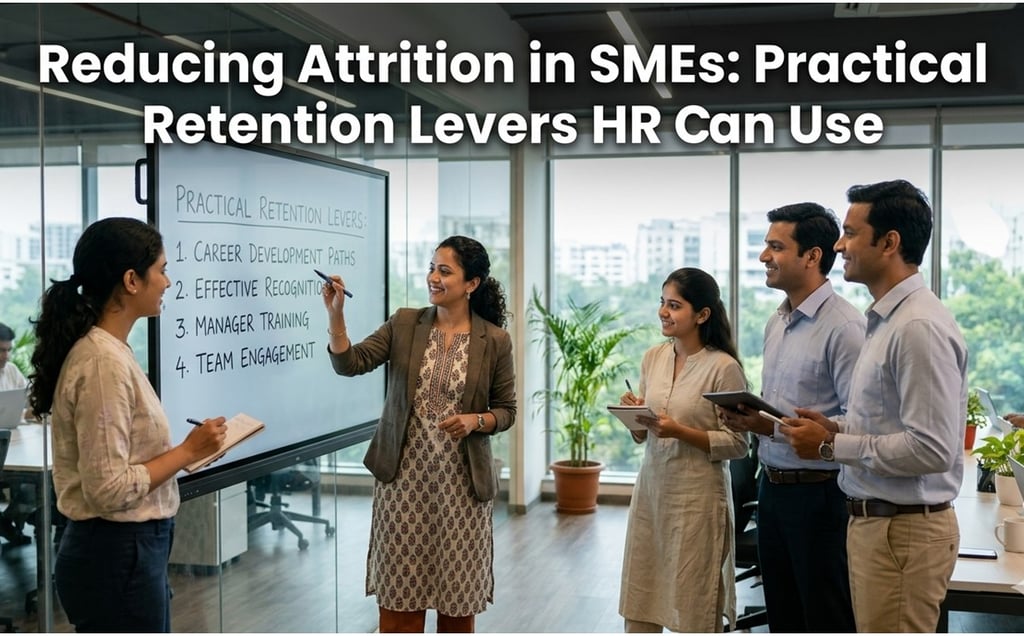
Attrition is one of the most expensive and disruptive challenges for Indian SMEs. Unlike large organisations, SMEs feel the impact of every resignation — productivity dips, team morale suffers, and leaders spend disproportionate time on backfilling roles.
While pay is often blamed, most SME attrition is driven by day-to-day experience issues: unclear expectations, weak supervision, delayed decisions, and lack of growth visibility. This article focuses on practical retention levers that HR teams in SMEs can realistically influence.
Understanding Attrition in the SME Context
Common attrition drivers in SMEs include:
Manager behaviour and communication gaps
Irregular feedback and recognition
Unclear role growth or skill development
Workload imbalance
Perceived unfairness in decisions
Retention efforts must address these basics before adding incentives.
Manager Effectiveness Is the Biggest Lever
Employees don’t leave companies — they leave managers.
HR should focus on:
Coaching managers on communication and feedback
Encouraging regular one-on-one conversations
Intervening early when issues surface
Holding managers accountable for team attrition
Improving manager capability delivers faster retention results than policy changes.
Role Clarity and Work Stability
Uncertainty drives exits.
SMEs should ensure:
Clear role expectations and priorities
Reasonable workload distribution
Predictable schedules and timelines
Alignment between assigned work and skills
Stability builds trust and reduces anxiety.
Growth and Learning Visibility
SMEs may not offer fast promotions, but they can offer skill growth.
HR can:
Communicate learning and role expansion opportunities
Provide exposure to new responsibilities
Encourage internal movement where feasible
Acknowledge effort and improvement
Employees stay when they see a future.
Recognition and Fairness Matter More Than Perks
Simple, timely recognition goes a long way.
SMEs should focus on:
Acknowledging good work publicly
Ensuring fairness in pay and leave decisions
Explaining decisions transparently
Avoiding favouritism
Perceived fairness is a powerful retention driver.
Using Exit Feedback Constructively
Exit interviews should inform action, not just records.
HR should:
Look for patterns across exits
Share insights with leadership
Act on recurring issues
Close the loop visibly
Ignoring feedback increases future attrition.
Conclusion
Reducing attrition in SMEs is less about grand retention programmes and more about consistent people management. When managers communicate well, roles are clear, and employees feel treated fairly, retention improves naturally. HR’s role is to identify friction points and fix them early — before they turn into resignations.
Checklist: Practical Retention Levers for SMEs
🗹 Track attrition trends by team and manager
🗹 Coach managers on feedback and communication
🗹 Ensure role clarity and workload balance
🗹 Provide visibility into learning and growth
🗹 Recognise good performance consistently
🗹 Address fairness concerns promptly
🗹 Analyse exit feedback for patterns
🗹 Act early on disengagement signals
Key Attrition Drivers and SME Retention Actions
Conclusion--
Effective labour law compliance depends on how well HR operations, payroll, and business processes work together. When compliance is embedded into everyday workflows, organisations reduce risk, improve accuracy, and build sustainable governance systems. HR teams that prioritise integration over isolation are better positioned to manage compliance confidently and consistently.
HireDesk India © 2026 | All Rights Reserved
"Thoughtful guidance for everyday HR"


Quick Links
Topics
Connect
_______________________________________________________________________________________________________________________________________________________________________________________
HireDesk is a free HR knowledge platform focused on practical, India-specific workplace guidance. We help HR professionals, managers, and learners navigate people practices with clarity, responsibility, and real-world relevance.