
Respect, Dignity, and Workplace Conduct: Setting Behaviour Standards in Indian Context
EMPLOYEE EXPERIENCE & CULTURE
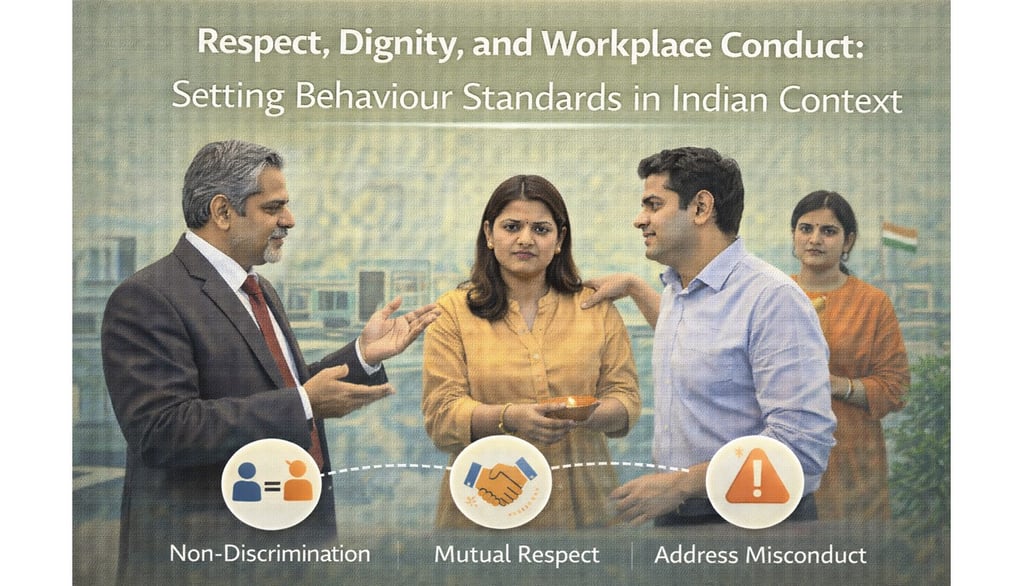
Most workplace conflicts in India are not about policies — they are about behaviour. Disrespectful tone, public embarrassment, casual sexism, favouritism, or misuse of authority quietly damage trust long before they become formal complaints.
Respect and dignity are not “soft culture ideas”. They are the baseline standards that define whether employees feel safe, valued, and treated fairly at work. This article explains how HR can set, communicate, and reinforce conduct standards that actually work in Indian organisations.
Why Behaviour Standards Are Often Unclear in India
Many Indian organisations struggle with behaviour consistency because:
Hierarchy blurs the line between authority and entitlement
Informal culture excuses poor conduct as “style” or “pressure”
Senior leaders are rarely challenged on behaviour
Policies exist, but expectations are not clearly translated into actions
As a result, employees often know what is technically wrong, but not what is practically unacceptable.
Respect and Dignity: What Do They Mean at Work?
In the Indian workplace context, respect and dignity include:
Speaking without humiliation or sarcasm
Treating juniors, support staff, and contract workers fairly
Avoiding comments on gender, caste, appearance, age, or background
Using authority responsibly, not emotionally
Addressing performance issues privately and constructively
Behaviour is judged not by intent, but by impact.
The Role of HR in Defining Conduct Standards
HR must move beyond generic “code of conduct” documents and make expectations tangible.
Effective HR actions include:
Clearly defining acceptable and unacceptable behaviours
Using real-life examples relevant to Indian offices and factories
Applying standards consistently across levels
Intervening early, not only after escalation
Supporting managers in difficult conversations
Silence from HR is often interpreted as approval.
Manager Behaviour: The Biggest Signal
Employees take behavioural cues from managers, not posters.
Managers influence conduct standards by:
How they speak in meetings
How they react under stress
How they treat women, juniors, and support staff
Whether they tolerate jokes, gossip, or bullying
One unchecked manager can undo months of culture work.
Addressing Misconduct Without Escalation
Not all misconduct needs formal punishment — but all misconduct needs response.
HR can:
Address issues early through private conversations
Focus on impact, not accusations
Coach managers on behaviour correction
Escalate only when patterns repeat or severity is high
Document actions discreetly
The goal is correction, not humiliation.
Linking Conduct to Culture and Performance
When respect and dignity are enforced:
Trust improves
Complaints reduce over time
Engagement increases
Employer brand strengthens
Attrition linked to “manager issues” drops
Culture becomes predictable — and predictability builds safety.
Conclusion
In Indian organisations, respect and dignity do not happen automatically. They require clear standards, visible enforcement, and consistent leadership behaviour. HR’s credibility depends on its willingness to protect dignity — even when it is uncomfortable.
Culture is not what you tolerate occasionally; it is what you tolerate repeatedly.
HR Checklist: Setting and Enforcing Behaviour Standards
🗹 Define clear behaviour expectations beyond policy language
🗹 Use Indian workplace examples in conduct guidelines
🗹 Train managers on respectful communication
🗹 Address misconduct early and privately
🗹 Apply standards consistently across hierarchy
🗹 Protect complainants from backlash
🗹 Document behavioural interventions discreetly
🗹 Reinforce dignity as a non-negotiable value
Common Behaviour Issues and HR Responses
Conclusion--
Effective labour law compliance depends on how well HR operations, payroll, and business processes work together. When compliance is embedded into everyday workflows, organisations reduce risk, improve accuracy, and build sustainable governance systems. HR teams that prioritise integration over isolation are better positioned to manage compliance confidently and consistently.
HireDesk India © 2026 | All Rights Reserved
"Thoughtful guidance for everyday HR"


Quick Links
Topics
Connect
_______________________________________________________________________________________________________________________________________________________________________________________
HireDesk is a free HR knowledge platform focused on practical, India-specific workplace guidance. We help HR professionals, managers, and learners navigate people practices with clarity, responsibility, and real-world relevance.