
Resume Screening Practices for Indian HR Teams
RECRUITMENT AND HIRING
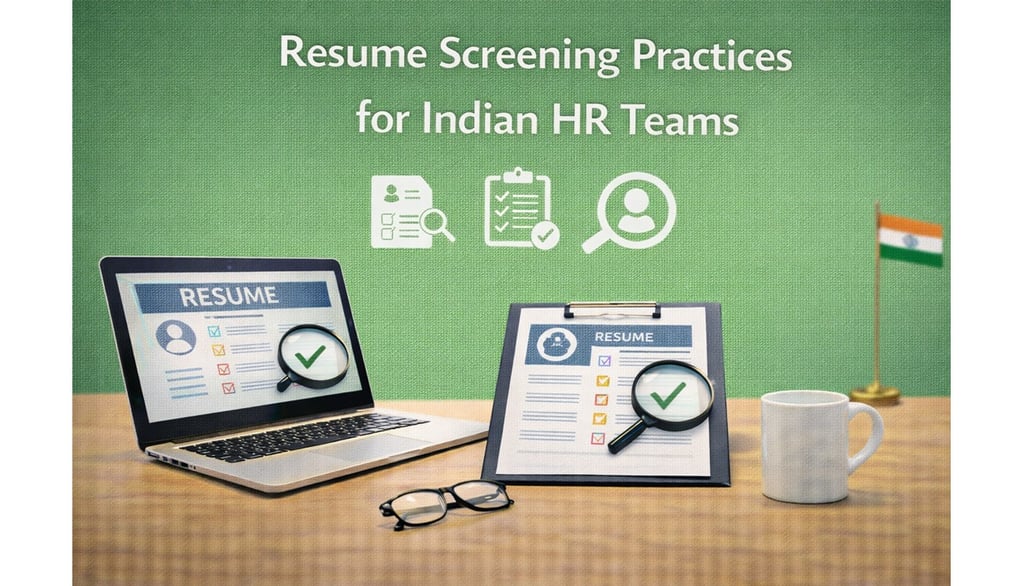
Resume screening is often the first and most critical filtering stage in recruitment. In Indian organisations, HR teams deal with high application volumes, inconsistent resume formats, inflated experience claims, and varying education standards. Poor screening leads to unsuitable interviews, wasted manager time, and compromised hiring quality.
A disciplined and structured resume screening approach helps HR shortlist relevant candidates efficiently while maintaining fairness, consistency, and compliance.
Indian Resume Screening Realities
Indian HR teams face specific challenges while screening resumes:
High applicant volumes from job portals and referrals
Inconsistent resume formats and terminology
Inflated skills or experience claims
Wide variation in institutions, degrees, and certifications
Pressure to shortlist quickly for urgent roles
Recognising these realities helps HR balance speed with judgement.
Core Resume Screening Practices
1. Start with Role-Based Screening Criteria
Before reviewing resumes, HR must define screening parameters clearly:
Mandatory qualifications and certifications
Relevant experience range (not just total years)
Industry or domain exposure required
Location, shift, or travel constraints
Clear criteria prevent subjective or inconsistent shortlisting.
2. Screen for Substance, Not Keywords Alone
Keyword-based filtering is useful but insufficient:
Assess actual role relevance, not just tool names
Look for continuity and progression in roles
Identify depth of responsibility rather than job title inflation
Cross-check skill claims with employment history
Human judgement remains essential, especially in Indian resumes.
3. Validate Education and Experience Carefully
Indian resumes often require closer validation:
Check institute recognition and degree relevance
Watch for unexplained employment gaps or overlaps
Verify tenure consistency across roles
Flag frequent job changes where role stability matters
This reduces downstream offer dropouts and background verification issues.
4. Identify Red Flags Early
Certain resume patterns require attention:
Overly generic descriptions across roles
Sudden unexplained role or salary jumps
Inconsistent dates or mismatched company names
Copy-paste project descriptions
Early identification helps HR make informed shortlist decisions.
5. Maintain Fairness and Consistency
HR must ensure screening practices are unbiased:
Apply the same criteria across all candidates
Avoid over-reliance on institute brand names alone
Document screening reasons where required
Align screening decisions with diversity and inclusion goals
Consistency builds credibility with hiring managers and candidates.
HR’s Practical Perspective
HR’s role is to act as the first quality gate:
Translate business requirements into screening parameters
Balance automation with human judgement
Protect hiring manager time by shortlisting relevant candidates
Ensure documentation and audit readiness
Continuously refine screening criteria based on hiring outcomes
Effective screening improves overall recruitment efficiency and hiring quality.
Conclusion
Resume screening is not a mechanical activity but a critical HR judgement exercise. For Indian HR teams, structured criteria, careful validation, and consistent application are essential to manage volume without compromising quality.
A disciplined screening approach strengthens hiring outcomes, reduces downstream risks, and builds trust with business stakeholders.
🗹 Resume Screening Checklist
🗹 Define mandatory qualifications and experience criteria upfront
🗹 Screen resumes against role-specific requirements
🗹 Assess substance beyond keywords and job titles
🗹 Validate education, tenure, and role progression
🗹 Identify red flags early during screening
🗹 Maintain consistent screening standards across candidates
🗹 Document screening decisions where required
🗹 Balance automation tools with HR judgement
🗹 Review screening effectiveness based on hiring outcomes
Resume Screening Framework
Conclusion--
Effective labour law compliance depends on how well HR operations, payroll, and business processes work together. When compliance is embedded into everyday workflows, organisations reduce risk, improve accuracy, and build sustainable governance systems. HR teams that prioritise integration over isolation are better positioned to manage compliance confidently and consistently.
HireDesk India © 2026 | All Rights Reserved
"Thoughtful guidance for everyday HR"


Quick Links
Topics
Connect
_______________________________________________________________________________________________________________________________________________________________________________________
HireDesk is a free HR knowledge platform focused on practical, India-specific workplace guidance. We help HR professionals, managers, and learners navigate people practices with clarity, responsibility, and real-world relevance.