
Role of HR in Managing Industrial Relations on the Shop Floor
INDUSTRIAL RELATIONS & FACTORY HR
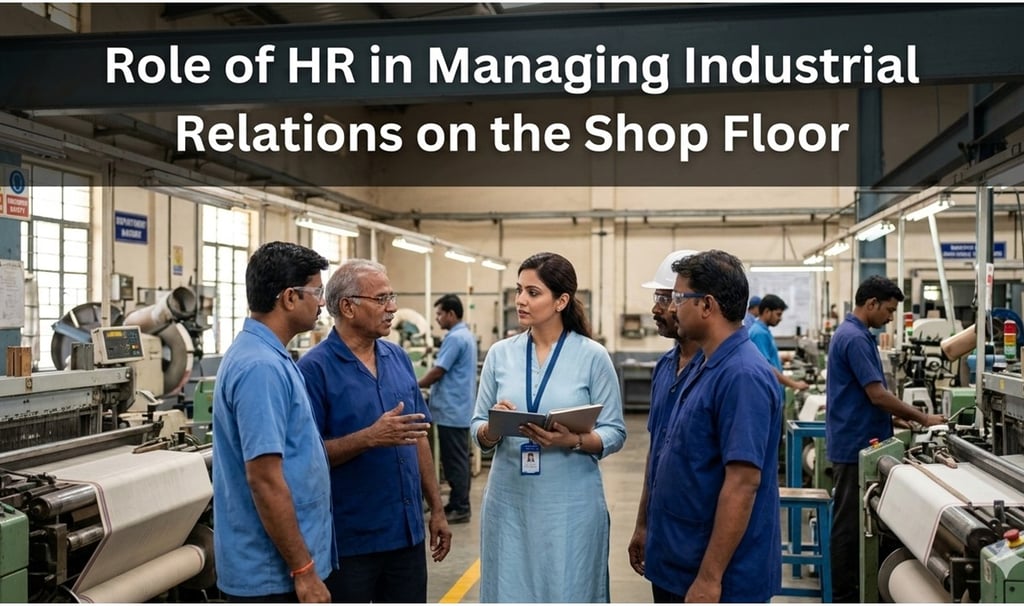
The shop floor is where industrial operations meet human dynamics. For HR teams, managing Industrial Relations (IR) at the shop floor level is critical to ensuring productivity, compliance, and workforce engagement.
In Indian factories, shop-floor HR involves direct interaction with line supervisors, workers, contract employees, and union representatives. The HR team must balance legal compliance, operational continuity, and employee satisfaction, often in real time. Effective IR management at this level reduces disputes, prevents strikes, and fosters a harmonious work environment.
This article explains the practical role of HR in managing shop-floor IR and highlights actions that strengthen both workforce relations and operational outcomes.
Key Shop-Floor IR Responsibilities for HR
Monitoring Workforce Dynamics
Maintain a clear understanding of worker composition: permanent, contract, and gig staff.
Track attendance, shift patterns, productivity, and absenteeism.
Observe interpersonal dynamics, emerging grievances, and team morale.
Union Engagement and Communication
Identify union representatives and maintain regular communication.
Participate in negotiation forums or bipartite meetings to discuss concerns.
Ensure union interactions are documented and transparent to avoid misunderstandings.
Grievance Handling and Conflict Resolution
Implement structured grievance redressal mechanisms, including suggestion boxes, digital tracking systems, and periodic forums.
Address complaints promptly and fairly, following principles of natural justice.
Escalate unresolved disputes to senior management or conciliation officers as needed.
Disciplinary Management
Ensure Standing Orders are clearly communicated and applied consistently.
Conduct domestic enquiries for misconduct or performance issues, maintaining full documentation.
Align disciplinary action with legal frameworks like the Industrial Relations Code 2020 and Factories Act.
Compliance and Safety Oversight
Ensure statutory registers, safety protocols, and welfare measures are maintained at all times.
Prepare for inspections by labour authorities, PF/ESI officials, and safety auditors.
Track accident reporting, remedial actions, and statutory filings.
Emerging Shop-Floor Challenges
HR teams at the shop floor face additional contemporary challenges:
Technological Change: Automation and digital workflows may create skill gaps and resistance among workers.
Contract and Gig Workers: Integration of non-permanent staff requires clear communication of rules and compliance responsibility.
Union Fragmentation: Multiple union factions may create overlapping demands, requiring careful coordination.
Employee Well-being: Mental health, fatigue, and ergonomic concerns must be proactively addressed.
Addressing these challenges proactively reduces operational disruptions and strengthens workforce trust.
Practical HR Strategies for Effective Shop-Floor IR
Participative Management: Encourage workers to contribute to problem-solving, safety committees, and process improvements.
Transparent Communication: Use notice boards, digital dashboards, town halls, and supervisor briefings to maintain clarity.
Supervisor Empowerment: Train line managers to handle minor disputes, reinforce compliance, and motivate workers.
Data-Driven Monitoring: Track attendance, productivity, grievances, and disciplinary trends to anticipate issues.
Collaboration with Unions: Engage constructively to ensure that union activity supports both workforce welfare and operational continuity.
These strategies make HR a proactive partner rather than a reactive mediator in shop-floor operations.
Conclusion
HR plays a central role in maintaining harmony, compliance, and productivity on the shop floor. By combining legal knowledge, operational awareness, and strong communication, HR teams can prevent disputes, foster engagement, and ensure smooth factory operations.
A structured, proactive, and participative approach to shop-floor IR ensures reliable production, worker satisfaction, and organisational resilience.
🗹 Shop-Floor IR – HR Action Checklist
🗹 Monitor workforce composition, attendance, and team dynamics daily
🗹 Maintain regular, transparent communication with union representatives
🗹 Implement and track grievance redressal mechanisms
🗹 Conduct domestic enquiries for misconduct or disputes consistently and fairly
🗹 Communicate Standing Orders and policies to all shop-floor staff
🗹 Prepare for statutory inspections and maintain safety registers
🗹 Train supervisors in IR, compliance, and conflict management
🗹 Use data and analytics to anticipate disputes and productivity issues
🗹 Integrate contract and gig workers into compliance and engagement processes
Key Shop-Floor IR Responsibilities (Sample Table)
Conclusion--
Effective labour law compliance depends on how well HR operations, payroll, and business processes work together. When compliance is embedded into everyday workflows, organisations reduce risk, improve accuracy, and build sustainable governance systems. HR teams that prioritise integration over isolation are better positioned to manage compliance confidently and consistently.
HireDesk India © 2026 | All Rights Reserved
"Thoughtful guidance for everyday HR"


Quick Links
Topics
Connect
_______________________________________________________________________________________________________________________________________________________________________________________
HireDesk is a free HR knowledge platform focused on practical, India-specific workplace guidance. We help HR professionals, managers, and learners navigate people practices with clarity, responsibility, and real-world relevance.