
Salary Structure Design: Balancing Compliance, Cost, and Take-Home Pay
PAYROLL, PF & BENEFITS
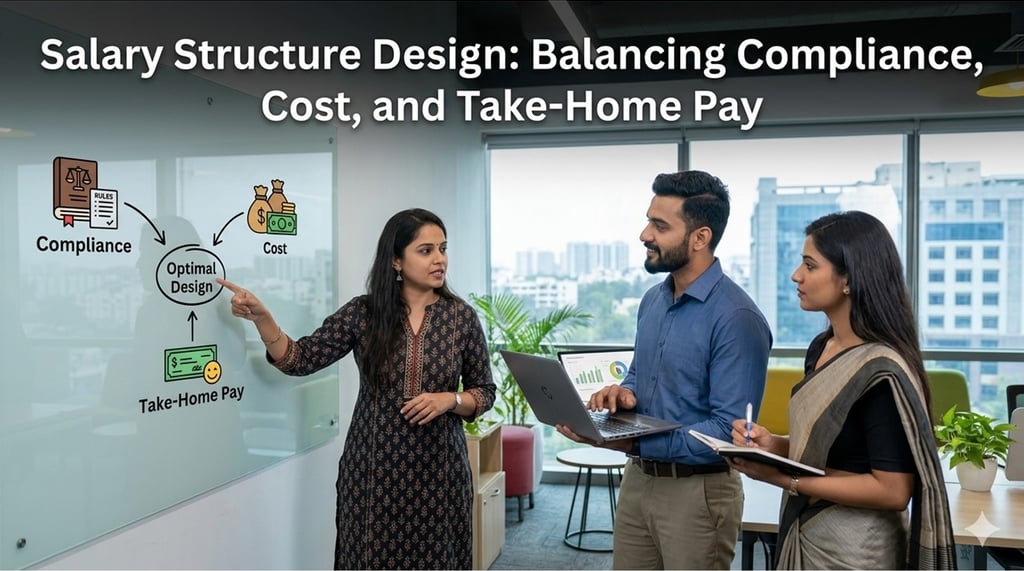
Salary structure design is one of the most strategic payroll responsibilities in HR. A poorly designed structure can increase statutory costs, confuse employees, and create long-term compliance risks. A well-balanced structure, on the other hand, supports transparency, cost efficiency, and employee satisfaction.
This article explains how HR can design salary structures that meet legal requirements while optimising take-home pay.
What Is a Salary Structure?
A salary structure is the break-up of an employee’s Cost to Company (CTC) into various earning and deduction components. It determines:
Statutory contribution levels
Tax exposure
Net take-home pay
Payroll compliance obligations
Key Components in Salary Structuring
Fixed Pay Elements
Basic salary
House Rent Allowance (HRA)
Special allowance
Fixed monthly allowances
Variable / Flexible Elements
Performance incentives
Bonuses
Reimbursements (where applicable)
Each component has different tax and statutory implications.
Compliance Considerations HR Must Account For
PF applicability depends on Basic wages definition
ESIC coverage depends on gross wage thresholds
Gratuity liability is linked to Basic + DA
Professional tax applicability varies by state
Ignoring these linkages can create long-term payroll exposure.
Balancing Take-Home Pay and Cost
While structuring salaries, HR should aim to:
Keep Basic pay compliant with wage definitions
Avoid artificial splitting to reduce PF unlawfully
Maintain internal parity across roles and grades
Align structures with organisation pay philosophy
Short-term savings should not compromise statutory integrity.
Salary Structure Design Checklist
☐ Define Basic pay rationale clearly
☐ Map PF, ESIC, and gratuity implications
☐ Ensure consistency across employee categories
☐ Validate tax treatment of each component
☐ Document structure logic for audits
Common Structuring Pitfalls
Excessive reliance on “special allowance”
Ignoring future gratuity liability
Different structures for similar roles
Misalignment between offer letters and payroll
Conclusion
Salary structure design is not merely a payroll exercise—it reflects organisational ethics, compliance maturity, and employee trust. HR teams must design structures that are defensible, transparent, and sustainable.
Conclusion--
Effective labour law compliance depends on how well HR operations, payroll, and business processes work together. When compliance is embedded into everyday workflows, organisations reduce risk, improve accuracy, and build sustainable governance systems. HR teams that prioritise integration over isolation are better positioned to manage compliance confidently and consistently.
Related Articles
HireDesk India © 2026 | All Rights Reserved
"Thoughtful guidance for everyday HR"


Quick Links
Topics
Connect
_______________________________________________________________________________________________________________________________________________________________________________________
HireDesk is a free HR knowledge platform focused on practical, India-specific workplace guidance. We help HR professionals, managers, and learners navigate people practices with clarity, responsibility, and real-world relevance.