
Scenario Planning in Workforce Planning
WORKFORCE PLANNING & MANPOWER
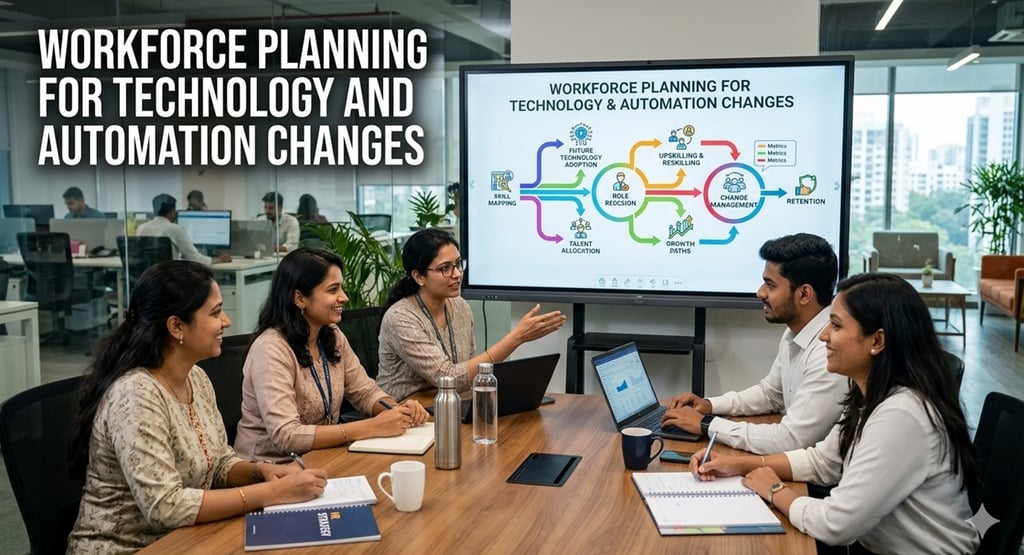
Business environments are increasingly uncertain due to market volatility, technology changes, regulatory shifts, and economic cycles. Workforce plans based on a single forecast often struggle when conditions change. Scenario planning helps organisations prepare for multiple possible futures rather than relying on one fixed assumption.
When applied to workforce planning, scenario planning improves manpower flexibility and decision readiness.
What Is Scenario Planning in Workforce Planning?
Scenario planning is the process of developing multiple, plausible workforce scenarios based on different business conditions. Instead of predicting one outcome, it explores how manpower requirements may change under varying situations.
Typical scenarios may include:
Business growth or slowdown
Technology adoption or automation
Market expansion or contraction
Regulatory or policy changes
Each scenario is analysed to understand its impact on workforce size, skills, and structure.
Why Scenario Planning Is Important for Manpower Decisions
Improves Preparedness
Scenario planning helps organisations anticipate workforce risks before they occur.
Reduces Reactive Decisions
Having pre-thought manpower responses reduces the need for rushed hiring or sudden cost-cutting.
Supports Flexible Workforce Strategies
It enables planning for alternative workforce mixes, such as permanent, contract, or outsourced resources.
Strengthens Leadership Decision-Making
Leaders can evaluate workforce implications before committing to strategic business choices.
Common Workforce Scenarios Considered
Growth Scenario
Increased demand leading to higher manpower needs, new skills, or additional locations.
Stability Scenario
Minimal change in headcount, with focus on productivity and skill optimisation.
Slowdown or Cost-Control Scenario
Reduced demand requiring workforce rationalisation or redeployment.
Transformation Scenario
Significant skill shifts due to technology, automation, or process changes.
Integrating Scenario Planning into Workforce Planning
Step 1: Identify Key Business Uncertainties
List factors that may significantly affect workforce demand, such as market demand or technology adoption.
Step 2: Develop Workforce Scenarios
Create 2–4 realistic scenarios with different manpower assumptions.
Step 3: Assess Workforce Impact
Estimate headcount, skill needs, costs, and risks under each scenario.
Step 4: Define Contingency Actions
Prepare workforce responses such as hiring triggers, redeployment plans, or training priorities.
Light Checklist: Scenario Planning Readiness
☐ Key business uncertainties identified
☐ Multiple workforce scenarios defined
☐ Impact on headcount and skills assessed
☐ Contingency manpower actions documented
☐ Scenarios reviewed periodically
Using Scenario Planning in Practice
In practice, organisations use scenario planning to:
Set hiring thresholds linked to demand changes
Prepare reskilling plans for transformation scenarios
Identify roles at risk during downturns
Plan leadership and succession needs under growth scenarios
This approach makes workforce planning more adaptable and resilient.
Common Challenges
Overcomplicating scenarios with unrealistic assumptions
Limited data to support scenario modelling
Lack of alignment between business and HR teams
Treating scenarios as theoretical rather than actionable
Keeping scenarios simple and actionable improves their effectiveness.
Conclusion
Scenario planning strengthens workforce planning by preparing organisations for uncertainty. By considering multiple manpower outcomes and defining response strategies in advance, organisations can respond faster and with greater confidence.
As business environments continue to evolve, scenario planning is an essential tool for effective and resilient workforce planning.
Conclusion--
Effective labour law compliance depends on how well HR operations, payroll, and business processes work together. When compliance is embedded into everyday workflows, organisations reduce risk, improve accuracy, and build sustainable governance systems. HR teams that prioritise integration over isolation are better positioned to manage compliance confidently and consistently.
HireDesk India © 2026 | All Rights Reserved
"Thoughtful guidance for everyday HR"


Quick Links
Topics
Connect
_______________________________________________________________________________________________________________________________________________________________________________________
HireDesk is a free HR knowledge platform focused on practical, India-specific workplace guidance. We help HR professionals, managers, and learners navigate people practices with clarity, responsibility, and real-world relevance.