
Setting Up Core HR Processes in a Growing Organisation
As SMEs grow, informal people practices may no longer be sufficient. Establishing basic HR processes helps create consistency, clarity, and operational stability.
SME HR OPERATIONS
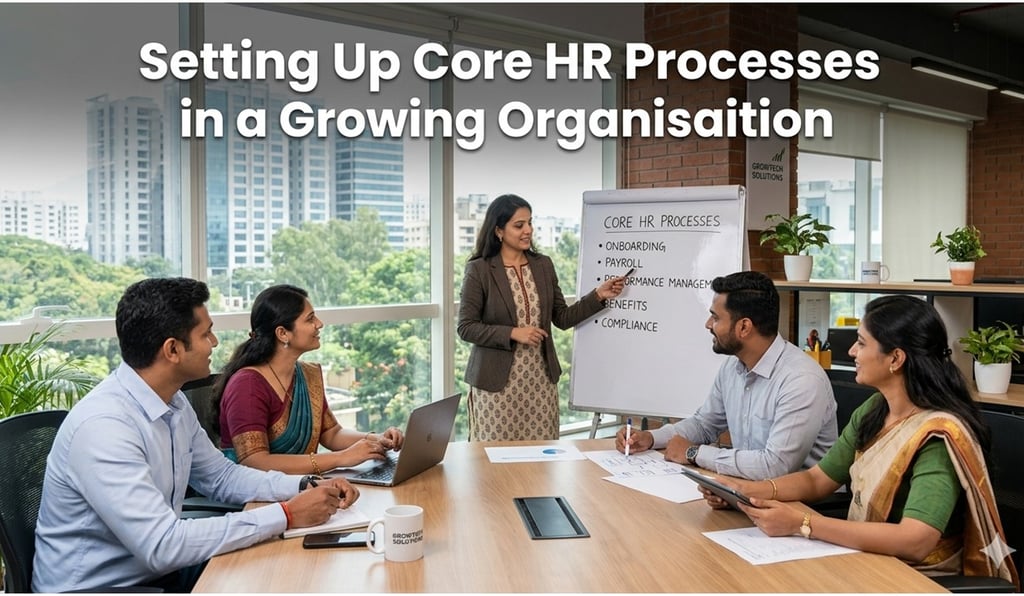
This article discusses how HR professionals can set up essential HR processes in growing SMEs, focusing on simplicity, practicality, and compliance.
When Should HR Processes Be Formalised?
HR processes typically need formalisation when:
Employee headcount increases steadily
Managers struggle with consistency
Compliance requirements become complex
Employee queries increase
Early intervention helps prevent operational challenges.
Core HR Processes to Prioritise
Growing organisations should focus on:
Recruitment and onboarding procedures
Payroll and statutory compliance
Attendance and leave management
Employee documentation
These processes create a reliable HR foundation.
Keeping Processes Simple and Scalable
HR should avoid over-engineering systems. Instead:
Use clear templates and guidelines
Document processes briefly
Review and refine processes periodically
Simplicity supports adoption and flexibility.
HR’s Role in Implementation
HR supports implementation by:
Communicating processes clearly
Training managers on expectations
Addressing employee questions promptly
Gradual implementation improves acceptance.
Conclusion
Setting up core HR processes at the right stage helps growing organisations operate smoothly and compliantly. HR’s focus should be on clarity, consistency, and scalability rather than complexity.
Part of HireDesk’s SME HR Operations resources.
Conclusion--
Effective labour law compliance depends on how well HR operations, payroll, and business processes work together. When compliance is embedded into everyday workflows, organisations reduce risk, improve accuracy, and build sustainable governance systems. HR teams that prioritise integration over isolation are better positioned to manage compliance confidently and consistently.
HireDesk India © 2026 | All Rights Reserved
"Thoughtful guidance for everyday HR"


Quick Links
Topics
Connect
_______________________________________________________________________________________________________________________________________________________________________________________
HireDesk is a free HR knowledge platform focused on practical, India-specific workplace guidance. We help HR professionals, managers, and learners navigate people practices with clarity, responsibility, and real-world relevance.