
Short-Term vs Long-Term Manpower Planning
WORKFORCE PLANNING & MANPOWER
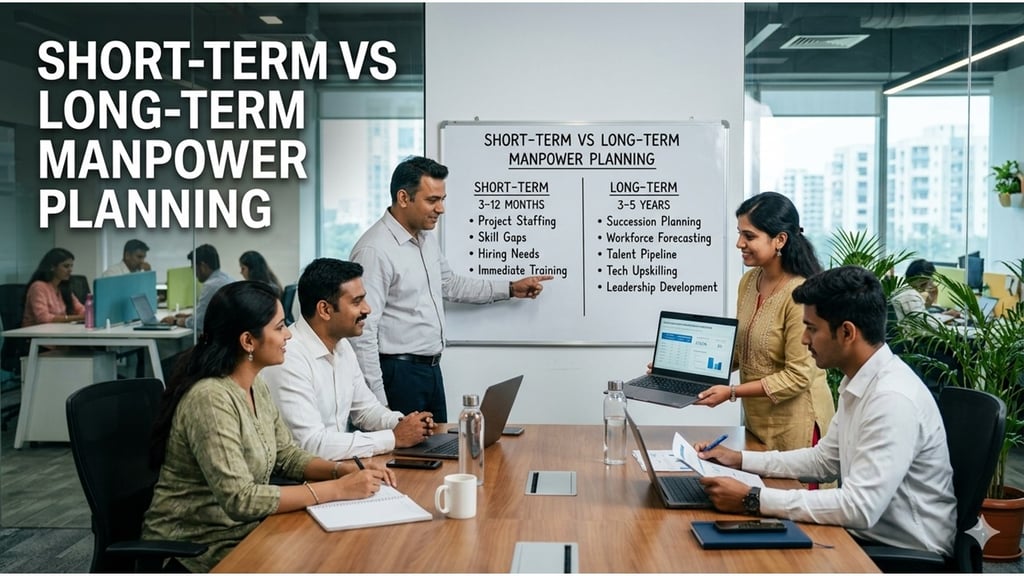
Workforce planning involves decisions that span immediate operational needs as well as strategic, long-term objectives. Understanding the difference between short-term and long-term manpower planning helps HR professionals balance efficiency, flexibility, and future readiness.
Short-term planning addresses immediate staffing requirements, while long-term planning ensures sustainable workforce capability aligned with organisational strategy.
Short-Term Manpower Planning
Definition
Short-term planning focuses on workforce requirements over a few weeks to 12 months. It ensures operational continuity, project delivery, and timely response to seasonal or sudden changes in demand.
Key Focus Areas
Filling immediate vacancies
Managing peak workloads and seasonal demand
Temporary or contract staffing
Overtime management
HR Actions
Monitor current headcount and utilisation
Redeploy internal employees to high-demand areas
Plan temporary or project-based hires
Track real-time workforce metrics
Long-Term Manpower Planning
Definition
Long-term planning considers 1–5 years or more, aligning workforce capabilities with strategic organisational goals. It anticipates changes in business direction, technology, and skills needs.
Key Focus Areas
Leadership and succession planning
Future skills development and reskilling
Organisational growth or expansion planning
Workforce cost optimisation
HR Actions
Forecast headcount and skills for future roles
Develop training and reskilling programs
Plan career paths and internal mobility pipelines
Align manpower plans with business strategy
Light Checklist: Short-Term vs Long-Term Planning
☐ Immediate staffing needs identified and addressed
☐ Seasonal or project-based demand assessed
☐ Future skill and leadership requirements forecasted
☐ Reskilling and internal mobility plans prepared
☐ Workforce plans reviewed periodically
Sample Table: Comparing Short-Term and Long-Term Workforce Planning
Common Challenges
Overemphasis on short-term staffing, neglecting strategic growth
Inaccurate long-term forecasts due to changing business priorities
Insufficient integration of training and succession plans
Reactive decision-making without data support
Balancing short-term responsiveness with long-term readiness ensures workforce stability and organisational agility.
Conclusion
Effective workforce planning requires both short-term and long-term perspectives. While short-term planning maintains operational continuity, long-term planning builds sustainable organisational capability. HR professionals must integrate both approaches to ensure the workforce is flexible, skilled, and aligned with business strategy.
Conclusion--
Effective labour law compliance depends on how well HR operations, payroll, and business processes work together. When compliance is embedded into everyday workflows, organisations reduce risk, improve accuracy, and build sustainable governance systems. HR teams that prioritise integration over isolation are better positioned to manage compliance confidently and consistently.
HireDesk India © 2026 | All Rights Reserved
"Thoughtful guidance for everyday HR"


Quick Links
Topics
Connect
_______________________________________________________________________________________________________________________________________________________________________________________
HireDesk is a free HR knowledge platform focused on practical, India-specific workplace guidance. We help HR professionals, managers, and learners navigate people practices with clarity, responsibility, and real-world relevance.