
Shortlisting Criteria and Bias Control in Recruitment
RECRUITMENT AND HIRING
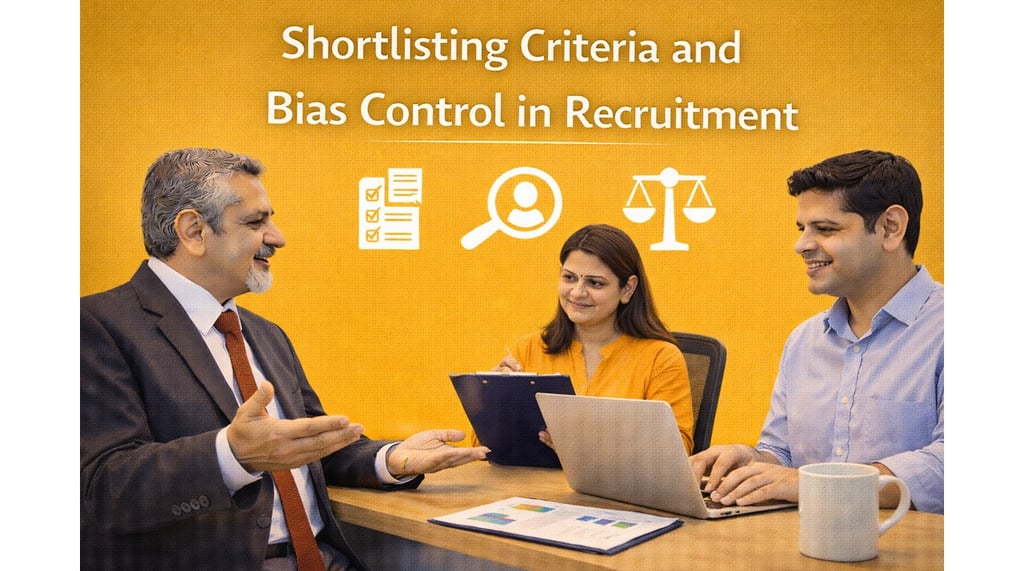
Shortlisting is the stage where recruitment decisions start becoming subjective. In Indian organisations, this stage often sees unconscious bias, inconsistent criteria, and pressure from hiring managers to “include known profiles”. Weak shortlisting practices lead to poor interview outcomes, diversity issues, and credibility gaps for HR.
A disciplined shortlisting framework helps HR teams balance speed, fairness, and quality, while ensuring decisions are defensible and aligned with organisational values.
Shortlisting Challenges in Indian Organisations
Common shortlisting challenges include:
High dependence on individual judgement rather than defined criteria
Preference for familiar institutes, companies, or referrals
Pressure from business leaders for specific candidate types
Inconsistent shortlisting across teams and locations
Limited awareness of unconscious bias
Recognising these issues allows HR to design structured, bias-aware shortlisting practices.
Core Shortlisting Principles
1. Define Objective Shortlisting Criteria
Shortlisting must be based on pre-defined parameters:
Mandatory vs preferred qualifications
Role-relevant experience and exposure
Skill depth and application
Location, shift, or regulatory constraints
Criteria should be agreed upon with the hiring manager before screening begins.
2. Separate Screening from Selection
HR should differentiate between:
Screening: Eligibility and role fit
Shortlisting: Prioritising candidates for interviews
This separation reduces premature elimination and ensures fair consideration.
3. Identify and Control Bias
HR must actively manage common recruitment biases:
Institute bias: Overvaluing elite colleges
Company brand bias: Preferring large or well-known employers
Gender or age assumptions: Unjustified role suitability assumptions
Referral bias: Assuming referred candidates are inherently superior
Structured criteria and documentation help neutralise these biases.
4. Use Structured Shortlisting Tools
Practical tools support consistency:
Shortlisting scorecards aligned to job requirements
Mandatory justification for rejection of borderline candidates
Review or calibration discussions for critical roles
These tools improve transparency and audit readiness.
5. Maintain Documentation and Accountability
Shortlisting decisions should be traceable:
Record reasons for inclusion or exclusion
Maintain shortlisting summaries for leadership review
Use data to assess patterns and bias risks over time
Documentation protects HR and improves long-term hiring quality.
HR’s Practical Perspective
HR acts as the process owner and bias guardian:
Translate business needs into objective criteria
Challenge unjustified preferences or exclusions
Educate hiring managers on bias risks
Ensure consistency across departments and locations
Review outcomes to refine criteria and controls
Strong HR stewardship ensures shortlisting decisions are fair, credible, and effective.
Conclusion
Effective shortlisting requires structure, discipline, and awareness of bias. In the Indian context, where networks and brand preferences are strong, HR must play an active role in defining criteria, controlling bias, and documenting decisions.
Balanced shortlisting practices improve interview quality, diversity, and trust in the recruitment process.
🗹 Shortlisting and Bias Control Checklist
🗹 Define objective shortlisting criteria before screening
🗹 Separate eligibility screening from interview shortlisting
🗹 Identify common recruitment biases proactively
🗹 Use structured scorecards for shortlisting decisions
🗹 Document reasons for inclusion or exclusion
🗹 Ensure consistency across teams and locations
🗹 Conduct calibration for critical or senior roles
🗹 Educate hiring managers on bias risks
🗹 Review shortlisting patterns periodically
Shortlisting and Bias Control Framework
Conclusion--
Effective labour law compliance depends on how well HR operations, payroll, and business processes work together. When compliance is embedded into everyday workflows, organisations reduce risk, improve accuracy, and build sustainable governance systems. HR teams that prioritise integration over isolation are better positioned to manage compliance confidently and consistently.
HireDesk India © 2026 | All Rights Reserved
"Thoughtful guidance for everyday HR"


Quick Links
Topics
Connect
_______________________________________________________________________________________________________________________________________________________________________________________
HireDesk is a free HR knowledge platform focused on practical, India-specific workplace guidance. We help HR professionals, managers, and learners navigate people practices with clarity, responsibility, and real-world relevance.