
Skill-Based Workforce Planning Concepts
WORKFORCE PLANNING & MANPOWER
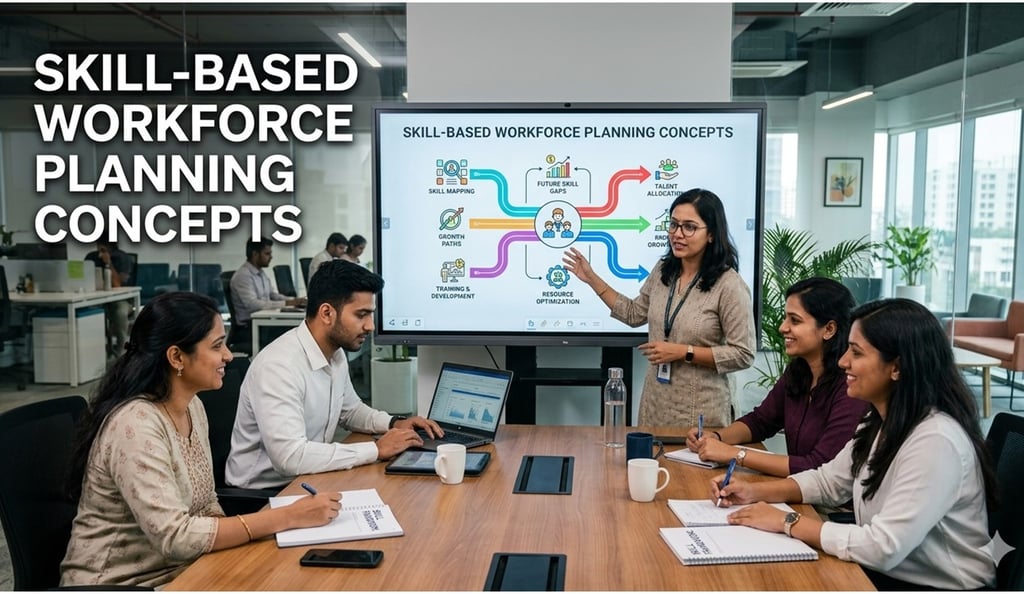
In today’s dynamic business environment, workforce planning is not just about headcount—it’s about skills. Skill-based workforce planning ensures organisations have the right competencies available to meet current and future business needs.
For HR professionals, focusing on skills rather than just roles or numbers helps align manpower planning with organisational strategy and long-term capability requirements.
What Is Skill-Based Workforce Planning?
Skill-based workforce planning is the process of analysing, forecasting, and managing the skills required across the organisation. Instead of planning solely for positions or departments, it focuses on skills supply and demand, skill gaps, and development priorities.
Key aspects include:
Mapping existing skills across the workforce
Forecasting skills needed for future projects or roles
Identifying gaps between current and required skills
Planning training, recruitment, or redeployment to bridge gaps
Why Skills Matter in Workforce Planning
Future-Proofing the Organisation
Rapid technology adoption and evolving business needs require employees to possess the right skills to remain competitive.
Improved Resource Allocation
Knowing which skills exist internally helps HR deploy talent effectively and reduce dependency on external hiring.
Targeted Training and Development
Skill-focused planning identifies high-priority training areas and ensures development efforts are impactful.
Succession and Career Planning
Aligning critical skills with talent pipelines strengthens succession planning and internal mobility.
Steps in Skill-Based Workforce Planning
Step 1: Skills Inventory
Create a comprehensive record of current employee skills, certifications, experience, and proficiency levels.
Step 2: Skills Demand Forecast
Identify skills required for upcoming projects, new initiatives, or future business needs.
Step 3: Gap Analysis
Compare existing skills with forecasted needs to determine shortages, surpluses, or redeployment opportunities.
Step 4: Action Planning
Plan recruitment, training, or internal mobility initiatives to address skill gaps and optimise utilisation.
Step 5: Monitoring and Review
Regularly track skill development progress and adjust plans as business priorities evolve.
Light Checklist: Skill-Based Workforce Planning
☐ Skills inventory maintained and updated
☐ Future skill requirements forecasted
☐ Skill gaps identified by role and function
☐ Training and recruitment plans aligned with gaps
☐ Skill development progress monitored
Sample Table: Skill-Based Workforce Planning Overview
Common Challenges
Incomplete or inaccurate skills data
Difficulty forecasting skills for emerging roles
Over-reliance on external hiring rather than developing internal skills
Lack of coordination between business needs and HR development plans
Proper skill mapping and planning ensures workforce capabilities align with organisational strategy.
Conclusion
Skill-based workforce planning moves beyond headcount to focus on capabilities and competencies. By systematically mapping skills, forecasting demand, identifying gaps, and planning interventions, organisations can ensure they have the right skills at the right time, supporting both current operations and future growth.
Conclusion--
Effective labour law compliance depends on how well HR operations, payroll, and business processes work together. When compliance is embedded into everyday workflows, organisations reduce risk, improve accuracy, and build sustainable governance systems. HR teams that prioritise integration over isolation are better positioned to manage compliance confidently and consistently.
HireDesk India © 2026 | All Rights Reserved
"Thoughtful guidance for everyday HR"


Quick Links
Topics
Connect
_______________________________________________________________________________________________________________________________________________________________________________________
HireDesk is a free HR knowledge platform focused on practical, India-specific workplace guidance. We help HR professionals, managers, and learners navigate people practices with clarity, responsibility, and real-world relevance.