
Skills Gap Analysis: Identifying Future Workforce Capabilities
WORKFORCE PLANNING & MANPOWER
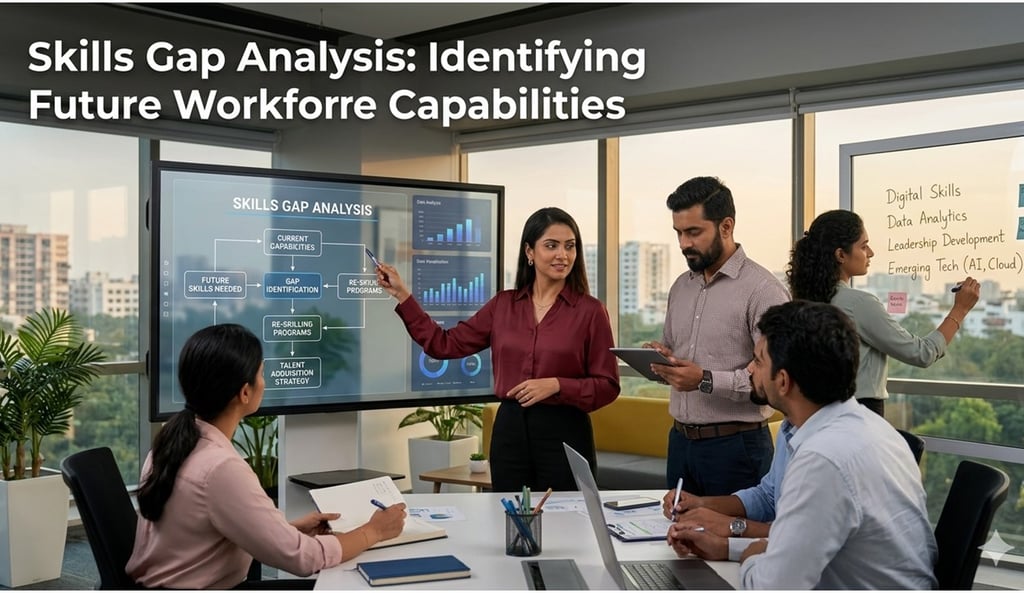
Workforce planning is no longer just about numbers — it is equally about capabilities. As roles evolve, technologies change, and business priorities shift, organisations often find that existing skills no longer fully match future needs. Skills gap analysis helps HR teams systematically identify these gaps and plan targeted interventions rather than relying on assumptions or reactive hiring.
This article explains what skills gap analysis means in a practical HR context, how it can be conducted using available data, and how findings can be translated into hiring, learning, and workforce planning decisions.
What Is Skills Gap Analysis?
Skills gap analysis is the process of comparing current workforce skills with skills required for future roles and business goals. The objective is to identify areas where skills are insufficient, outdated, or missing altogether.
Unlike performance assessments, which focus on how well employees are doing today, skills gap analysis looks ahead — anticipating what capabilities the organisation will need in the near to medium term.
Why Skills Gap Analysis Matters for HR
For HR teams, skills gaps often surface indirectly — through hiring delays, performance challenges, or dependence on external consultants. Conducting a structured skills gap analysis allows HR to:
· Anticipate future hiring and training needs
· Reduce skill shortages before they impact business delivery
· Support internal mobility and career development
· Align learning initiatives with real organisational needs
· Improve succession and continuity planning
In the Indian context, where rapid growth, automation, and role hybridisation are common, skills gap analysis is increasingly critical.
Step 1: Understand Future Skill Requirements
Skills gap analysis begins with clarity on where the organisation is heading. HR should work closely with business leaders to understand:
· Business growth or expansion plans
· Technology or process changes
· New roles or evolving responsibilities
· Regulatory or compliance-driven skill needs
From this, HR can identify future skill categories, such as digital literacy, leadership capability, compliance knowledge, customer-facing skills, or technical expertise.
Step 2: Map Current Workforce Skills
Once future needs are identified, the next step is assessing existing skills within the organisation. This can be done using a combination of:
· Job descriptions and role profiles
· Performance reviews and competency frameworks
· Manager inputs and team assessments
· Employee self-assessments
· Learning and certification records
The aim is not to achieve perfect precision but to build a reasonable skills inventory that reflects actual capabilities.
Step 3: Identify and Prioritise Skill Gaps
Comparing future skill needs with current capabilities highlights gaps that HR must address. Not all gaps require immediate action, so prioritisation is essential.
HR should consider:
· Criticality of the skill to business operations
· Time required to build the skill internally
· Availability of talent in the external market
· Cost implications of hiring vs training
This helps distinguish between urgent gaps, developable gaps, and long-term capability needs.
Step 4: Translate Insights into HR Actions
Skills gap analysis is only valuable if it leads to action. Based on findings, HR can decide whether to:
· Upskill or reskill existing employees
· Redesign roles or responsibilities
· Hire externally for specialised skills
· Introduce mentoring or job rotation programs
· Strengthen succession pipelines
This ensures workforce planning, learning, and recruitment efforts are aligned and evidence-based.
Skills Gap Analysis and Workforce Planning
Skills gap analysis complements manpower forecasting and workforce alignment. While forecasting answers how many people are needed and alignment answers where they are needed, skills analysis clarifies what capabilities those people must have.
Together, these approaches help HR move from reactive staffing to proactive workforce design.
Light Checklist: Conducting a Practical Skills Gap Analysis
Use this checklist to guide your skills gap exercise:
· Have future business priorities been clearly identified?
· Are key roles and evolving responsibilities defined?
· Is there a basic inventory of current employee skills?
· Have managers contributed to skill assessments?
· Are skill gaps prioritised based on business impact?
· Are actions identified — hire, train, redeploy, or redesign roles?
This checklist helps keep the exercise focused and actionable.
Common Pitfalls to Avoid
HR teams should be mindful of common mistakes, such as:
· Treating skills gap analysis as a one-time activity
· Relying only on self-assessments without validation
· Focusing only on technical skills and ignoring behavioural or leadership capabilities
· Conducting the exercise without business involvement
Avoiding these pitfalls improves accuracy and adoption.
Sample Skills Matrix (Simple HR-Friendly Format)
A skills matrix helps HR visualise current capabilities against future needs without complex tools. Below is an illustrative example for a mid-sized organisation.
Assessing Readiness for Emerging HR Needs
Core HR Roles vs Key Skill Areas
Skill Level Legend
Editorial Tip:
This matrix is indicative. Skill expectations may vary based on organisation size, industry, and role scope.
How HR Can Use This Matrix
This simple matrix helps HR teams to:
Quickly spot skill concentrations and gaps
Identify employees who may need targeted upskilling
Support role redesign or succession planning
Decide where external hiring may be necessary
The matrix can be maintained in a spreadsheet and reviewed annually or during workforce planning cycles.
Practical Tip for Indian Organisations
Start small. Focus on 5–7 critical skills per role rather than capturing everything. The goal is clarity, not documentation overload.
Conclusion
Skills gap analysis enables HR to anticipate future capability needs rather than reacting to shortages after they emerge. When done thoughtfully, it strengthens workforce planning, informs learning strategies, and supports sustainable organisational growth.
For HR teams, the real value lies not in complex frameworks but in consistent, practical assessment and follow-through — ensuring the workforce evolves in step with the organisation’s future direction.
Conclusion--
Effective labour law compliance depends on how well HR operations, payroll, and business processes work together. When compliance is embedded into everyday workflows, organisations reduce risk, improve accuracy, and build sustainable governance systems. HR teams that prioritise integration over isolation are better positioned to manage compliance confidently and consistently.
HireDesk India © 2026 | All Rights Reserved
"Thoughtful guidance for everyday HR"


Quick Links
Topics
Connect
_______________________________________________________________________________________________________________________________________________________________________________________
HireDesk is a free HR knowledge platform focused on practical, India-specific workplace guidance. We help HR professionals, managers, and learners navigate people practices with clarity, responsibility, and real-world relevance.