
Sourcing Strategies for Different Hiring Needs
RECRUITMENT AND HIRING

Introduction
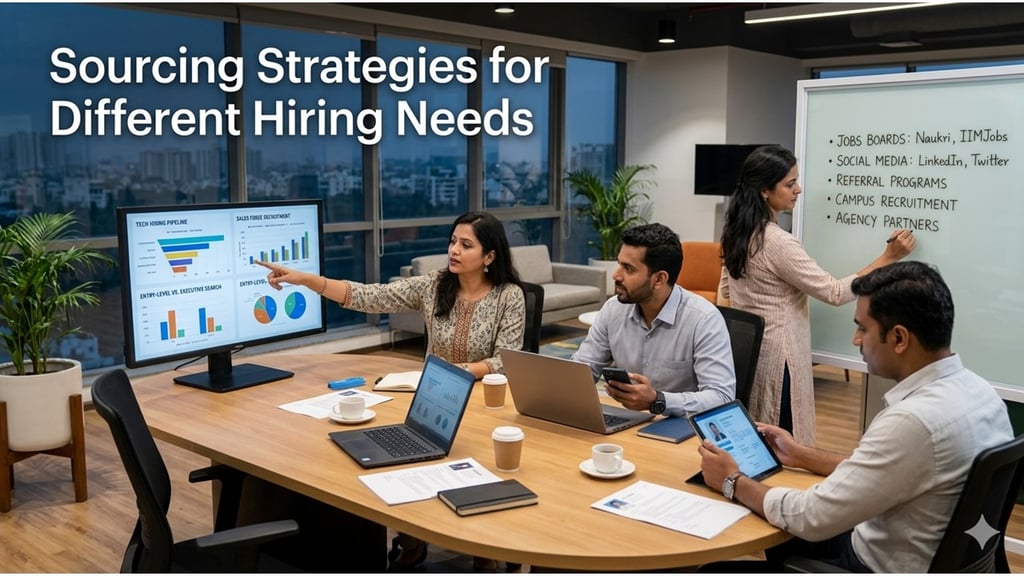
Hiring success depends not only on who you want to hire, but also on how and where you look for talent. A sourcing approach that works well for entry-level roles may fail entirely for niche, senior, or urgent positions. Effective HR teams tailor sourcing strategies based on role criticality, skill availability, timelines, and organisational context.
This article explains how HR professionals can align sourcing methods with different hiring needs in a practical, realistic way—especially within Indian workplaces.
Understanding Why One Sourcing Method Doesn’t Fit All
Sourcing is not about posting vacancies everywhere and waiting for responses. Each role has unique characteristics such as:
Skill rarity or availability
Experience level required
Time sensitivity
Industry or location constraints
Confidentiality considerations
Recognising these differences helps HR choose sourcing channels that are efficient, cost-effective, and appropriate.
Common Hiring Needs and Suitable Sourcing Approaches
1. Entry-Level and Graduate Hiring
Typical needs: Freshers, junior executives, trainees
Recommended sourcing channels:
Campus hiring and internship conversions
Job portals with fresher-focused filters
Employee referrals
Social media postings (LinkedIn, Instagram, WhatsApp groups)
HR focus: Clear eligibility criteria, simple job descriptions, and volume screening processes.
2. Lateral Hiring for Operational Roles
Typical needs: Experienced professionals for routine business roles
Recommended sourcing channels:
Major job portals
Professional networking platforms
Past applicant databases
Vendor or consultant support (selective)
HR focus: Role clarity, realistic expectations, and efficient screening to avoid hiring delays.
3. Specialist and Niche Skill Hiring
Typical needs: IT specialists, compliance experts, domain specialists
Recommended sourcing channels:
LinkedIn sourcing and direct outreach
Industry-specific job boards
Professional communities and forums
Targeted referrals
HR focus: Precision sourcing, longer timelines, and strong coordination with hiring managers.
4. Senior Leadership and Strategic Roles
Typical needs: Managers, heads of function, CXO-level roles
Recommended sourcing channels:
Confidential search through leadership networks
Executive search firms
Internal succession planning
Industry references
HR focus: Confidentiality, cultural alignment, and in-depth evaluation rather than speed.
5. Urgent or High-Volume Hiring
Typical needs: Seasonal hiring, plant expansion, project-based staffing
Recommended sourcing channels:
Staffing agencies
Walk-in drives
Local employment networks
Bulk job postings with simplified criteria
HR focus: Speed, coordination, and compliance readiness.
Balancing Internal and External Sourcing
HR should always evaluate internal options before moving externally:
Internal job postings
Role rotations
Succession pipelines
Redeployment during restructuring
Internal sourcing reduces hiring time, improves retention, and supports employee growth when managed transparently.
Practical Sourcing Checklist for HR
Before finalising a sourcing plan, HR should ask:
What is the urgency and business impact of this role?
Are the required skills easily available in the market?
Can this role be filled internally?
What sourcing channel has worked for similar roles earlier?
Is the cost and effort justified for the role level?
This clarity prevents over-sourcing or under-sourcing.
Common Sourcing Mistakes to Avoid
Using the same sourcing channel for every role
Over-dependence on consultants for routine hiring
Ignoring internal talent pools
Poor coordination between HR and hiring managers
Unrealistic timelines for niche roles
Avoiding these mistakes improves hiring outcomes without increasing costs.
Sourcing Strategy Alignment Checklist for HR
Before launching sourcing efforts for any role, review the following:
Role & Business Context
☐ Is the role entry-level, specialist, leadership, or high-volume?
☐ How critical is this role to business continuity or growth?
☐ Is there a defined hiring timeline or urgency?
Talent Availability
☐ Are the required skills commonly available in the market?
☐ Does the role require niche or industry-specific expertise?
☐ Is location flexibility possible (remote / hybrid / relocation)?
Internal Sourcing Review
☐ Have internal candidates or succession options been evaluated?
☐ Is redeployment or role expansion feasible?
☐ Have past applicants for similar roles been reviewed?
External Sourcing Strategy
☐ Are job portals, referrals, or direct sourcing best suited for this role?
☐ Is consultant support necessary—or avoidable?
☐ Have sourcing channels been prioritised rather than used blindly?
Execution & Coordination
☐ Are hiring managers aligned on role expectations and timelines?
☐ Is confidentiality required for this hiring?
☐ Are sourcing costs and effort proportionate to the role level?
Closing Perspective
Effective sourcing is a strategic HR capability, not an administrative task. When sourcing strategies are aligned with hiring needs, HR can improve quality of hire, reduce time-to-fill, and strengthen employer credibility. Thoughtful sourcing also creates a better experience for candidates and hiring managers alike.
Related Articles
HireDesk India © 2026 | All Rights Reserved
"Thoughtful guidance for everyday HR"


Quick Links
Topics
Connect
_______________________________________________________________________________________________________________________________________________________________________________________
HireDesk is a free HR knowledge platform focused on practical, India-specific workplace guidance. We help HR professionals, managers, and learners navigate people practices with clarity, responsibility, and real-world relevance.