
Sourcing Talent in India: Channels, Costs, and Effectiveness
RECRUITMENT AND HIRING
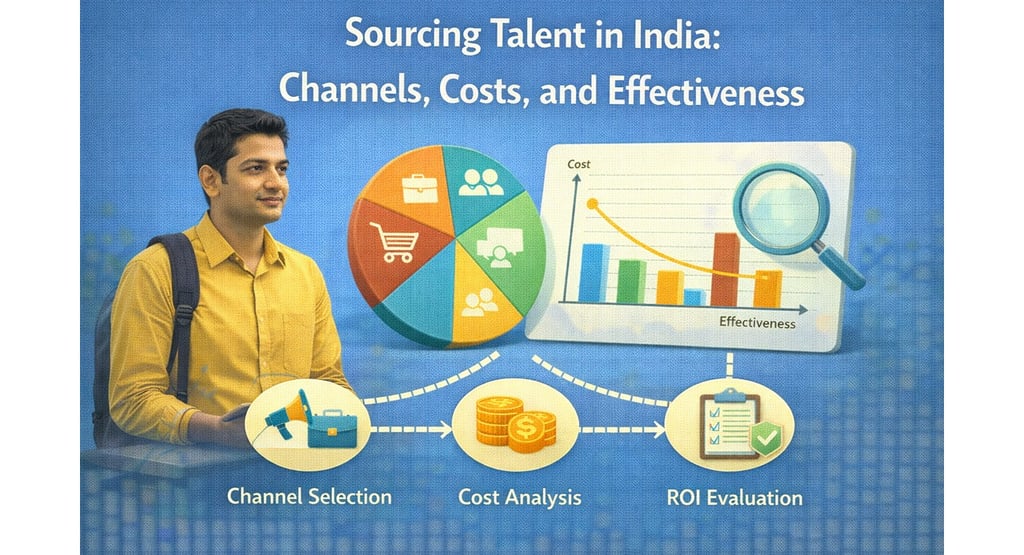
Sourcing talent is one of the most critical steps in recruitment, especially in India’s diverse and competitive labour market. Choosing the right sourcing channels impacts hiring speed, quality, and cost. Many Indian organisations rely heavily on a few familiar channels — job portals or referrals — without evaluating effectiveness or market reach, which often leads to longer hiring cycles or suboptimal hires.
A structured approach to sourcing helps HR teams find the right candidates, manage costs, and maintain hiring efficiency.
The Indian Recruitment Context
Indian organisations face several unique sourcing challenges:
Skill shortages in niche and specialised roles
High attrition in IT, sales, and frontline roles
Regional differences in language, talent availability, and compensation expectations
High reliance on referrals, which may reduce diversity
Budget-conscious hiring, particularly in SMEs
Understanding these realities allows HR to select sourcing channels strategically rather than reactively.
Core Talent Sourcing Channels
1. Job Portals and Professional Networks
Job portals (Naukri, Indeed, Shine) and professional networks (LinkedIn) remain primary channels for many Indian organisations.
Best practices:
Use portals for targeted role types (experienced vs entry-level)
Maintain clear JD and skill criteria
Track cost per hire and response rates
2. Employee Referrals
Referrals are highly effective in India, particularly for critical roles or cultural fit.
Best practices:
Encourage referrals with structured programs and recognition
Maintain transparency in referral incentives
Monitor diversity and avoid over-reliance
3. Campus Hiring
Campus recruitment is ideal for entry-level roles or talent pipelines in IT, engineering, and business functions.
Best practices:
Build relationships with key universities and colleges
Plan recruitment calendars around academic schedules
Include internships or apprenticeships for early engagement
4. Recruitment Consultants and Staffing Agencies
Consultants and agencies are useful for specialised or urgent roles.
Best practices:
Use agencies only for predefined critical roles
Negotiate fees and define service SLAs
Maintain control over candidate quality and final selection
5. Local Sourcing for Frontline and Blue-Collar Roles
Factories, retail, logistics, and field operations often require local sourcing.
Best practices:
Partner with local staffing providers or placement agencies
Leverage community networks and word-of-mouth
Consider seasonal hiring trends and peak demand periods
HR’s Practical Perspective
HR teams in India must evaluate sourcing channels based on:
Quality of candidates: Relevant skills and experience
Cost per hire: Portal fees, agency charges, referral incentives
Time to hire: Speed of pipeline building and closing candidates
Diversity and inclusion: Avoid over-reliance on a single channel
Compliance and documentation: Ensure source credibility
A multi-channel approach, periodically reviewed for ROI and effectiveness, ensures better hiring outcomes.
Conclusion
Effective talent sourcing in India requires careful channel selection, cost management, and quality control. By combining job portals, referrals, campus hiring, agencies, and local sourcing, HR teams can maintain a steady flow of candidates and reduce hiring delays.
Structured sourcing aligned with business demand and manpower planning ensures recruitment efficiency and supports long-term workforce stability.
🗹 Talent Sourcing Checklist
🗹 Identify roles requiring immediate vs long-term sourcing
🗹 Select sourcing channels based on role type and skill requirement
🗹 Maintain clear, realistic job descriptions for all channels
🗹 Encourage and manage employee referrals transparently
🗹 Plan campus hiring and internships proactively
🗹 Engage recruitment agencies selectively and monitor SLAs
🗹 Leverage local sourcing networks for frontline or seasonal roles
🗹 Track cost per hire and time-to-fill metrics
🗹 Monitor sourcing channel effectiveness and adjust strategy
Talent Sourcing Channels Overview
Conclusion--
Effective labour law compliance depends on how well HR operations, payroll, and business processes work together. When compliance is embedded into everyday workflows, organisations reduce risk, improve accuracy, and build sustainable governance systems. HR teams that prioritise integration over isolation are better positioned to manage compliance confidently and consistently.
HireDesk India © 2026 | All Rights Reserved
"Thoughtful guidance for everyday HR"


Quick Links
Topics
Connect
_______________________________________________________________________________________________________________________________________________________________________________________
HireDesk is a free HR knowledge platform focused on practical, India-specific workplace guidance. We help HR professionals, managers, and learners navigate people practices with clarity, responsibility, and real-world relevance.