
Succession Planning as a Workforce Planning Tool
WORKFORCE PLANNING & MANPOWER
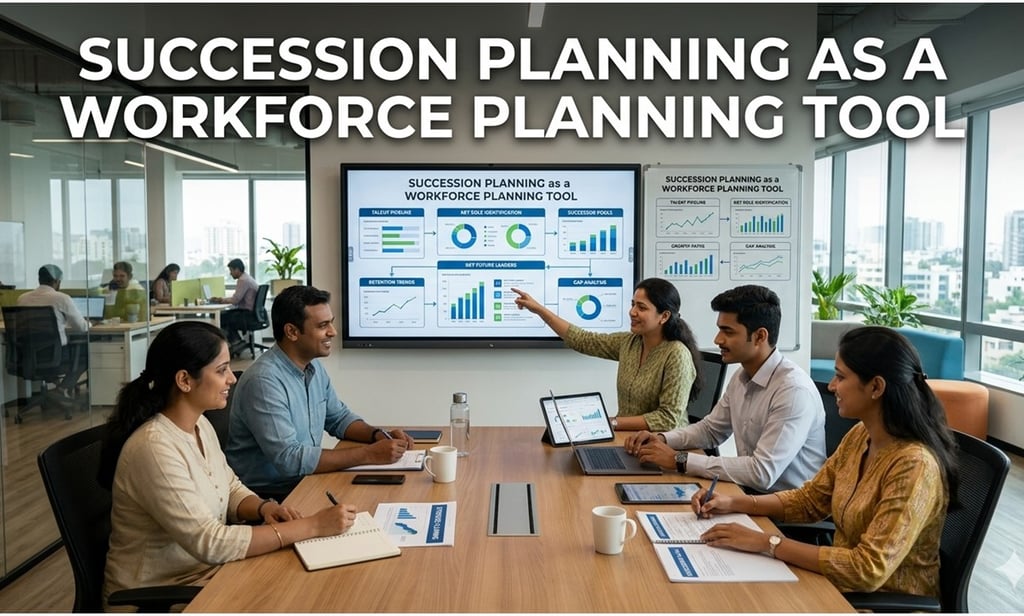
Introduction
Workforce planning is incomplete without preparing for leadership and critical role continuity. Organisations often face disruption when key employees exit unexpectedly or retire without ready replacements. Succession planning addresses this risk by ensuring a steady pipeline of capable employees for critical roles.
When integrated into workforce planning, succession planning moves beyond senior leadership focus and becomes a structured manpower readiness tool.
What Is Succession Planning?
Succession planning is the process of identifying and developing employees to fill key roles when they become vacant. These roles may include leadership positions, technical specialists, or operationally critical jobs.
From a workforce planning perspective, succession planning focuses on:
Role continuity
Skill and leadership readiness
Reduced dependency on external hiring
It ensures that manpower availability supports long-term organisational stability.
Why Succession Planning Matters in Workforce Planning
Ensures Business Continuity
Unexpected exits can disrupt operations. Succession planning reduces this risk by ensuring trained internal backups.
Strengthens Internal Talent Supply
Succession planning improves internal supply forecasting, a core component of workforce planning.
Reduces Hiring Pressure
Prepared successors lower the need for urgent external recruitment for critical roles.
Supports Career Development
Visible succession pathways increase employee engagement and retention.
Identifying Roles for Succession Planning
Not all roles require formal succession plans. Priority is usually given to:
Leadership and managerial positions
Roles with specialised or scarce skills
Positions critical to safety, compliance, or revenue
Roles with high attrition or retirement risk
This prioritisation helps focus workforce planning efforts effectively.
Integrating Succession Planning into Workforce Planning
Step 1: Identify Critical Roles
Map roles that have a direct impact on business continuity or future growth.
Step 2: Assess Internal Talent Availability
Review potential successors based on performance, capability, and readiness.
Step 3: Identify Gaps
Determine whether successors are ready now, ready with development, or unavailable.
Step 4: Plan Development Actions
Link identified gaps to training, mentoring, job rotation, or stretch assignments.
Light Checklist: Succession Planning Readiness
☐ Critical roles clearly identified
☐ Potential successors mapped for each role
☐ Readiness levels defined and documented
☐ Development plans aligned to role requirements
☐ Succession plans reviewed periodically
Sample Succession Planning Overview (Text Format)
Common Challenges
Over-reliance on single successors
Limited development opportunities
Lack of manager involvement
Treating succession plans as confidential or static
Addressing these challenges ensures succession planning strengthens workforce plans rather than remaining a paper exercise.
Conclusion
Succession planning plays a vital role in workforce planning by ensuring critical roles are always backed by prepared talent. It strengthens internal manpower supply, supports leadership continuity, and reduces organisational risk.
When treated as an ongoing workforce planning tool rather than a one-time HR activity, succession planning contributes directly to long-term organisational resilience.
Conclusion--
Effective labour law compliance depends on how well HR operations, payroll, and business processes work together. When compliance is embedded into everyday workflows, organisations reduce risk, improve accuracy, and build sustainable governance systems. HR teams that prioritise integration over isolation are better positioned to manage compliance confidently and consistently.
HireDesk India © 2026 | All Rights Reserved
"Thoughtful guidance for everyday HR"


Quick Links
Topics
Connect
_______________________________________________________________________________________________________________________________________________________________________________________
HireDesk is a free HR knowledge platform focused on practical, India-specific workplace guidance. We help HR professionals, managers, and learners navigate people practices with clarity, responsibility, and real-world relevance.