
Succession Planning Fundamentals
Succession planning is a structured approach to identifying and developing employees who can fill key roles in the future. It ensures leadership continuity, reduces talent risks, and supports long-term organisational stability.
PERFORMANCE & DEVELOPMENT
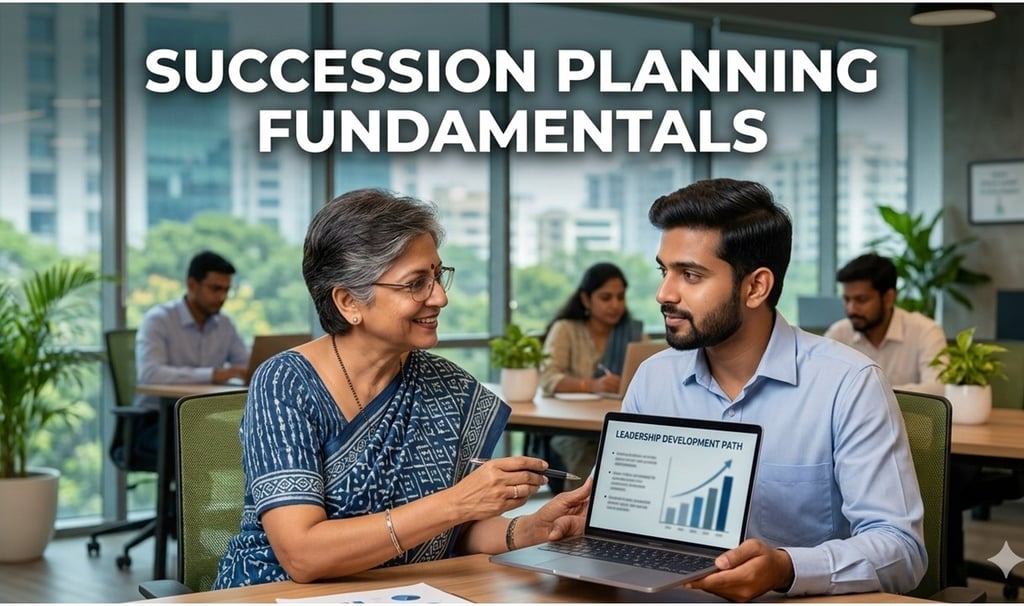
Succession planning is a structured approach to identifying and developing employees who can fill key roles in the future. It ensures leadership continuity, reduces talent risks, and supports long-term organisational stability.
Rather than focusing only on senior leadership, effective succession planning covers critical roles across levels and aligns talent development with workforce and business planning.
Why Succession Planning Matters
Ensures continuity in key roles
Reduces dependency on external hiring
Strengthens internal talent pipelines
Improves employee engagement and retention
Supports long-term workforce planning
Without succession planning, organisations may face sudden capability gaps, leadership disruptions, and increased hiring risks.
Core Elements of Succession Planning
1. Identify Critical Roles
Determine roles that are vital to operations, leadership, or future growth.
Focus on positions with high impact or limited replacement availability.
Review roles periodically as business needs evolve.
2. Define Success Profiles
Identify skills, experience, and behaviours required for success in each role.
Use competency frameworks and performance criteria.
Ensure profiles are realistic and aligned with organisational values.
3. Assess Internal Talent
Evaluate potential successors based on performance and readiness.
Consider both current capabilities and development potential.
Use multiple data points such as performance reviews, feedback, and assessments.
4. Develop Successors
Create targeted development plans to close readiness gaps.
Use job rotations, mentoring, stretch assignments, and learning programs.
Ensure development actions are measurable and time-bound.
5. Review and Update Regularly
Reassess succession plans periodically.
Adjust based on business changes, performance shifts, or employee movement.
Ensure ongoing alignment with workforce planning.
Sample View: Succession Planning Framework
Checklist: Effective Succession Planning
☐ Identify critical roles across the organisation
☐ Define clear success profiles for key positions
☐ Assess internal talent using multiple data points
☐ Create targeted development plans for successors
☐ Review succession plans regularly
☐ Align succession planning with workforce strategy
Common Pitfalls to Avoid
Limiting succession planning to top leadership roles
Relying solely on tenure rather than readiness
Keeping succession plans static and outdated
Lack of transparency or communication around development
Role of HR and Leadership
HR designs the succession framework, tools, and review processes.
Leaders and managers identify potential successors and support development.
Together, they ensure succession planning is structured, fair, and aligned with future needs.
Key Takeaway
Succession planning builds organisational resilience by preparing internal talent for critical roles. A structured, regularly reviewed approach ensures continuity, reduces talent risk, and supports long-term workforce and leadership stability.
Conclusion--
Effective labour law compliance depends on how well HR operations, payroll, and business processes work together. When compliance is embedded into everyday workflows, organisations reduce risk, improve accuracy, and build sustainable governance systems. HR teams that prioritise integration over isolation are better positioned to manage compliance confidently and consistently.
HireDesk India © 2026 | All Rights Reserved
"Thoughtful guidance for everyday HR"


Quick Links
Topics
Connect
_______________________________________________________________________________________________________________________________________________________________________________________
HireDesk is a free HR knowledge platform focused on practical, India-specific workplace guidance. We help HR professionals, managers, and learners navigate people practices with clarity, responsibility, and real-world relevance.