
Sustainable Performance Management Practices
PERFORMANCE & DEVELOPMENT
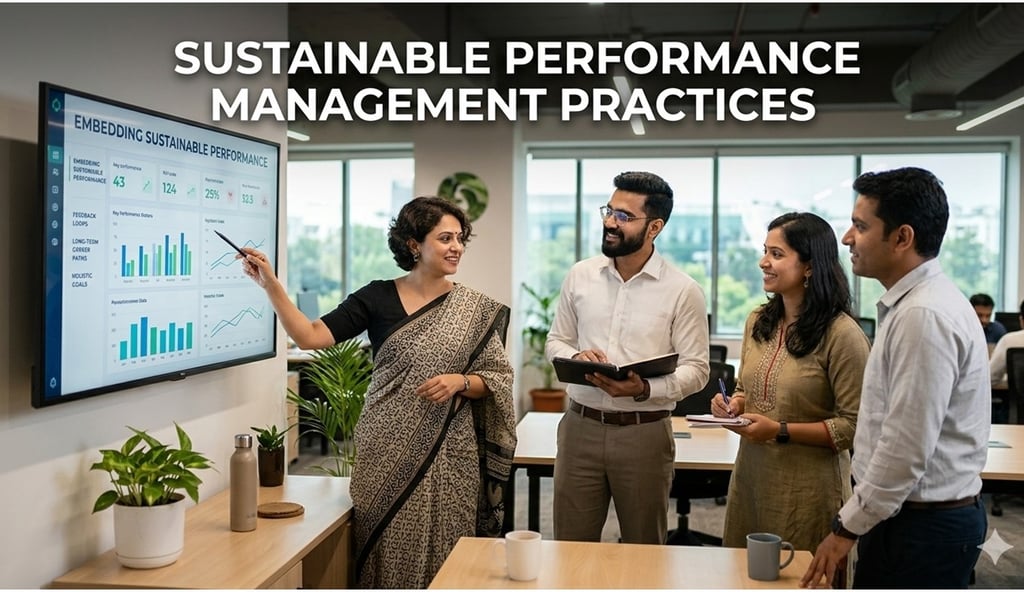
Performance management is more than just annual appraisals or periodic reviews. To truly benefit the organisation and its employees, systems must be sustainable — capable of maintaining fairness, engagement, and effectiveness over time.
Sustainable performance management ensures that employees stay motivated, managers can differentiate contribution accurately, and HR can make data-driven talent decisions consistently.
Why Sustainability Matters in Performance Management
Maintains credibility: Employees trust the system when evaluations are fair and consistent.
Supports retention: High performers are less likely to leave when their contributions are recognised and rewarded appropriately.
Enables long-term planning: Sustainable systems allow HR to forecast talent needs, plan development, and align rewards with organisational goals.
Reduces administrative burden: Efficient and repeatable processes save time for managers and HR teams.
Without sustainability, performance systems often degrade into formalities, losing impact and trust.
Core Principles of Sustainable Performance Management
1. Clear and Consistent Processes
Use well-defined rating scales and goal-setting frameworks.
Ensure managers understand evaluation criteria and expectations.
Communicate processes transparently to employees.
2. Regular Feedback and Continuous Dialogue
Move beyond annual reviews to ongoing check-ins.
Focus on coaching, guidance, and development alongside assessment.
Encourage two-way discussions between managers and employees.
3. Evidence-Based Evaluation
Base ratings on observable results and behaviours.
Avoid reliance on memory or perception alone.
Incorporate multiple inputs, such as peer feedback, project outcomes, and measurable KPIs.
4. Flexibility and Adaptability
Update goals and performance criteria as business priorities shift.
Adapt to organisational change without compromising fairness.
Include mechanisms to account for unforeseen circumstances affecting performance.
5. Integration with Development and Rewards
Link outcomes to career growth, learning opportunities, and recognition.
Ensure high performers have visible paths for progression.
Align incentives to reinforce desired behaviours and results.
Sample View: Key Practices for Sustainable Performance Management
Checklist: Implementing Sustainable Performance Management
☐ Document and communicate processes clearly
☐ Train managers on fair evaluation and coaching
☐ Conduct regular check-ins and provide feedback continuously
☐ Use measurable evidence and multiple sources for ratings
☐ Adapt criteria to business changes while maintaining fairness
☐ Link performance outcomes to career growth, learning, and rewards
Common Pitfalls to Avoid
Overcomplicating processes
Neglecting manager training and support
Focusing solely on ratings instead of development
Ignoring system review and continuous improvement
Role of HR
HR ensures sustainability by:
Designing and updating frameworks
Supporting managers in feedback and coaching
Monitoring rating trends and fairness
Integrating performance with rewards, development, and succession plans
Key Takeaway
Sustainable performance management is a long-term investment in people and organisational capability. By combining clear processes, continuous feedback, evidence-based evaluation, flexibility, and integration with development and rewards, organisations create systems that are credible, motivating, and impactful over time.
Conclusion--
Effective labour law compliance depends on how well HR operations, payroll, and business processes work together. When compliance is embedded into everyday workflows, organisations reduce risk, improve accuracy, and build sustainable governance systems. HR teams that prioritise integration over isolation are better positioned to manage compliance confidently and consistently.
HireDesk India © 2026 | All Rights Reserved
"Thoughtful guidance for everyday HR"


Quick Links
Topics
Connect
_______________________________________________________________________________________________________________________________________________________________________________________
HireDesk is a free HR knowledge platform focused on practical, India-specific workplace guidance. We help HR professionals, managers, and learners navigate people practices with clarity, responsibility, and real-world relevance.