
Sustainable Workforce Planning Practices
WORKFORCE PLANNING & MANPOWER
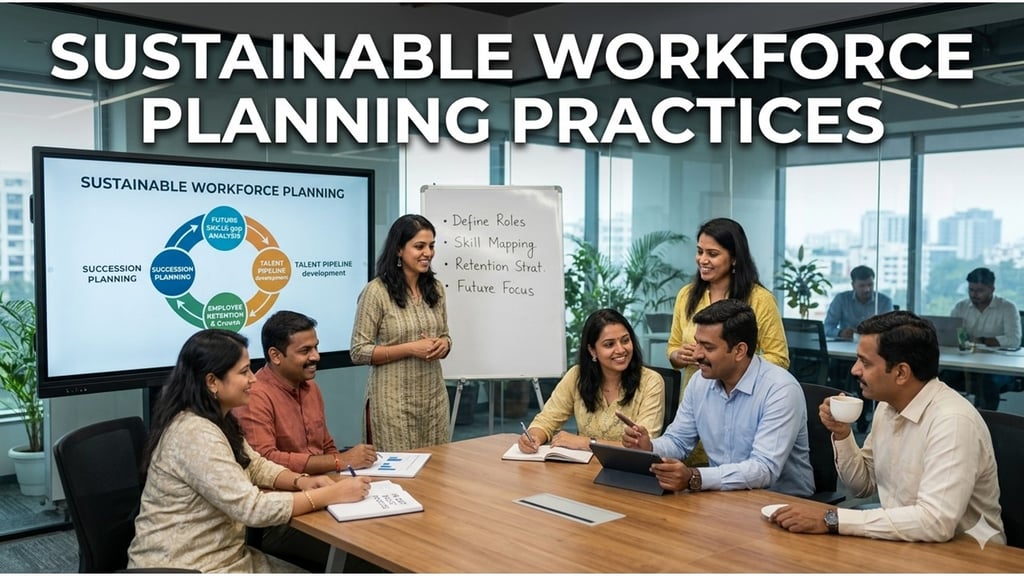
Sustainable workforce planning ensures that organisations meet current manpower needs while preparing for future challenges. It balances operational efficiency, employee well-being, cost management, and long-term business objectives.
Sustainability in workforce planning is not only about numbers—it’s about creating resilient, adaptable, and future-ready workforce strategies.
Why Sustainability Matters in Workforce Planning
Unsustainable workforce planning can lead to:
Chronic overstaffing or understaffing
High turnover and burnout
Skill gaps and capability risks
Rising operational costs
Sustainable planning ensures workforce stability, aligns with strategic goals, and promotes organisational resilience.
Key Practices for Sustainable Workforce Planning
1. Long-Term Demand Forecasting
Use multi-year projections to anticipate skills, capacity, and role requirements beyond immediate business needs.
2. Balanced Workforce Mix
Combine permanent, contract, and flexible staffing strategically to maintain capacity while controlling costs.
3. Skill Development and Succession Planning
Invest in employee development to reduce dependency on external hiring and ensure continuity in critical roles.
4. Data-Driven Decision Making
Use workforce analytics to monitor trends, identify gaps, and support evidence-based planning.
5. Periodic Review and Adaptation
Regularly revisit plans to adjust for business changes, technological shifts, or workforce dynamics.
6. Employee Engagement and Well-Being
Consider workload balance, career growth, and job satisfaction to maintain a productive and committed workforce.
Light Checklist: Sustainable Workforce Planning
☐ Multi-year workforce demand forecast conducted
☐ Workforce mix optimised for cost and capacity
☐ Skills and succession plans maintained
☐ Data analytics used for planning decisions
☐ Workforce plans reviewed periodically
☐ Employee well-being incorporated into planning
Sample Table: Sustainable Workforce Planning Practices
Conclusion
Sustainable workforce planning ensures organisations are prepared, adaptable, and efficient. By forecasting demand, balancing workforce mix, developing skills, leveraging data, and incorporating employee well-being, HR can create workforce plans that support long-term organisational success.
Conclusion--
Effective labour law compliance depends on how well HR operations, payroll, and business processes work together. When compliance is embedded into everyday workflows, organisations reduce risk, improve accuracy, and build sustainable governance systems. HR teams that prioritise integration over isolation are better positioned to manage compliance confidently and consistently.
HireDesk India © 2026 | All Rights Reserved
"Thoughtful guidance for everyday HR"


Quick Links
Topics
Connect
_______________________________________________________________________________________________________________________________________________________________________________________
HireDesk is a free HR knowledge platform focused on practical, India-specific workplace guidance. We help HR professionals, managers, and learners navigate people practices with clarity, responsibility, and real-world relevance.