
Sustaining High Performance Over Time
PERFORMANCE & DEVELOPMENT

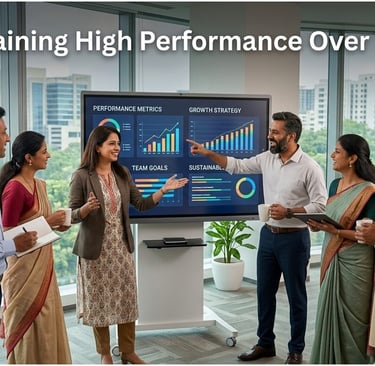
Achieving high performance is important, but sustaining it over time is a greater challenge for organisations. Employees may deliver strong results in short periods, yet struggle to maintain performance due to burnout, skill stagnation, or lack of ongoing support.
This article explains how organisations can create systems and practices that enable consistent, long-term high performance rather than short-lived peaks.
Why Sustained Performance Matters
Sustained performance helps organisations:
Build reliable capability and execution strength
Reduce burnout and performance volatility
Retain high performers through meaningful engagement
Ensure leadership and talent pipelines remain strong
High performance must be viewed as a long-term organisational outcome, not a one-time achievement.
Factors That Enable Sustained High Performance
1. Clear and Evolving Expectations
Regularly review goals and priorities
Adjust expectations as roles and business needs evolve
Avoid static goals that lose relevance
Clarity helps employees focus on what matters most.
2. Continuous Feedback and Coaching
Move beyond annual performance discussions
Encourage frequent feedback and coaching conversations
Address issues early before they escalate
Ongoing dialogue supports steady improvement.
3. Skill Development and Learning
Invest in upskilling and reskilling
Align learning initiatives with future role requirements
Encourage learning agility and curiosity
Skills enable employees to sustain performance in changing environments.
4. Wellbeing and Workload Management
Monitor workload and work intensity
Encourage reasonable work practices and recovery
Address signs of burnout proactively
Sustained performance depends on employee wellbeing.
5. Recognition and Growth Opportunities
Recognise consistent contributors, not only peak performers
Provide career progression and new challenges
Balance rewards with development and visibility
Recognition reinforces positive performance behaviours.
Sample View: Sustaining High Performance Framework
Checklist: Supporting Sustained High Performance
☐ Goals are reviewed and updated regularly
☐ Feedback is continuous and developmental
☐ Learning opportunities align with future needs
☐ Workload and wellbeing are actively monitored
☐ Recognition acknowledges consistent performance
☐ Managers are equipped to support long-term performance
Role of HR
HR supports sustained performance by:
Designing systems that encourage continuous improvement
Enabling manager capability through training and tools
Monitoring engagement, wellbeing, and performance trends
Aligning rewards, development, and career frameworks
HR ensures high performance is sustainable, not exhausting.
Key Takeaway
Sustaining high performance requires consistent focus on clarity, feedback, capability, wellbeing, and recognition. Organisations that invest in long-term performance systems create resilient, engaged, and high-performing workforces.
Conclusion--
Effective labour law compliance depends on how well HR operations, payroll, and business processes work together. When compliance is embedded into everyday workflows, organisations reduce risk, improve accuracy, and build sustainable governance systems. HR teams that prioritise integration over isolation are better positioned to manage compliance confidently and consistently.
HireDesk India © 2026 | All Rights Reserved
"Thoughtful guidance for everyday HR"


Quick Links
Topics
Connect
_______________________________________________________________________________________________________________________________________________________________________________________
HireDesk is a free HR knowledge platform focused on practical, India-specific workplace guidance. We help HR professionals, managers, and learners navigate people practices with clarity, responsibility, and real-world relevance.