
Technology Adoption in Factory HR: HRIS, Attendance, and Compliance Tools
INDUSTRIAL RELATIONS & FACTORY HR
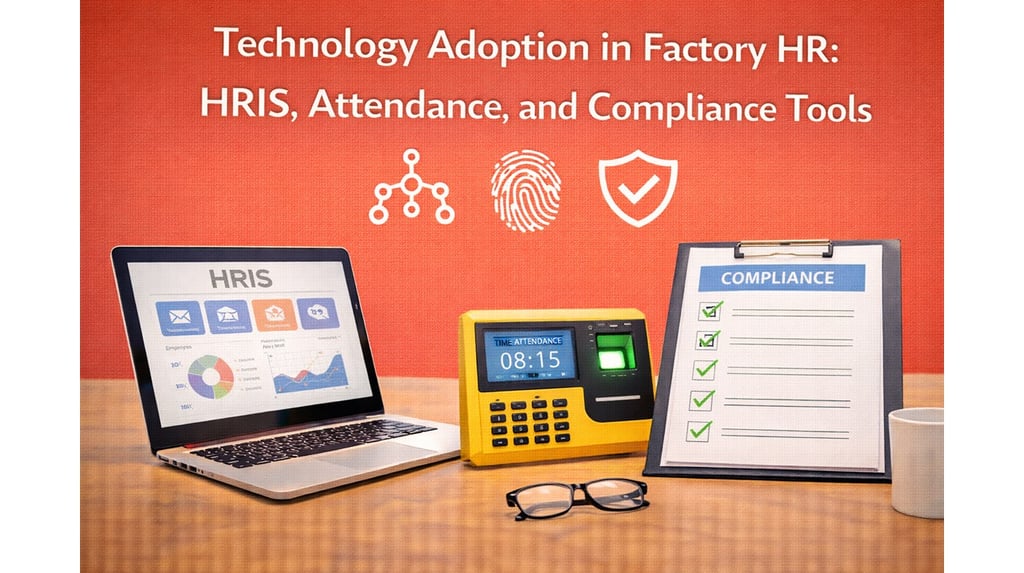
Digital tools are transforming HR management in Indian factories. From attendance tracking to compliance monitoring, technology enables HR teams to operate efficiently, reduce manual errors, and ensure timely statutory adherence.
For Factory HR, technology is not about replacing human judgment—it is about streamlining processes, enhancing accuracy, and supporting better industrial relations. Proper adoption ensures smoother operations, faster reporting, and improved worker satisfaction.
Key Technology Areas for Factory HR
HRIS (Human Resource Information System)
Centralised employee database
Tracks personal, employment, and payroll information
Generates reports for audits and statutory compliance
Attendance & Shift Management Tools
Biometric or RFID-based attendance
Shift scheduling and leave tracking
Automated overtime calculation
Payroll and Compliance Modules
Ensures timely salary processing
Integrates PF, ESI, gratuity, and bonus calculations
Tracks statutory filings and deadlines
Grievance & Helpdesk Platforms
Digital tracking of complaints
Escalation management
Transparent resolution timelines
HR Benefits of Technology Adoption
Accuracy & Transparency – Reduces manual errors and discrepancies
Time Savings – Automation frees HR for strategic tasks
Compliance Monitoring – Generates alerts for legal deadlines
Data-Driven Decisions – Analytics support workforce planning and IR interventions
Employee Engagement – Self-service portals improve accessibility
Implementation Best Practices
Assess Needs Before Selection – Choose tools aligned with factory size, workforce complexity, and budget
Data Accuracy – Clean existing records before migration
Training & Change Management – Train HR staff and supervisors for adoption
Integration – Ensure HRIS integrates with payroll, attendance, and statutory reporting
Security & Privacy – Protect sensitive employee data under IT and labour regulations
Continuous Monitoring – Regular audits to ensure system reliability and compliance
Common Pitfalls
Over-reliance on tools without human verification
Lack of SOPs and defined workflows
Ignoring statutory reporting requirements
Poor adoption by shop floor supervisors
Fragmented systems causing duplicate data entry
HR must balance technology and human oversight.
Conclusion
Technology adoption in factory HR is a strategic enabler. By deploying HRIS, attendance, and compliance tools thoughtfully, HR teams enhance efficiency, reduce errors, and ensure legal compliance while supporting workforce engagement and industrial harmony.
Factories that implement technology responsibly achieve faster decision-making, transparency, and operational resilience.
🗹 Factory HR Checklist: Technology Adoption
🗹 Assess HR process needs before tool selection
🗹 Implement HRIS for centralised employee data
🗹 Automate attendance, shift, and leave management
🗹 Integrate payroll with statutory compliance
🗹 Train HR and supervisors on tool usage
🗹 Maintain data security and privacy
🗹 Use analytics for operational and IR decisions
🗹 Audit systems regularly for accuracy and compliance
Technology Adoption – HR Reference Table
Conclusion--
Effective labour law compliance depends on how well HR operations, payroll, and business processes work together. When compliance is embedded into everyday workflows, organisations reduce risk, improve accuracy, and build sustainable governance systems. HR teams that prioritise integration over isolation are better positioned to manage compliance confidently and consistently.
HireDesk India © 2026 | All Rights Reserved
"Thoughtful guidance for everyday HR"


Quick Links
Topics
Connect
_______________________________________________________________________________________________________________________________________________________________________________________
HireDesk is a free HR knowledge platform focused on practical, India-specific workplace guidance. We help HR professionals, managers, and learners navigate people practices with clarity, responsibility, and real-world relevance.